We need your help now

Support from readers like you keeps The Journal open.

You are visiting us because we have something you value. Independent, unbiased news that tells the truth. Advertising revenue goes some way to support our mission, but this year it has not been enough.

If you've seen value in our reporting, please contribute what you can, so we can continue to produce accurate and meaningful journalism. For everyone who needs it.

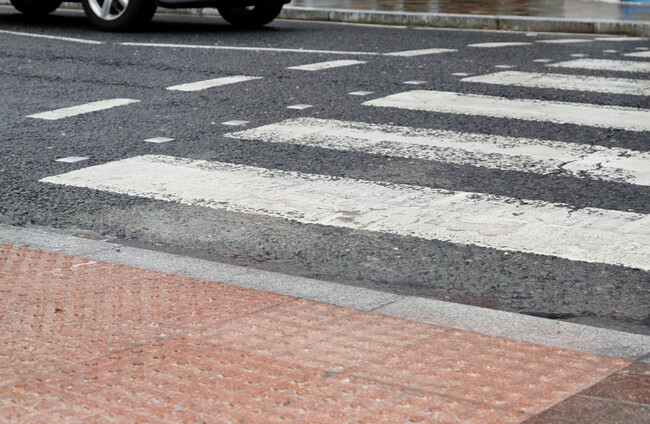
Opinion 2025 was a devastating year on Irish roads. We need a transport system that keeps us safe

Safety of pedestrians and cyclists on Irish roads is going in exactly the wrong direction, writes Dr Catherine Conlon.

2025 WAS A devastating year on Irish roads. Garda figures show that there were 179 collisions resulting in 190 fatalities – 15 more than the number of deaths (175) in 2024.

The Road Safety Authority has expressed concern over the increase, particularly among vulnerable road users, such as pedestrians and cyclists.

Last year, 45 pedestrians and 14 cyclists were killed on Irish roads. The figures show that 30 motor cyclists and 3 e-scooter drivers or passengers were killed. In other words, almost half (48%) of the people killed on Irish roads in 2025 were not protected by the chassis of a motorised vehicle.

These figures are telling us that safety of pedestrians and cyclists on Irish roads is going in exactly the wrong direction at a time when climate and health targets urge us to get out of cars and onto two feet, bicycles and public transport.

Car supremacy tells us that roads exist only for drivers; the harms of driving should be ignored; and that everyone else- pedestrians, children, cyclists, motor cyclists and e-scooter drivers should get out of the way.

Car spreading is resulting in new cars every year that further reduce the space for cyclists and pedestrians and make crashes all the more potentially lethal.

Our travel choices and our level of physical activity are often seen as personal choices. But they are largely shaped by the environment and infrastructure around us. The systemic and commercial ‘drivers’ behind these choices have often been ignored.

To make population-level improvements, we must shift from blaming the individual to shaping environments that support healthy living.

Better policy

A system that supports active travel and quality public transport will support reduced traffic congestion and cost savings for the State.

Ireland has plenty of plans to promote sustainable mobility but to date, implementation has been slow and fragmented. The Climate and Health Alliance in its recent insightful report Active Travel: The Magic Pill is calling for urgent courageous action to realise this vision.

“We need faster, fairer and better-coordinated implementation to realise the immense health, economic and environmental benefits of a more physically active society,” it says.

The report highlights the immense physical and mental health benefits from physical activity including less cardiovascular disease, diabetes, depression, depression, anxiety and dementia. Active travel gets us moving by embedding physical activity in everyday life.

“If regular car journeys such as the daily commute or school run can be safely converted to walking, wheeling or cycling, physical activities become an ongoing daily habit.”

Walking, wheeling and cycling takes 680,000 cars off the road every day in Ireland’s five largest cities, according to the National Transport Authority’s Walking and Cycling Index 2023. Why do we continue to ignore this?

Unsafe roads

In Ireland, we are not physically active enough. Less than half (46%) of adults and a minority of children meet national physical activity guidelines. Only 43% of children walk or cycle to school.

We know the reason for these low figures. The roads are just too dangerous to walk or cycle on.

In 2025, the government was supposed to introduce measures to make roads safer for everyone.

There is solid evidence that if you are hit by a car travelling at 30kph you have a much better chance of surviving than if you are hit by a car travelling at 50kph. The default speed limit in built up areas was set to be reduced to 30kph last year. That plan was scrapped.

In 2024, the government commissioned an independent review that said the Road Safety Authority should be scrapped and replaced with two new bodies. One would work on driver licencing and testing and the other would be focused entirely on road safety. That plan was also scrapped.

There is an epidemic of red light breaking in cities that makes junctions dangerous for pedestrians and cyclists as well as drivers. Red light traffic cameras were due to be rolled out in Dublin in 2025. This did not happen and is unlikely to happen in 2026.

There were 190 people killed on Irish roads in 2025.

This government is not addressing the key issues to bring this down to zero.

What we need is a transport system that supports heath. This means safe, high-quality infrastructure for walking and cycling integrated with high quality public transport that is complimented by car use when needed.

Real change

We do not have to look very far to see what robust political will can achieve. In a few short years, Paris has increased cycling by 240% with a combination of political vision along with a mix of carrots and sticks; demonstrating how a good balance can achieve lasting change.

The carrots make cycling both practical and pleasant. This includes 180km of protected bicycle lanes and safer intersections; more secure bike parking; three hundred school streets; along with pedestrian zones and re-greening corridors.

The sticks include nudging people toward more sustainable choices including low-emission zones, higher fuel prices, and reduced car space.

Meanwhile, the Climate and Health Alliance have laid out what needs to be done to achieve health, climate and transport targets.

Transport policy needs to be strengthened. This includes allocation of 20% of the land transport budget to walking and cycling. In 2020, the Government did exactly that. A 2:1 public transport-to-roads spending ratio was also set. Investment at this scale has since been dropped.

A ‘Health in All Policies’ approach that ensures systematic inclusion of health in all policy decisions, as recommended by the World Health Organisation is needed. Health benefits of better walking, cycling and public transport should be quantified when evaluating transport budgets. Reliable detailed data is needed including travel surveys, traffic counts, collision and hospital statistics, and heights and weights of vehicles.

Resources must be rebalanced away from car use, including reallocation of road space to walking, cycling and public transport in both urban and rural areas.

Urgent action is needed to make walking safer that includes lower speed limits, segregated infrastructure and better enforcement. A reformed Road Safety Authority is needed to play a more ambitious role.

The need to prioritise public transport and active travel must be communicated in a way that will shape a cultural shift away from cars. Effective promotion of active travel requires compelling storytelling supported by solid evidence. Behaviour change expertise is essential to convey the hidden costs, health and climate impacts of both driving and sedentary lifestyles. Car and fossil fuel advertising must be restricted.

Robust legislation – 30kph speed limits in built up areas; a national body with the sole remit of addressing road safety; and the roll out of red light traffic cameras are just some of the measures that were due to be introduced and have been either delayed or scrapped. Introduction of these measures would immediately save lives.

The reality is that unless there is robust political commitment to prioritise protected active travel and public transport; aligned with legislation to ensure safety for those travelling on Irish roads, nothing will change and road deaths will continue to rise.

Dr Catherine Conlon is a public health doctor with the HSE in Cork.

Readers like you are keeping these stories free for everyone...
A mix of advertising and supporting contributions helps keep paywalls away from valuable information like this article. Over 5,000 readers like you have already stepped up and support us with a monthly payment or a once-off donation.

Close
JournalTv
News in 60 seconds