We need your help now

Support from readers like you keeps The Journal open.

You are visiting us because we have something you value. Independent, unbiased news that tells the truth. Advertising revenue goes some way to support our mission, but this year it has not been enough.

If you've seen value in our reporting, please contribute what you can, so we can continue to produce accurate and meaningful journalism. For everyone who needs it.

Alamy Stock Photo

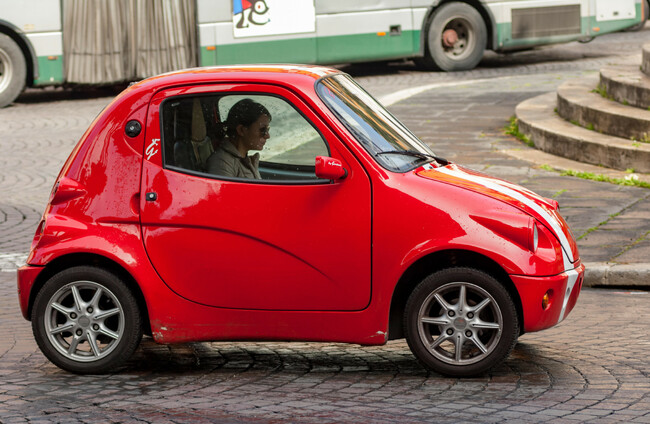
Ciarán Cannon Fewer small cars, saloons, hatchbacks... why have we let SUVs rule the roads?

Research increasingly suggests that bigger vehicles protect their occupants at the expense of those outside them, which does not bode well for Ireland’s road safety record.

I VISITED A Galway car showroom recently to pick up a friend who had dropped off their car for servicing.

The dealership represents two well-known international brands and, as I wandered through the showroom, something struck me. Almost every vehicle on display, at every price point, was an SUV.

It made me wonder why buying an ordinary family car has become so difficult.

Not so long ago, anyone walking into a dealership could choose from a range of hatchbacks, saloons and estates, alongside a handful of larger four-wheel drives.

Today, the balance has shifted dramatically. If you are looking for an SUV, you are spoiled for choice. If you are looking for what most of us would once have simply called a car, your options are becoming increasingly limited.

This is not simply my impression. More than half of all new cars sold in Ireland are now SUVs, a higher proportion than the European average. Manufacturers have responded to consumer demand, but they have also helped shape it. SUVs are more profitable to produce and market, and increasingly they dominate our advertising, our dealerships and our roads.

Paddy Comyn captured this changing landscape perfectly in his thoughtful article in The Journal recently. His was not an argument against SUVs. Rather, it was a reminder that the small car still has much to recommend it. Reading his piece reminded me of something else I had been reading in recent days, research that suggests the rise of the SUV is no longer simply a question of consumer preference. It is becoming a question of public safety.

The number of fatalities and injuries being sustained on Irish roads is beyond acceptable. Last year, 190 people died on Irish roads, and so far this year, 84 people have been killed. And that doesn’t take serious injury into account. Behind every statistic is a family whose lives have been changed forever.

Reducing that toll requires us to look honestly at every factor that contributes to death and serious injury. Conversations rightly focus on driver behaviour, infrastructure, education, enforcement and speed management. Ireland has embraced the Safe System approach, recognising that people will always make mistakes and that our policies, roads and vehicles should minimise the consequences of those mistakes.

If we are serious about reducing deaths and life-changing injuries, then no part of that system should be beyond scrutiny.

Bigger is not better

That is why a growing body of international research deserves our attention. Earlier this year, researchers at the London School of Hygiene and Tropical Medicine analysed data from more than 680,000 collisions involving pedestrians and cyclists across several countries.

Their findings were stark. Adults struck by an SUV or light truck are around 44% more likely to be killed than if they had been struck by a conventional passenger car. For children, the increase in risk rises to more than 80%.

The explanation is straightforward. The higher front profile of an SUV means the initial impact is more likely to involve the torso and head rather than the legs, making catastrophic injuries significantly more likely.

These findings are not an outlier. A major Belgian study, analysing five years of collision data involving more than 300,000 road users, reached a similar conclusion. As vehicles become heavier and taller, the protection afforded to those inside them increases, but so too does the danger faced by pedestrians, cyclists and the occupants of smaller cars.

In other words, we have become remarkably successful at making vehicles safer for the people inside them, while increasing the risks for those outside.

It is important to be clear about what this research does and does not say. It does not suggest that people who drive SUVs are less careful, nor does it suggest that SUVs are involved in more collisions. What it shows is that when collisions do occur, the consequences are more severe. That is a very different proposition, but an important one.

There is another reason why this evidence matters.

It might be tempting to assume that if consumers were simply made aware of these risks, the market would correct itself. A recent study led by Professor Ian Walker at Swansea University suggests otherwise.

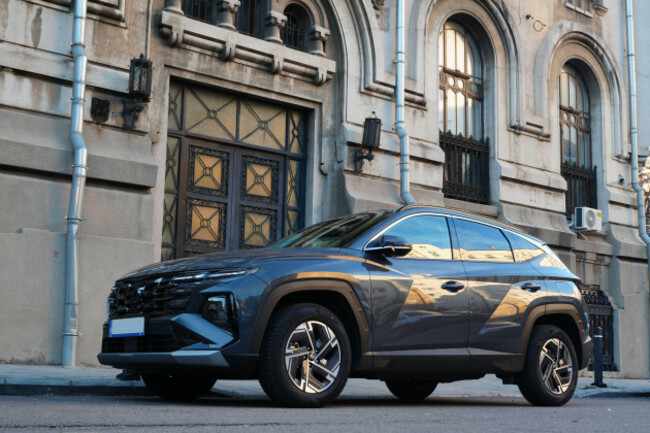
bucharest-romania-january-6-2025-hyundai-tucson-hybrid-black-car-parked-in-front-of-historical-buildingSource: Alamy Stock Photo

Researchers presented prospective SUV buyers with clear evidence that larger vehicles pose a significantly greater risk to pedestrians and cyclists. Awareness increased, but purchasing intentions barely changed. Almost everyone who had intended to buy an SUV still planned to do so. 

That finding changes the nature of the debate. If information alone is unlikely to influence purchasing decisions, then responsibility cannot rest solely with individual consumers. It becomes a question of public policy.

Political will

Governments already shape the vehicles we drive. We regulate emissions. We require seat belts and child restraints. We insist on rigorous crash testing before vehicles can be sold. Yet almost all of those measures are designed to protect the people inside the vehicle. As the evidence evolves, should we now give greater prominence to the safety of those outside it?

This is not about banning SUVs, nor is it about criticising the families who choose them. Many people have perfectly legitimate reasons for driving a larger vehicle. Equally, many people have little choice because manufacturers have steadily reduced the range of conventional cars available. That is precisely why this debate should not be framed as one of individual responsibility. It is about how markets evolve, how public policy responds and how new evidence should inform both.

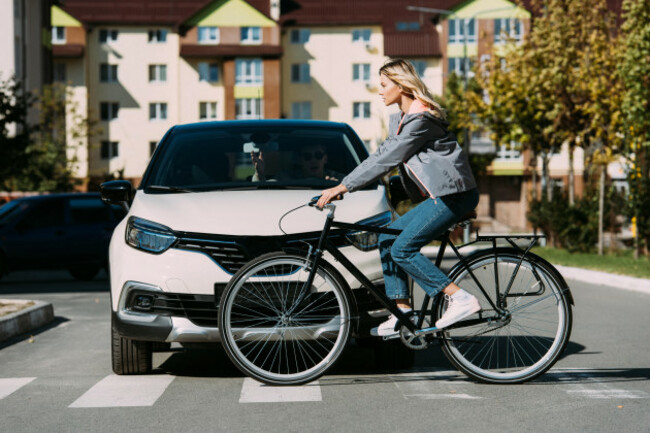
woman-riding-bicycle-while-crossing-road-with-driver-in-car Alamy Stock Photo Alamy Stock Photo

Every generation inherits assumptions that seem entirely normal. Sometimes it takes fresh evidence to persuade us to question them. The remarkable rise of the SUV happened gradually, almost without us noticing. We accepted it as another shift in consumer preference. But perhaps it was also a shift encouraged by manufacturers, reinforced by marketing and enabled by a policy environment that never really paused to consider its wider consequences.

Paddy Comyn asked whether we have forgotten the virtues of the small car. I think there is another question that deserves equal attention. Have we allowed the ordinary family car to quietly disappear from our showrooms without stopping to ask what that means for the most vulnerable people on our roads?

The evidence is still emerging, but it is pointing consistently in one direction. Larger, heavier vehicles provide greater protection for those inside them while increasing the risks faced by those outside.

That does not mean SUVs have no place on our roads. It does mean that the conversation can no longer be confined to questions of consumer preference, fashion or emissions.

If our ambition is to reduce deaths and serious injuries on Irish roads, then vehicle design has become part of that conversation. The sooner we acknowledge that, the better.

Ciaran Cannon is President of Cycling Ireland and a former Minister of State.

Readers like you are keeping these stories free for everyone...
A mix of advertising and supporting contributions helps keep paywalls away from valuable information like this article. Over 5,000 readers like you have already stepped up and support us with a monthly payment or a once-off donation.

Close
10 Comments
This is YOUR comments community. Stay civil, stay constructive, stay on topic. Please familiarise yourself with our comments policy here before taking part.
Leave a Comment
    Submit a report
    Please help us understand how this comment violates our community guidelines.
    Thank you for the feedback
    Your feedback has been sent to our team for review.

    Leave a commentcancel

     
    JournalTv
    News in 60 seconds