We need your help now

Support from readers like you keeps The Journal open.

You are visiting us because we have something you value. Independent, unbiased news that tells the truth. Advertising revenue goes some way to support our mission, but this year it has not been enough.

If you've seen value in our reporting, please contribute what you can, so we can continue to produce accurate and meaningful journalism. For everyone who needs it.

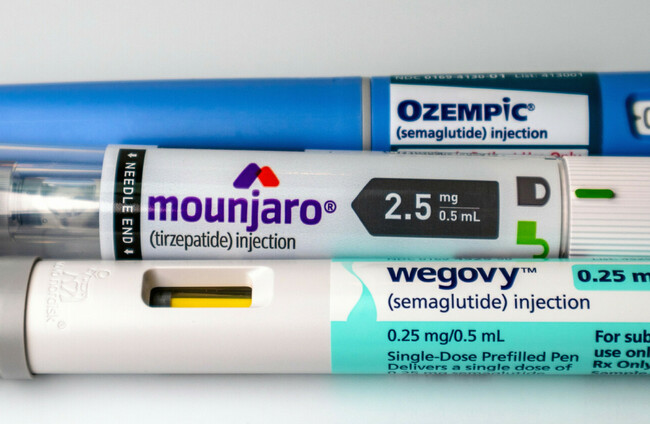
A health technology assessment of the medical, social, ethical and economic implications of the weight loss drug Mounjaro is due to be published soon. Shutterstock

Doctor Weight loss drugs look set to be made more affordable - we need to do the same for healthy food

Prescribing obesity medications to people who need them is overdue, but it must be aligned with a shift in our culture around food, writes Dr Catherine Conlon.

A DECISION ON the availability of State-funded weight-loss injections for medical card holders or under the HSE’s Drug Payment Scheme is imminent.

A health technology assessment (HTA) of the medical, social, ethical and economic implications of the weight loss drug Mounjaro is due to be published soon – the first step in the decision about who will be in a position to avail of these drugs.

However, there is no mention of the huge costs to the HSE of failing to regulate the unhealthy food environment in alignment with the provision of treatments for a disease that affects one in four of the population. That’s 1.2 million people. There is simply no logic to this approach.

Health Minister Jennifer Carroll MacNeill said the application for Mounjaro under the reimbursement scheme could be approved by the end of the year. The HSE’s national clinical lead for obesity, Professor Donal O’Shea, suggested that it is likely that availability will be similar to the approach taken in the UK, which is for people with a BMI over 35, plus complications. This would limit obesity injections to about 80,000 people.

The problem with this approach is that obesity treatments do not factor in the impact of price, marketing, the variety of foods offered or convenience on eating behaviour and body weight. These are the non-nutritional drivers of eating in the real world that need to be tackled in alignment with effective obesity treatment.

Sitting down to freshly cooked, seasonal, healthy foods every day is the ideal, but in today’s food environment, it is not going to happen for the majority.

But there are ways to mandate for a healthy food environment that would transform health, while reducing risks of obesity and chronic disease. Here are a few suggestions.

Resetting the country’s palate

The first step is to introduce mandatory reformulation of ultra-processed foods. This would require all companies to reformulate there products with restrictions on hyper palatability and calorie density.

In his book Food Intelligence, human nutrition and metabolism expert Kevin Hall suggests that mandatory reformulation would gradually reset the national palate to move away from the oversweet, salty and fatty foods we have become so used to and now crave at the megadoses the industry has set. Hall suggests that governments should introduce mandatory targets for reductions in salt, sugar, refined grains and saturated fat content in ultra-processed foods. He suggests that “all we need is the political will to start acting.”

Mandatory reformulation would ensure healthier versions of prominent unhealthy food. The next step is to target price so that the cost of healthy foods can compete with the less healthy options.

Hall suggests that we can start by taxing foods that can easily be reduced or even eliminated from the diet with no downsides for health, such as fizzy drinks, sweets, biscuits, crisps.

This is already happening with a tax on sugary drinks, introduced in Ireland in 2018 to great effect, reducing consumption and forcing the industry to reformulate so that sugary drinks no long fall into the tax band. This measure has now been introduced in nearly 120 countries, while Colombia took this one step further by introducing a new tax on all ultra-processed foods with poor nutritional profiles.

“To make sure the taxes don’t just increase food prices in general,” Hall states, “we also need to use some of the tax revenue to promote healthy replacements so that they’re more affordable, more prominent, and more convenient.”

This is where we need to think of ways to move the burden of improving dietary patterns up the food supply chain – by changing the food environment.

Higher standards for supermarkets

There are several ways to do this. Supermarkets could be held to high standards regarding the scope of the products they offer.

Walk into any supermarket today and you will have to climb over Christmas offerings of towers of selections boxes, biscuits, cakes and puddings. This is because manufacturers of the most profitable ultra-processed foods pay a premium for access to prime shelf space.

One away to change this is to ban the promotion of unhealthy foods at store entrances, end-of-aisles and at checkout tills. Another option is to tax the income of food manufacturers to promote improvements in the overall quality of the products sold.

Another is to support food businesses that make affordable, healthy prepared food more available to people. Nourish Scotland are piloting the introduction of public diners in Nottingham and Dundee in 2026, where healthy freshly cooked meals are provided in communities at a fraction of the price they would be served in restaurants.

New-kid-on-the-block, New York mayor-elect Zohran Mamdani made food affordability a lynchpin of his campaign, proposing the introduction of municipal grocery stores across five boroughs in New York. Mamdani is suggesting that the government step in and fix what a profit-driven market has failed to do: make healthy food affordable. These food stores could be subsidised by the massive revenue generated by a food tax on unhealthy foods.

Hall suggests there is so much more we can do.

What if restaurant chains that offered prepared meals were also subject to policies that encouraged overall menus to meet minimum quality standards?

Many multinational American companies, including Google, now offer their employees free healthy fresh and delicious meals. Google values the sense of community and collaborations that happen when employees gather over good food. This policy has the potential to raise productivity, reduce healthcare burdens at the company and improve retention. Who doesn’t want to work where healthy food reduces costs and makes going into work a pleasure?

“What if we decided that, like clean drinking water, access to delicious, convenient, healthy meals was considered an essential right instead of an employee perk?”

Teaching healthy choices

Getting there means changing our food culture – a critical and overlooked part of the food environment. To do that, we can learn from anti-tobacco campaigns that shifted the norms around smoking, making it first illegal and then undesirable to smoke in public places. Hall suggests that some of this might involve regulation, like ads that promote fruit and vegetable consumption or education mandates related to food and nutrition.

Japan has been doing this for over two decades, as one strand of efforts to reduce chronic disease. All schools are required to teach basic knowledge about nutrients and eating for health but also food culture, enjoyment and appreciation.

The food industry shifted the norms around eating – normalising eating on the go, replacing cooking with ultra-processed foods, snacking and massive portion sizes – in ways that reflect how the tobacco industry normalised smoking as a desirable and cool pastime.

“We need to fight back to reverse the unhealthy norms,” concludes Hall.

The availability of obesity medications on prescription for people with obesity is overdue and likely to reduce disease complications for people who receive them.

But it must be aligned with a paradigmatic shift in the culture around food ensuring that healthy food reverts to being a cultural norm – affordable and available to everyone.

We need population-level change. Anything else is a massive waste of taxpayer’s money.

Dr Catherine Conlon is a public health doctor and former director of human health and nutrition at Safefood.

Readers like you are keeping these stories free for everyone...
A mix of advertising and supporting contributions helps keep paywalls away from valuable information like this article. Over 5,000 readers like you have already stepped up and support us with a monthly payment or a once-off donation.

Close
25 Comments
This is YOUR comments community. Stay civil, stay constructive, stay on topic. Please familiarise yourself with our comments policy here before taking part.
Leave a Comment
    Submit a report
    Please help us understand how this comment violates our community guidelines.
    Thank you for the feedback
    Your feedback has been sent to our team for review.

    Leave a commentcancel

     
    JournalTv
    News in 60 seconds