We need your help now

Support from readers like you keeps The Journal open.

You are visiting us because we have something you value. Independent, unbiased news that tells the truth. Advertising revenue goes some way to support our mission, but this year it has not been enough.

If you've seen value in our reporting, please contribute what you can, so we can continue to produce accurate and meaningful journalism. For everyone who needs it.

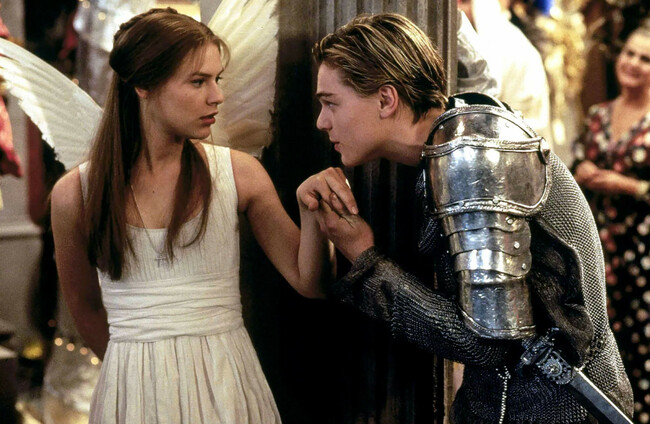
Romeo and Juliet (1996). Alamy Stock Photo

What's in a name? Shakespeare's Juliet didn't think they were important - I beg to differ

Gwen Loughman writes about our names being the basis of our identities and how it’s important for others to get them right (and pronounce them correctly).

STUDYING THE SHAKESPEAREAN play Romeo and Juliet all those years ago, I may have wondered, will there ever be practical working grounds to use any of William’s quotes in the future?

That occasion has still to present itself to me. However, there is one little stanza forever imprinted on my brain: “What’s in a name? That which we call a rose. By any other name would smell as sweet.”

Children of sworn enemies the Montagues and Capulets, Romeo and Juliet met their tragic end as a result of their families’ feud. Juliet was emphasising a rose would still smell like a rose even if it was called something else. According to our heroine, names aren’t of importance.

Juliet, allow me to make a riposte. “Lord, what fools these mortals be.” I get your beautifully-made point, but I beg to differ.

Our name holds personal meaning. It is the cornerstone of our identity, a source of pride. It can be cultural providing a strong connection to our family lineage. It’s our legal identity. It gives us a sense of self and if we’re lucky (or, in other words, famous) enough, we can go by our first name only. Isn’t that right, Madonna, Cher, Beyonce and Bono?

Proof of identity

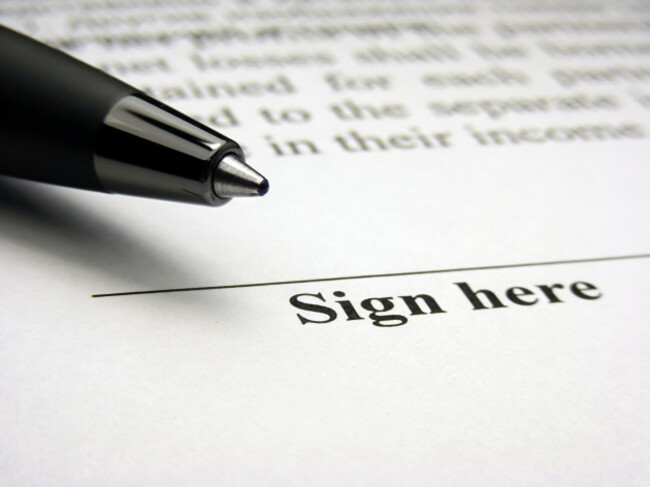
I kept my own name when I got married. As did most of my childhood friends. The patriarchy had begun its slow torturous change. However, in recent months my husband and I found ourselves needing to arrange some sort of financial security for our later years. The paperwork identified me as Mrs Husband’s Surname. When I addressed this, I was asked, for the sake of convenience, to just sign using his name.

It felt really alien and that stubborn part of me resisted because it’s my name, my identity – and also, a little bit, because of the principle of it. Yet I found myself acquiescing to the request and signing on the dotted line.

But then, it came to proof of identity. I produced my driver’s licence, proof of address and social services card. All three with my own OG name printed on them. Suddenly things were a bit different and fresh forms were printed out, putting my inherent right back where it belonged.

signherefield-thesignatureconcept I was asked, for the sake of convenience, to just sign using my husband's name. Shutterstock Shutterstock

I think my driver’s licence might have winked in devilment. The little rebel.

So yes, it would seem, Juliet, our names matter very much indeed.

Earlier this year, Meghan Markle, via her podcast, advised prospective parents pondering baby names to keep their choice to themselves only. “Keep it so close to your heart until that baby is born and it’s named. Don’t ask anyone’s opinion,” she said. 

Celebrity baby names

Her counsel didn’t reach everyone. Currently, there is a plethora of celebrities bestowing highly unusual names on their new babies. As is their absolute right.

Pop star Anne-Marie called her baby daughter and infant son Seven and Forever Sugar, respectively. Not to be outdone, Rihanna named her three RZA, Riot Rose and Rocki Irish. One has to wonder though, does giving your child an unusual name condemn them to a life of dreading a teacher mispronouncing it in school and possibly having to give an alias in a coffee shop? It must also surely, eventually, become a chore having to explain the provenance of your name to people in the presence of others.

This scenario already has form with regular skits on Saturday Night Live using Saoirse Ronan (how appropriate) as the conduit on how to correctly phonate beautiful traditional Irish names, such as Niamh, Siobhan, Caoimhe, Odhran and Tadhg.

An interesting survey has discovered the most difficult name to pronounce is not actually any of the above – those selfish we’ve-used-up-all-the-vowels-in-our-name names – but Seán, with its many variations. This is the perfect time to introduce the fada, the only diacritic mark used in the Irish language, and how utterly important it is to those who have come up against the passport office. Who knew a word with four letters could be so flummoxing?

Getting it wrong

Well, me for one. My first name comes with its own difficulties and gave me no end of grief when I was in primary school. I had a copy book returned to me once with my proper name crossed out and Glen boldly printed instead. That was a recurring theme.

Teachers just couldn’t get their heads around a little four-letter word and it made me very reluctant to say my name out loud in the class. Don’t get me started about being called Gwynne.

What we are called, and more importantly, having our names pronounced correctly, has given me plenty of food for thought over the years.

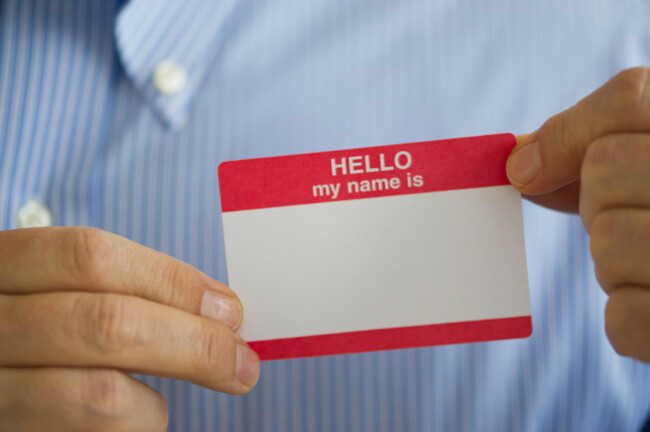
jersey-city-new-jersey-close-up-of-businessmans-hands-holding-blank-name-tag-studio-shot Names are personal things - some people don't want strangers to know theirs. Alamy Stock Photo Alamy Stock Photo

However, a perspective I didn’t consider was put to me by a barista I have the daily chats with when I am buying my coffee. It is general practice for the servers to wear a name tag but she told me she hates wearing hers, so she took it off. Her reason? She dislikes strangers knowing her name.

That pulled me up short. When I gave it further thought, it made perfect sense because by wearing a badge with your name on it, you are sharing a very personal piece of information with a complete unknown. Several of them if you work in retail. And happen to be female.

When we are born and right up until we die, the name our parents chose to give us is recorded and filed as our legal identity. What we are called, whether we like it or not, makes us part of a society with rules and regulations. Our registered profile provides us with our right to vote, get married and contribute to the conventions of daily life in general. 

At least until our darling friends christen us with a nickname when we start school – particularly the lads – and before you know it, no-one remembers our birth name at all!

Gwen Loughman is the gatekeeper of four boys, one husband and a watcher over two dogs.

Readers like you are keeping these stories free for everyone...
A mix of advertising and supporting contributions helps keep paywalls away from valuable information like this article. Over 5,000 readers like you have already stepped up and support us with a monthly payment or a once-off donation.

Close
8 Comments
This is YOUR comments community. Stay civil, stay constructive, stay on topic. Please familiarise yourself with our comments policy here before taking part.
Leave a Comment
    Submit a report
    Please help us understand how this comment violates our community guidelines.
    Thank you for the feedback
    Your feedback has been sent to our team for review.

    Leave a commentcancel

     
    JournalTv
    News in 60 seconds