Sign in. It’s quick, free and it’s up to you.
An account is an optional way to support the work we do. Find out more.
Sign in. It’s quick, free and it’s up to you.
An account is an optional way to support the work we do. Find out more.
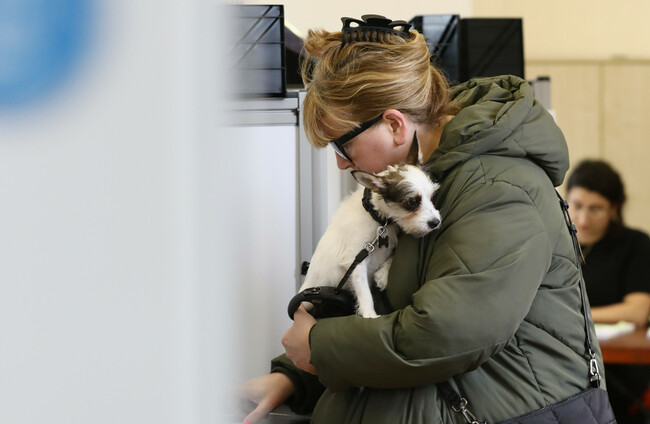
VOTING ON PROPOSED changes to the Constitution has closed following a slow turnout that saw a slight pickup during a ‘teatime rush’.
The public were asked to change two constitutional amendments relating to the definition of family and the provision of care in the home.
Members of the public received two separate ballot papers, one for each vote:
WHITE: This will be the ballot paper you get for the family referendum to change the definition of the family so that it will instead be ‘founded on marriage or on other durable relationships’.
GREEN: This is the one you’ll get asking do you want to remove a section dedicated to women and their ‘life within the home’ being a positive because it assists ‘the common good’. The ballot proposes new wording which will reference ‘care’ and that the State must “strive to support” this.
Political leaders shared messages and photos on social media today as they cast their votes.
Reporting from Eoghan Dalton, Muiris O’Cearbhaill, Lauren Boland, Mairead Maguire and Jane Moore.
First things first: the ballot papers for the Family referendum will be coloured white.
And the ballot papers for the Care referendum will be green.
Registered voters can attend their local polling station to cast their ballot, which is listed on the polling card that was issued to their home address in recent weeks.
If a polling card was not issued to you, and you are registered to vote, you can check where your local polling station is and your voter number on voter.ie or by calling your local authority.
When attending the polling station, you will need a legal and valid form of identification.
A drivers licence, passport or Public Services Card will work, but there are a number of different forms which you can bring. See here for more.
If you’re still doing any last-minute cramming, here’s a quick guide to what the votes are about.
Rónán Duffy breaks down what both ballots contain in a handily brief 500 words.
Among those out early this morning was Ms Justice Marie Baker, the chair of Ireland’s electoral commission.
She’s casted her votes in her home constituency at Trinity Presbyterian Church in Summerhill North in Cork.
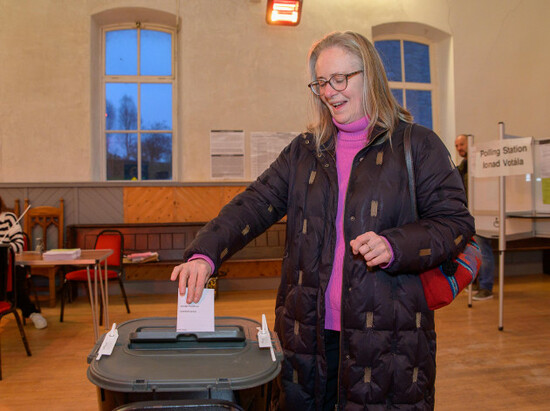
Sinn Féin leader Mary Lou McDonald is among the first of the party leaders out casting a vote this morning, in the polling station in St Joseph’s School, Dublin 7.
At the polling station for the #Referendum2024, the most important thing today is that you come out and have your say 🗳#Ref24 pic.twitter.com/OXluB13fBt
— Mary Lou McDonald (@MaryLouMcDonald) March 8, 2024
Green Party leader Eamon Ryan has also been to the polling station in the last few minutes in the Muslim National School in Dublin 14.
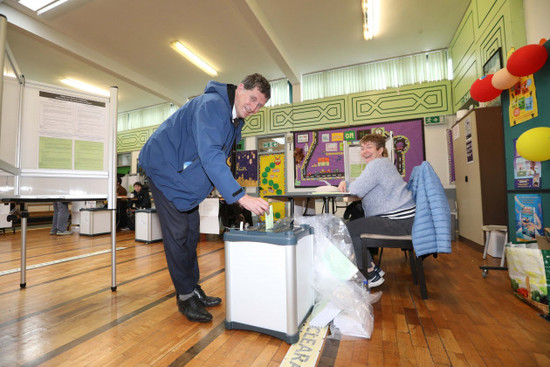
The party leaders keep coming.
It’s Tánaiste Micheál Martin’s turn this time, voting alongside his wife Mary in Ballinlough in Cork.
He’s urged a Yes vote to both ballots.
Very pleased to be here this morning at St. Anthony’s School to vote with Mary.#VoteYesYes for a more inclusive value and understanding of different family types in Ireland today, and to ensure Care is recognised in our Constitution for the first time. pic.twitter.com/Ucbq7ZQFXP
— Micheál Martin (@MichealMartinTD) March 8, 2024
With two proposed changes to the Constitution proposed in today’s poll, it’s meant some understandable confusion.
To avoid this and other matters, here’s a quick guide from Nicky Ryan.
President Michael D Higgins has voted alongside his wife, Sabina, in Dublin today.
The President returned to Áras an Uachtaráin yesterday after spending a week in St James’s Hospital after feeling unwell last Thursday.
Higgins casting his ballot is the first time he has been in public since being discharged.
President Michael D Higgins and his wife Sabina voting in the referenda on care and family. pic.twitter.com/zNmu0aDbfX
— Cate McCurry (@CateMcCurry) March 8, 2024
As it is coming up on five hours since polls opened around the country, turnout figures are slowly hitting news desks nationwide.
Here’s what has been reported so far:
RTÉ reports that between 4.4% and 6% of voters have cast their ballots in areas of Dublin City, as of 10.30am.
Elsewhere in Leinster, the public broadcaster is reporting that turn out is slow, with polling stations around the province citing levels of 2% or 3%, and lower in other areas.
In towns such as Rathvilly, Co Carlow, turnout has been notably low, at 0.32%.
In Wicklow less than 1.5% of the electorate in the west of the county has voted so far this morning.
Turnout rates in Limerick are reported by RTÉ at 1.4% and 2.4% and less than 1% in some places.
Galway Bay FM reports that, out of the 345 polling stations in both constituencies of Galway, just 3% of voters have cast their ballot so far.
Labour Party leader Ivana Bacik has joined other members of the Dáil who have cast their ballot so far today.
Voting in Dublin today, Bacik said on X, formerly Twitter: “Glad to Vote YesYes this morning.”
The party was originally hesitant to back the Government’s ‘YesYes’ campaign but chose to do so after its alternative proposals were not accepted in January.
Glad to #VoteYesYes this morning #IWD2024 pic.twitter.com/0TqwaqesTK
— Ivana Bacik (@ivanabacik) March 8, 2024
Junior business minister and Dublin Rathdown TD Neale Richmond also voted this morning.
Richmond shared his vote on X just 25 minutes after polls opened at 7am this morning.
Vote cast and it’s a Yes Yes from me! Now off to Mayo for the day.
— Neale Richmond (@nealerichmond) March 8, 2024
Vótáil mé agus vótáil mé tá tá. Anois amach go Maigh Eo don lá. pic.twitter.com/980XOnvASX
Minister of State Jack Chambers has cast his vote in Dublin West.
I cast my vote in todays referendum in Dublin West in support of the two proposals. #VoteYesYes - to make the definition of family more inclusive and to recognise care provided by all family members at home 🗳 #Ref24 pic.twitter.com/7MGsTxvSui
— Jack Chambers TD (@jackfchambers) March 8, 2024
Ireland’s previous referendums in recent years on marriage equality and the Eighth Amendment attracted quite a lot of international attention.
Today’s votes haven’t reached the same level of interest, but here’s how a couple of international media outlets are covering them.
The New York Times reports: “For more than eight decades, Ireland’s Constitution has included language enshrining the role of women in the home, which equality advocates have long seen as a relic of a patriarchal past. On Friday, the Irish public will vote on proposals to change that language and to broaden the definition of what constitutes a family.”
“The voting coincides with International Women’s Day and could be another milestone in a transformative few decades during which Ireland has reshaped its Constitution in ways that reflect the country’s more secular and liberal modern identity.
“If passed, the amendments would provide the latest updates to the Constitution, a document originally written in line with the values of the Roman Catholic Church and ratified in 1937, when religion and social conservatism dominated society.”
The Guardian writes that “when the Irish government announced it would hold two referendums on International Women’s Day it billed the votes as opportunities to embed inclusivity and equality in a constitution dating from 1937″.
“Compared with the landmark 2015 same-sex marriage referendum and the 2018 abortion referendum this outing to polling stations appeared a relatively low-stakes exercise in constitutional tidying up.
“But confusion, apathy and criticism of the amendments’ wording have raised the possibility of an embarrassing defeat for the government and progressive groups that have urged a ‘yes, yes’ vote.”
According to RTÉ News, turnout in Dublin constituencies has been slow – here’s some figures as of 12.30pm:
Tullamore is doing better than Offaly as a whole – 10.5% versus 8.25%, as of midday.
In contrast, neighbouring Laois was at 6.1% but just 5.49% in the town of Portlaoise, according to RTÉ.
Seven hours down, another eight hours to go until polls close.
If you’re one of the many people who haven’t voted yet, here’s a refresher on the logistics to know:
Michael Healy-Rae cast his votes in Kilgarvan earlier.
The Independent Kerry TD stressed the importance of having one’s say in the referendums.
Just cast my vote here in Kilgarvan on today’s referendums, I voted No No to both.
— Michael Healy-Rae (@MHealyRae) March 8, 2024
Whatever way you’re voting, go and cast your vote, it’s so so important to use your voice by voting at the ballot box.
Polls are open until 10pm so there is plenty of time. pic.twitter.com/1x5TFPM1ol
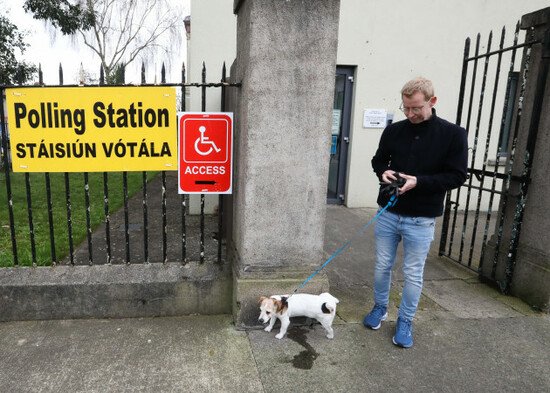
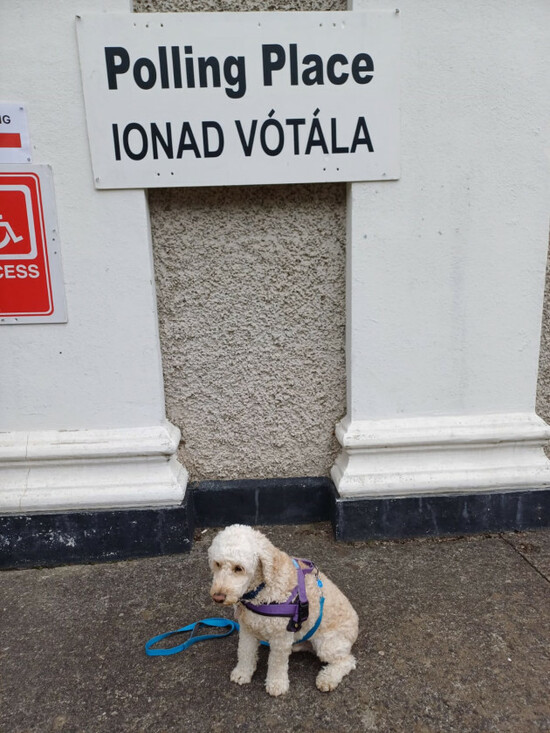
Some four-legged friends were spotted exercising their civic duty. (We’ve been liveblogging for eight hours. Let us have this.)
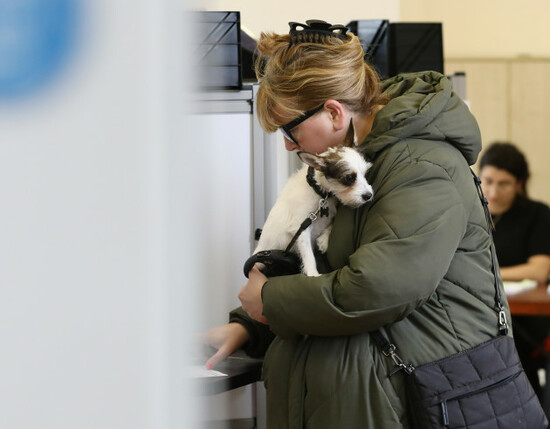
There are now just under five hours left until polls close and the ‘teatime rush’ is expected to boost turnout figures over the course of the evening.
Ireland Votes, an electoral analysis group, said that a “a large proportion of the overall turnout” during elections takes place from 4pm to 7pm.
On its website, the analysts suggest that national turnout currently stands at around 20.4%, as of 4pm.
Some reports have said that a lower-than-average turn out had been expected ahead of today’s poll, which has been reflected in earlier figures from polling stations throughout the day.
However, as of 4pm, Ireland Votes has said Galway has jumped 17 percentage-points since the county’s turnout was last reported on our live blog. It is suggesting that up to 20% of the county’s voters have now cast their ballots for today’s referendums.
RTÉ News has reported similar boosts in Dublin City, with figures jumping across all constituencies into the 20s.
🗳️Turnout for Dublin City Constituencies at 4:45pm:
— Mary Regan (@MaryERegan) March 8, 2024
- Dublin Central: 26%
- Dublin North West 21.8%
- Dublin Bay North: 27%
- Dublin South Central: 28.6%
- Dublin Bay South 20.7% @rtenews
International coverage of the referendums continues, with CNN dedicating a slot to discuss the debates and views of people in Ireland on the Family and Care amendments.
The station’s Becky Anderson spoke to Professor Mary McAuliffe, the Director of Gender Studies at University College Dublin to discuss what the proposals are, what they mean and the debate between the Yes and No campaigns.
CNN Connect The World reporters, on the ground in Dublin, conducted vox pops one young voter and the minister Simon Harris.
Harris is the Minister for Higher Education, not education as is reported below.
On #internationalwomensday , #Ireland is looking to change antiquated gender-based language in its constitution. I spoke to @MaryMcAuliffe4, Director of Gender Studies at University College Dublin and a featured guest of CNN's #AsEquals Defenders Project, on whether the change is… pic.twitter.com/tOl7j9vxuf
— Becky Anderson (@BeckyCNN) March 8, 2024
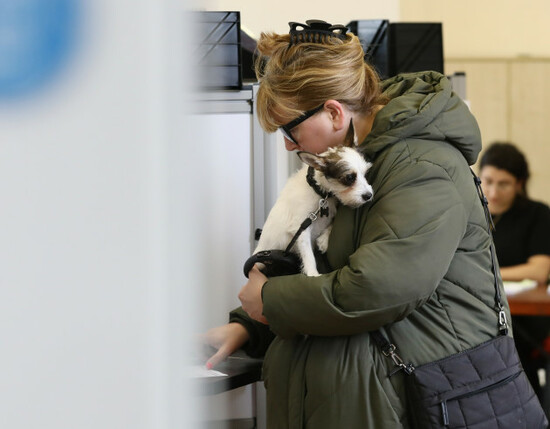
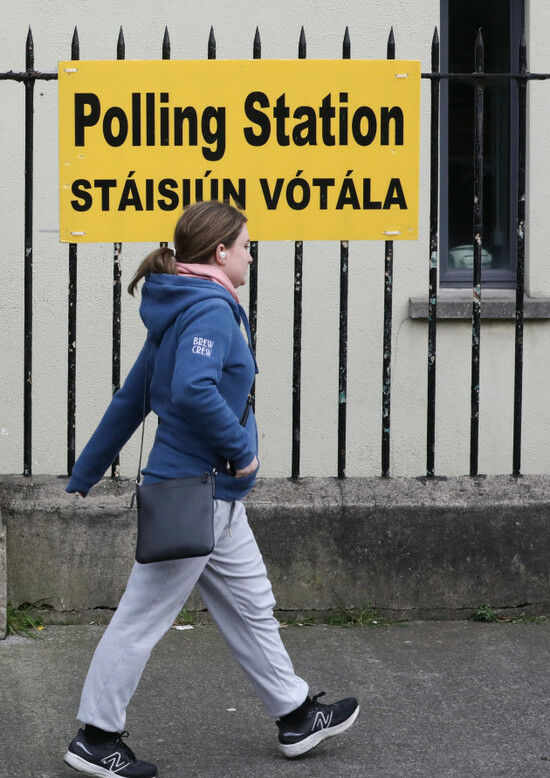
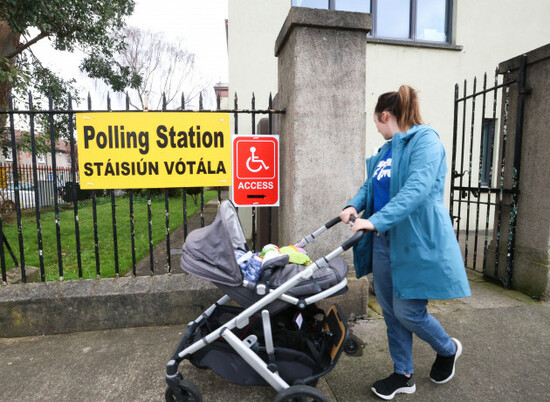
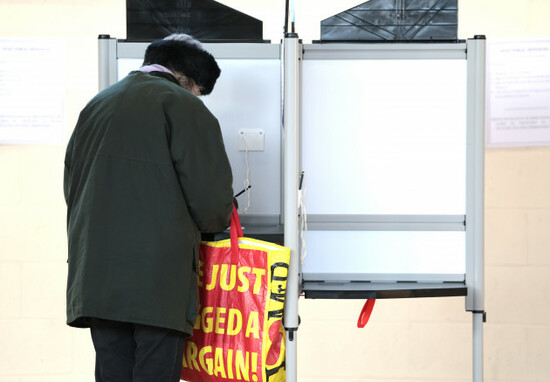
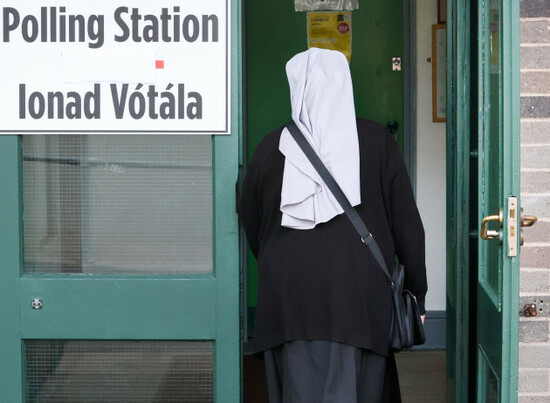
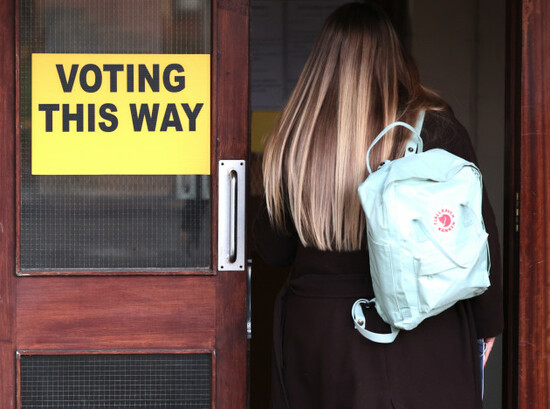
Here’s some of what Ireland’s photojournalists were able to capture today.
The European Parliament’s office in Ireland has told voters to go to the polls to exercise their right to vote as national turnout jumped more than seven percentage points in one hour.
In just under three-and-a-half hour’s time, the polls for the Family and Care referendums will close and preparations for counting will begin across the country.
Today, International Women’s Day, the Parliament’s office chose to highlight the statistics that reflect how Ireland’s female representation in Europe is much higher than the EU average.
The office, posting to X, also implored voters to get to the polls today and in June for the European elections.
38.5% of Irish MEPs are women - a much higher proportion than the seats held by women in the Dáil (23.1%).
— European Parliament in Ireland (@EPinIreland) March 8, 2024
While there's an important vote in 🇮🇪 today, don't forget to exercise democracy and #UseYourVote in the European Elections this June.#EUelections2024 #IWD2024 pic.twitter.com/fMBxHDO2iQ
Meanwhile, national turnout jumped more than seven percentage-points in just one hour as the teatime rush swings into effect.
While still sluggish, at best, more than a quarter of Ireland’s electorate has now cast their ballot on the Care and Family referendums.
Ireland Votes estimates that the current national turnout figure sits at 27.49% as of 5pm.
A slew of constituencies also reported their turnout rates from the Teatime rush, just after 6pm. According to the analysts at Ireland Votes, the rates in these constituencies are as follows:
Suburban Dublin’s turnout was also reported, for the first time today, at 26%.
In Dublin 20, a large number of people are casting their vote currently in St Locan’s School in Palmerstown.
According to Cork’s Returning Office, voter turnout for county Cork is reported, as of 5pm, at 22.3%. The 2018 referendum had a total turnout rate of 34%.
Among the electorate in Cork, was Social Democrats leader Holly Cairns, in Lisheen.
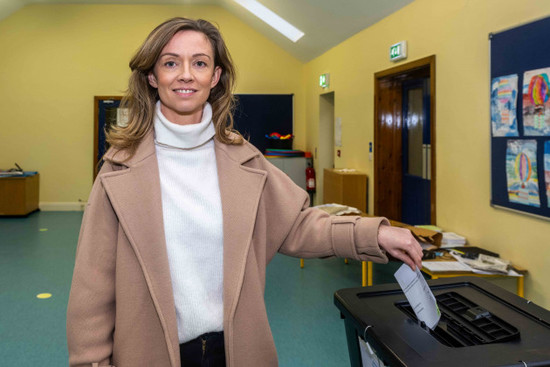
There is just under three hours left until the polls close around the country at 10pm and turnout rates are slowly increasing as the teatime rush comes to a close.
Dogs, nuns, politicians, buggies and voters all arrived at polling stations from 7am this morning to cast their vote in the Family and Care referendums.
Our liveblog posts will wind down for the evening, but The Journal will continue to bring you coverage of the count and the results over the weekend.
Do make sure to get out and vote if you haven’t already.
That’s a wrap! Polls have closed around the country following a day of voting that saw a slow turnout overall, with the teatime rush seeing a slight pickup.
There are no exit polls expected this evening.
Counting will get underway at 9am tomorrow, with the results set to be announced in two separate declarations later in the afternoon.
You’ll be able to follow all the latest developments tomorrow on The Journal.

To embed this post, copy the code below on your site













have your say