Sign in. It’s quick, free and it’s up to you.
An account is an optional way to support the work we do. Find out more.
Sign in. It’s quick, free and it’s up to you.
An account is an optional way to support the work we do. Find out more.
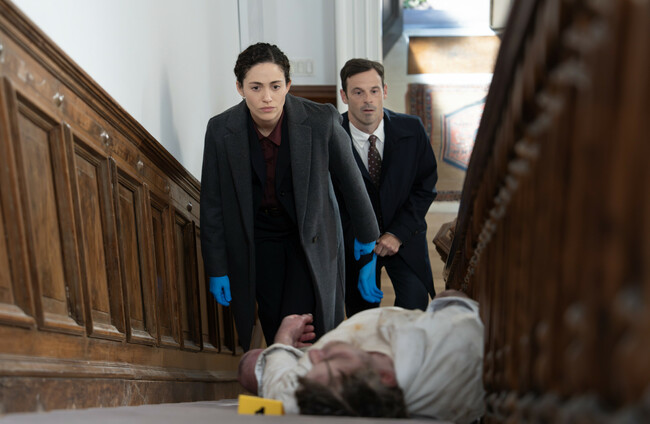
IF YOU WANT to see a dead woman on screen, unfortunately these days you can just go watch an episode of any crime series on television. Viewers have become so used to seeing fictional dead women that a show like Furious, on Disney+, feels like an outlier because its serial killer mostly targets men.
But Furious also goes deeper than we’re used to seeing on shows of its ilk. Yes, it’s a cat-and-mouse story about an FBI agent pursuing a serial killer. But it has layers and layers underpinning that. It brings us a female perpetrator and female investigator who are both complex, traumatised women trying to find a semblance of psychological safety in a dangerous world.
The series comes from the high-calibre creator and executive producer Elizabeth Meriwether, who was also behind Dying For Sex, The Dropout and New Girl. It’s “loosely adapted” from the 1987 film The Black Widow, which starred Debra Winger and Theresa Russell. But while a lot of its themes are still sadly resonant across generations, it tells a story firmly rooted in the Weinstein and Epstein-infected present.
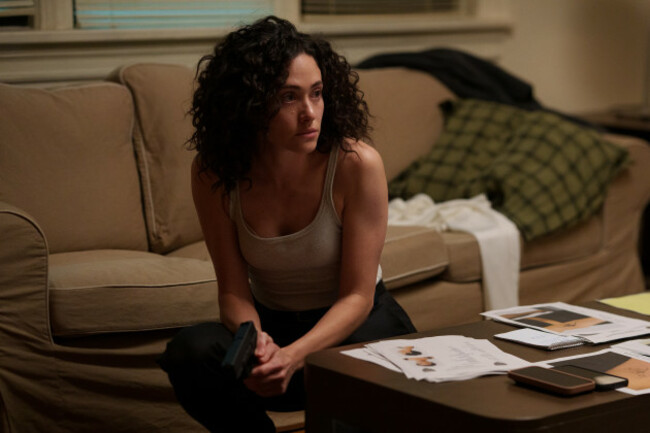
The series protagonist is FBI agent Alice Black (Shameless’s Emmy Rossum), a former NYPD investigator who has moved jobs after an abusive relationship with a colleague. She’s at the bottom of the FBI ladder, answering calls from the public. Scenes at her workplace show her male colleagues making paranoid female callers the butt of a joke, indicating that she’s in a toxic work environment.
Black is called to help with a murder case by a different former NYPD colleague. It involves the mysterious death of the son of a billionaire, which their bosses are keen to rule a suicide. But the death is actually connected to a web of deaths and a young woman (Lola Petticrew) who is highly skilled at staying out of the police force’s gaze.
Rossum is outstanding as Alice, embodying a woman trying to quell waves of emotion from overtaking her, while being reminded of her trauma and the lack of belief in her at every turn.
Alice’s former partner Marshall is played by Jake Lacey, in a strong – though disturbing – twist on the character type he has played in series like The White Lotus and All Her Fault. He has only limited insight into himself, and viewers can see how the system protects him in ways that it won’t protect Alice.
The killer of the billionaire’s son is Catherine (Lola Petticrew from Say Nothing), who we meet in the opening scenes of the series sitting on a brownstone stoop wearing a Halloween mask. Inside the house is a man who she’ll shortly give a fatal injection to.
Petticrew (with a sweet but at times wavering American accent) plays Catherine as a person who is both sexual and sexualised; a tiny young woman who nonetheless has the almost superhuman fortitude that it takes to wreak revenge on those who have wronged women.
Black begins investigating the murders alongside colleague Danny Kelly (Scoot McNairy). Kelly provides emotional and practical support to Alice, and even if at first he appears to be a bit dozy, he is able to verbalise Alice’s vulnerabilities more clearly than she can – yet he doesn’t want to take advantage of them, unlike others.
Another colleague is the beleaguered FBI agent Nora (Quincy Tyler Bernstein) who reluctantly becomes involved in the case alongside Alice. She doles out a lot of hard truths to Alice, but each recognise the trauma that they both hold.
As the case progresses, Alice, Danny and Nora try to connect the deaths to a perpetrator, and in doing so reveal sinister connections to high-profile figures.
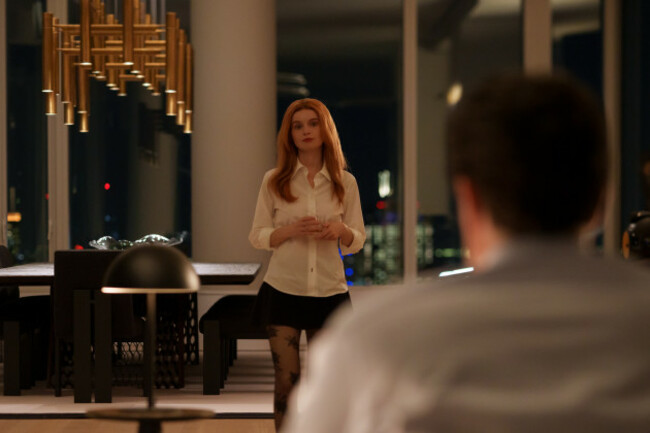
Furious dwells in a place of complexity, with no simple answers about character motivation or behaviour. Lola Petticrew’s character takes on multiple identities, and has multiple sides to her. She’s both troubled and troubling; she’s caring and manipulative. She is traumatised and a victim, but also responsible for trauma inflicted on others. At times, she occupies a playful, childlike persona, playing with stickers and crayons. But moments later, she might be planning her next kill.
Alice, meanwhile, is also traumatised following her abusive relationship. She’s able to find empathy for victims of abuse, but in her own life she struggles to care for herself. The case requires her to enter spaces where she has to encounter constant reminders of her own trauma, forcing her to push down emotions in order to progress the case.
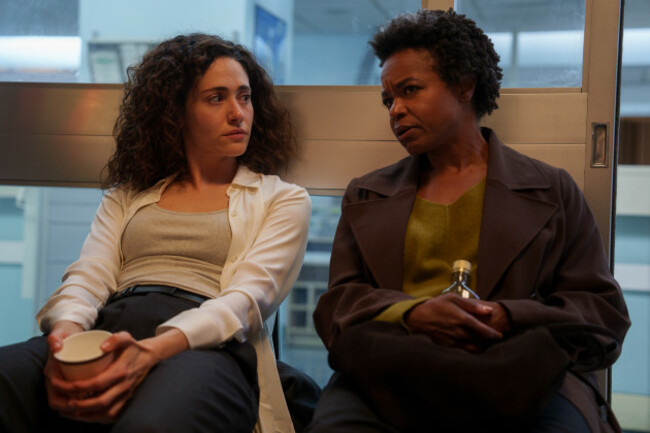
The series rejects the idea of a ‘perfect’ victim, asking us how much we can sympathise with Petticrew’s character. It asks too who really believes victims, when believing them means that family members and friends have to see their loved one in an entirely new light. The truth makes others uncomfortable, and this can end up retraumatising a survivor.
Furious is furious, and the women in the series are furious. Many viewers will recognise their own fury in the show, at systems that don’t work, at a machismo that infects workplaces, and at the sense of helplessness felt by those trying to help victims of abuse.
While it’s on the surface about a serial killer, what it’s really about is the yearning for revenge or retribution, and whether either are possible. In an era where the cruelties of men like Jeffrey Epstein are only just being unveiled, it’s about the ways women can’t speak up about abuse, and the silencing that happens when they try.
The story Furious tells is disturbing, and beneath its glossy TV show veneer lies a collection of hard truths about misogyny and violence in society, and the indelible impact it has on women in particular. It’s an urgent, absorbing watch, and Rossum and Petticrew are at the top of their game in their portrayals of two women – Alice and Catherine – who are constantly fighting against being subsumed by a trauma that society just wants to ignore.

To embed this post, copy the code below on your site







have your say