Sign in. It’s quick, free and it’s up to you.
An account is an optional way to support the work we do. Find out more.
Sign in. It’s quick, free and it’s up to you.
An account is an optional way to support the work we do. Find out more.
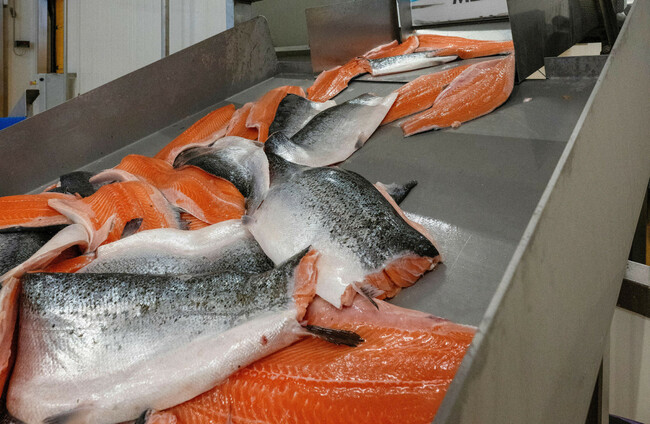
FARMED SALMON ARE being fed on poultry, with chicken-fed-salmon likely to become common on supermarket shelves in the coming months.
A European ban on feeding “processed animal protein” to animals farmed for food production was partially lifted in 2013 to allow poultry for fish feed, on the basis that this was safe. The ban was originally introduced in the wake of the 1990s BSE crisis.
However, chicken-based fish feed has been slow to take off in Europe partly due to fears of a consumer backlash.
Using rendered poultry remnants as feed undermines the aquaculture industry’s attempts to position its product as ‘natural’, or at least an approximation of the wild version: wild salmon are obviously not swimming around the Atlantic feeding on chickens.
Now, increased demand for traditional fishmeal – which is made from small species caught in the open ocean – has sent the industry scrambling for alternatives.
A supply crunch caused by this year’s super El Niño weather event and restricted anchovy fishing in the southern Pacific – a major source of fishmeal – has exacerbated the industry’s problem.
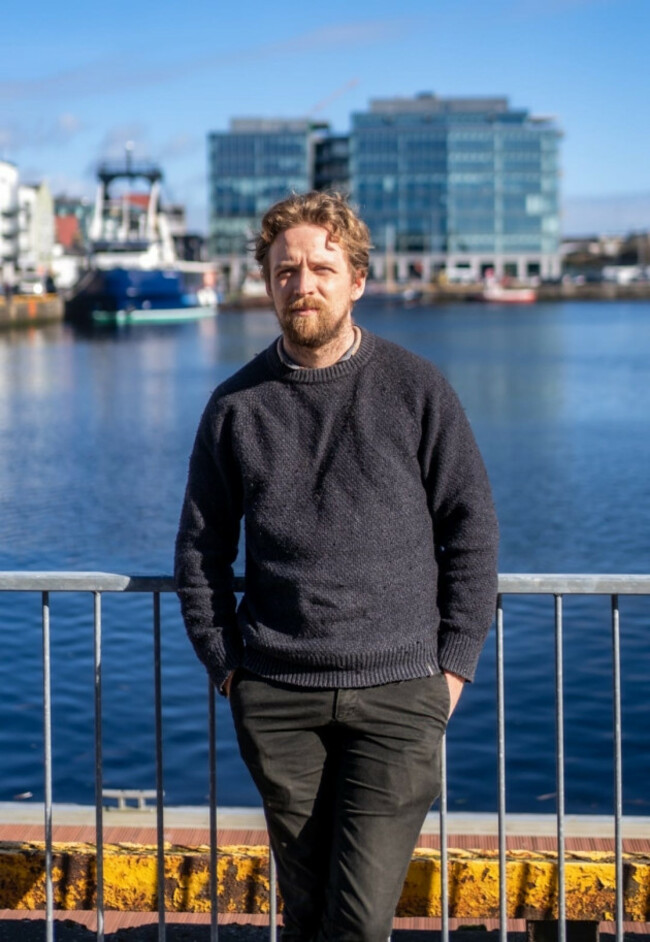
“The margins on farmed Atlantic salmon are quite tight, so when that price goes up, they have to find alternative protein sources at a lower price point to feed the salmon – and the next best thing is rendered poultry product,” explains Finnian Harnett, a fish nutritionist with a PhD in aquaculture.
The stuff being used to make fish feed is a byproduct of the poultry industry – it’s what is left over after the parts of the chicken consumed by humans and the remains used for cat and dog food have been removed.
In other words, it’s very cheap.
From the industry’s point of view, it is also an easily digestible form of protein and widely available, given the scale of mass poultry production globally.
Hartnett believes that only a small proportion of farmed salmon currently on Irish supermarket shelves is likely to have been fed chicken – but in the next few months it will become “way more common”.
“The crop from this summer would be predominantly fishmeal and soybean meal fed, but there will always be a few farms that are using poultry meal. It’s not a novel ingredient. Over the next 12 months there will be a lot of it,” Hartnett said.
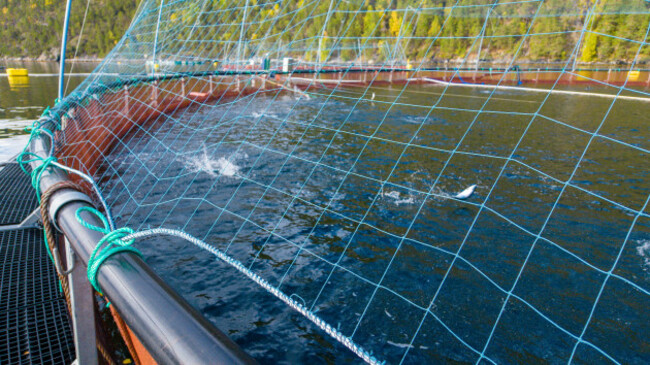
The Financial Times has reported that Mowi, one of the biggest suppliers to supermarkets and the dominant player in the Irish salmon farming industry, is planning to introduce poultry-based feed at its farms in Norway and Scotland. (Mowi did not respond to a request for comment from The Journal.)
Another major Norwegian producer, Lerøy, has already done so – after coming clean about its plans last year.
Irish-produced farmed salmon is typically produced as “organic”, which in aquaculture means lower stocking density and restrictions on the use of medicines.
It does not, however, mean that the fish cannot be fed on rendered chicken remnants.
The organic standard for carnivorous fish such as salmon “prioritises” protein from aquatic species but does not prohibit protein from other animals, the Food Safety Authority of Ireland (FSAI) told The Journal.
So how do consumers figure out what they are eating (and what it has been eating)?
If shoppers are bothered by the idea of chicken-fed-fish, they are likely to struggle to find the information they need to reassure them on supermarket salmon packaging.
Under food labelling law there is no requirement for the type of feed to be indicated on the label for any food of animal origin, including farmed fish, the FSAI said.
Nor is there any requirement for suppliers to be named. That means there is no point in going looking for Lerøy or Mowi’s logos. The law does not require the name of producers to be declared. Salmon packaging will often simply state “produced for [name of supermarket]“.
It looks like salmon from Norway and Scotland is most likely at the moment to have been fed on poultry – but it’s not even easy to figure out where salmon has been produced from looking at the labels, even though it is mandatory to declare the country of origin.
In practice, the country of origin is normally indicated through a single letter at the end of the batch code, often found near the barcode: N for Norway, S for Scotland, IS for Iceland and so on.
Even farmed salmon products carrying Irish brand names will often have the telltale “N” at the end of their batch code, especially if the salmon is not labelled as “organic”.
There is no requirement on producers to inform the FSAI – Ireland’s food law enforcement agency – what they are using in their feed.
However, the FSAI said the EU regulations on sourcing and processing of animal by-products for feed are “strict”.
Lerøy has argued that poultry by-products would otherwise not be used for human food and are also a more sustainable option than another important component of fish meal – soy.
Soy production is a major driver of deforestation in South America.
Liam Carr, a senior lecturer at the University of Galway’s School of Geography, agrees that using poultry byproduct to feed farmed fish is “highly sustainable”, since this waste would probably otherwise be incinerated.
Both Carr and Hartnett point to another important environmental benefit: feeding salmon on chicken protects stocks of the smaller wild fish currently being caught to feed farmed salmon for our supermarket shelves.
Catching small oily fish for fishmeal, or for that matter to make food supplements such as omega 3 capsules, removes an important part of the ocean’s food web.
However, Carr emphasises that the environmental benefits of switching to poultry-based feed only go so far – the wider environmental impact of fish farming remains.
The threats posed include the risk of infection and the fish’s susceptibility to pathogens and parasites due to being packed into cages. Farmed fish – which are kept all around Ireland’s coast – can and do escape.
“These risks are borne to both farmed salmon and also the surrounding wild populations, and habitats,” Carr said.
“It’s unlikely that choice in feed is the only – or major – concern when it comes to maintaining a healthy farmed stock or not adversely impacting wild populations.”
Salmon could be farmed in tanks on land or in closed cages – but this would be a lot more expensive.
Does Carr himself eat farmed salmon? No, he says, he does not, because of the environmental impact of current open cage farming, although he believes changes can be made to make salmon farming more sustainable and allow wild populations to recover.
He suggests mussels and oysters are probably a good option for an ethical seafood choice, as well as locally caught wild fish, once the species is known to be doing well at the moment – there are apps for that.
Ultimately, feeding chicken to salmon is not “natural”, but neither is keeping a migratory species in a cage.
It’s not clear whether consumers will care – we seem to just want more and more salmon. Global demand for the fish increased by 9% in the second quarter of the year, according to Mowi’s latest financial results. Demand for chicken – the most consumed meat globally – also continues to grow.
The food industry will inevitably find a way to make a margin on our seemingly bottomless appetite for animal protein.

To embed this post, copy the code below on your site














have your say