We need your help now

Support from readers like you keeps The Journal open.

You are visiting us because we have something you value. Independent, unbiased news that tells the truth. Advertising revenue goes some way to support our mission, but this year it has not been enough.

If you've seen value in our reporting, please contribute what you can, so we can continue to produce accurate and meaningful journalism. For everyone who needs it.

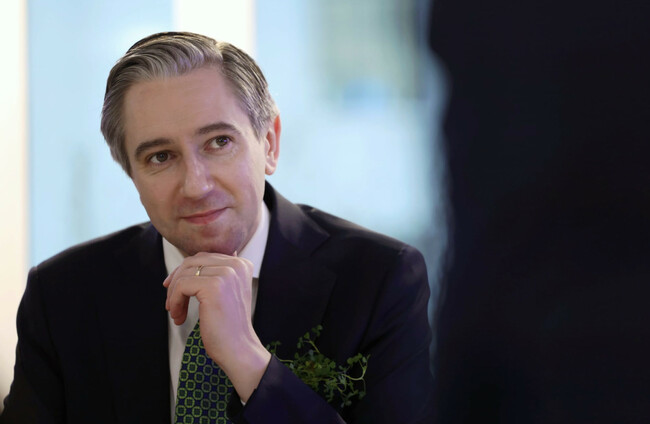
Tánaiste and Finance Minister Simon Harris pictured in Paris during his ministerial trip marking St Patrick's Day.

Simon Harris signals interest in Swedish-style savings scheme

The finance minister spoke to The Journal at the Embassy of Ireland in Paris about plans for a new savings scheme.

GOVERNMENT IS CONTINUING to examine its highly anticipated savings scheme, with Finance Minister Simon Harris saying he finds the Swedish model of a low tax — and up to a certain threshold, tax-free — savings account “very interesting”.

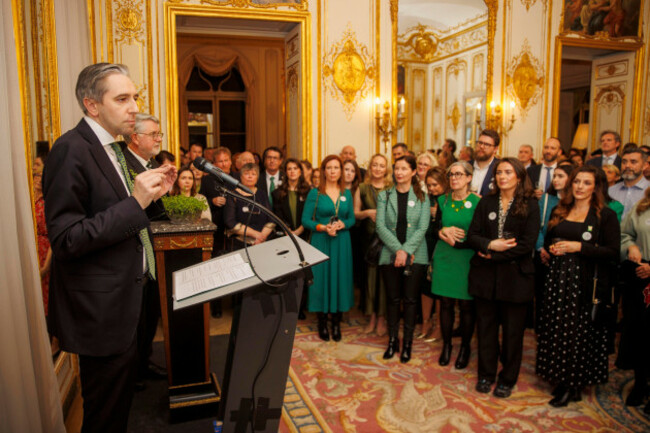
Harris spoke to The Journal at the Embassy of Ireland in Paris on Wednesday evening after a reception with state agencies about his plans to incentivise Irish people to invest by creating a savings scheme that would remove some of the barriers currently in place.

Plans for the scheme are set to be approved in the first half of this year and form part of the proposals for Budget 2027.

He had previously outlined that he was looking at schemes currently on offer in the UK, Canada, and Sweden. Government will hold a forum in the next month and bring together stakeholders to discuss the move.

“What I will say at this stage without prejudice to that is I think what they’ve done in Sweden is very interesting,” he said, outlining the tax-free threshold.

“From my perspective, I think we need to do a form of saving and investment account because it makes sense, and people aren’t making any money on their deposits. I think a lot of middle-Ireland, hardworking people are locked out of investments.”

Sweden’s special savings account 

Sweden’s ISK (Investeringssparkonto), a special savings account, lets savers invest in products linked to the stock market.

Several of these are so-called ETFs (exchange-traded funds) which track the value of the country’s stock market. 

ISK users pay a standard tax rate on their accounts, usually equivalent to just under 1% of the fund value. The rate is linked to Sweden’s government bond yield and so can rise or fall slightly, but is normally about that level.

Crucially, no tax is due on the first 300,000 SEK (€28,000) held in an ISK.

In return for the small flat tax, account holders do not have to pay fees on individual trades. As no tax is due on trades, transactions do not have to be tracked, making investing much more straightforward. There is also no capital gains tax due on profits.

This encourages compounding, which many Irish investors are hindered from doing due to deemed disposal, where gains from ETFs are taxed at 38% every 8 years.

tanaiste-and-finance-minister-simon-harris-speaking-during-a-st-patricks-day-business-reception-with-state-agencies-at-the-embassy-of-ireland-in-paris-during-his-visit-to-france-picture-date-wedn Harris speaking during a St Patrick's Day business reception with state agencies at the Embassy of Ireland in Paris. Alamy Stock Photo Alamy Stock Photo

‘Significant issues around deemed disposal’

Deemed disposal is viewed as one of the main barriers to Irish investors. Asked by The Journal whether he is considering scrapping deemed disposal, Harris said he wouldn’t speculate on what he’s going to do before the Budget.

“I do think there’s significant issues around deemed disposal, and I hear people on that,” he said. 

In Budget 2026, the tax on investment returns was reduced from 41% to 38%.

Harris said he thinks there’s “much more that needs to be done in that space, but the exact menu of what we decide to do will be for Budget day”.

“People rightly highlight the unfairness of it [deemed disposal] and the barrier that it presents as well, so it certainly is something we will look at.”

He said he’s conscious that there are people currently investing in other products, which will need to be accounted for.

Although Ireland suffers with cost of living challenges and high property prices and rents, Harris said the nation is among the best savers in the European Union.

This new scheme will allow “middle Ireland for the very first time to be able to invest in a way that is convenient, and that can match the risk appetite”.

He said he understands the banks are welcoming the idea of such a scheme.

On the issue of lower birth rates, which has declined from 3.85 in 1970 to 1.47 in 2024, Harris told Press Association he believes it raised a number of important policy questions and considerations.

“One, obviously, is the the importance of skilled labour and skilled labour coming to our country and the very positive contribution that people who come to Ireland from abroad to work make in the country.

“How we factor that into our new national migration and integration strategy is important.

“Secondly, I think we also have to look at other issues in terms of how we can help and support people in terms of the social contract.

“People being able to buy their own home earlier, people being able to therefore consider their own life choices at an earlier stage and then other issues around childcare and the cost of raising a family.”

Also on Wednesday, he met with France’s Finance and Energy Minister Roland Lescure, where they discussed increased energy prices, the upcoming Irish presidency of the EU, and how best to progress the Savings and Investment Union (SIU).

Unveiled in March 2025, the SIU “aims to create better financial opportunities for EU citizens, while enhancing our financial system’s capability to connect savings with productive investments”. 

It aims to connect savings and investment needs with integrated capital markets across the EU.

“There’ll always be money on deposit in Ireland, but if a portion of that could be converted to investment, it’s really good for the country, it’s really good for individuals,” Harris told The Journal.

“It could be good for our economic resilience and ultimately that’s good for the banking sector too.”

Readers like you are keeping these stories free for everyone...
A mix of advertising and supporting contributions helps keep paywalls away from valuable information like this article. Over 5,000 readers like you have already stepped up and support us with a monthly payment or a once-off donation.

View 59 comments
Close
59 Comments
This is YOUR comments community. Stay civil, stay constructive, stay on topic. Please familiarise yourself with our comments policy here before taking part.
Leave a Comment
    Submit a report
    Please help us understand how this comment violates our community guidelines.
    Thank you for the feedback
    Your feedback has been sent to our team for review.

    Leave a commentcancel

     
    JournalTv
    News in 60 seconds