Sign in. It’s quick, free and it’s up to you.
An account is an optional way to support the work we do. Find out more.
Sign in. It’s quick, free and it’s up to you.
An account is an optional way to support the work we do. Find out more.
IT’S A DAY of rest, and you may be in the mood for a quiet corner and a comfy chair.
We’ve hand-picked the week’s best reads for you to savour.
1. Inside the trials of Johnny Depp

In case you’ve been wondering what the former-hearthrob-turned-controversial-celeb Johnny Depp was up to, here’s a somewhat sobering read.
(Rolling Stone, approx 53 mins reading time)
Depp is dressed like a Forties gangster, jet-black hair slicked back, pinstripes, suspenders and spats. His face is puffy, but Depp still possesses the fixating brown eyes that have toggled between dreamy and menacing during his 35-year career. Now, Depp’s studious leer is reminiscent of late-era Marlon Brando. This isn’t a coincidence, since Depp has long built his life by imitating his legends – buying an island like Brando, becoming an expert on quaaludes like Hunter S. Thompson.
2. One family, seven children with amputated legs
A shocking look at what happened to a family in Afghanistan one day when an unexploded rocket landed outside their home.
(New York Times, approx 6 mins reading time)
Eleven members of the Mirza Gul family, 10 of them children, gathered around an unfamiliar object on the ground outside their home. It was 6 a.m. on April 29, and the night before, the Taliban had fought Afghan soldiers nearby. Two of the smaller children picked the object up, and 16-year-old Jalil then realized that it was dangerous: an unexploded rocket from the battle.
3. Meet the world’s top art forgery detective
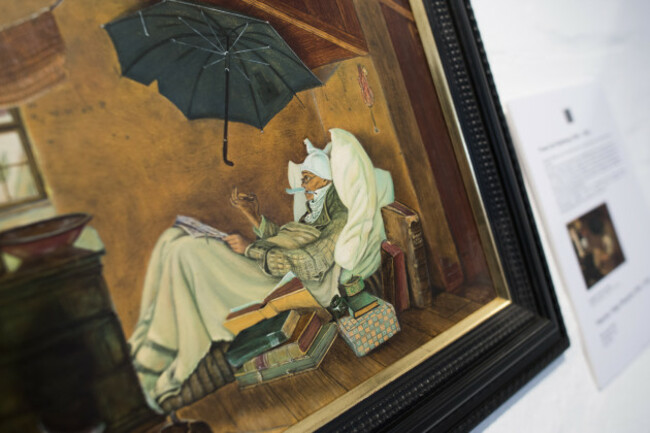
There’s been somewhat of a boom in forged art in the last few years, which means that galleries have to be scrupulous in making sure they aren’t taken in by fake paintings. Meet James Martin, who is skilled at uncovering the truth about forged works.
(The Guardian, approx 33 mins reading time)
The works were full of striking, scrupulous detail. On Jerome’s arm, for example, dozens of faint horizontal cracks have appeared; every so often, a clean, vertical split intersects them. In French canvases from the 18th century, cracks in paint tend to develop like spider webs; in Flemish panels, like tree bark. In Italian paintings of the Renaissance, the patterns resemble rows of untidy brickwork. On the Saint Jerome, the cracks match perfectly.
4. Human trafficking’s invisible casualties
Kenyan runner Moninda Marube was adopted by Maine as a symbol of human trafficking’s invisible casualties. However, his case raises hard questions about prosecuting such cases.
(Down East, approx 32 mins reading time)
He stayed in Kosgei’s house for nine months, during which time, he says, the manager confiscated his passport and visa, pocketed all but a fraction of his appearance fees and winnings, and prevented him from communicating with the outside world via phone or internet. For lack of money, Marube says, he was forced to run in dozens of races, but he didn’t retain enough of his own race income even to consistently afford food, which Kosgei did not provide. Marube says he was forced to share a single room with many other runners. When we first spoke, he told me he couldn’t remember their number or sleeping arrangements; later, he said it was five to seven runners, with some on mattresses on the floor.

There has been a huge amount of coverage this week about the fact the US has been separating children from their parents after they illegally crossed the country’s border. Now this report says that some of those children have been sent to shelters with histories of abuse allegations.
(Reveal, approx 16 mins reading time)
Allegations included staff members’ failure to seek medical attention for children. One had a burn, another a broken wrist, a third a sexually transmitted disease. In another shelter, staff gave a child medicine to which she was allergic, despite a warning on her medical bracelet. Inspectors also cited homes for “inappropriate contact” between children and staff, including a case in which a staff member gave children a pornographic magazine.
6. The orgasmic meditation company – and its dark side
OneTaste is an American wellness company that is known for its ‘orgasmic meditation’ classes. But some of its members say they’ve been coerced and that the company has taken over their lives. The company denies the claims.
(Bloomberg, approx 24 mins reading time)
Michal had been drawn to OneTaste because she felt unfulfilled sexually and in other parts of her personal life. The group seemed full of glowing, attractive people confident they could feel profound sexual pleasure whenever they wanted. She believed her new life would bring her closer to the center of OneTaste, where those who were experts in OM—especially the company’s co-founder, Nicole Daedone—seemed to hold the key to sexual and spiritual enlightenment.
…AND A CLASSIC FROM THE ARCHIVES…

This 2010 article from The Guardian looked at the murder of Sophie Toscan du Plantier in Schull, with her mother talking about the impact of the incident on her life.
(The Guardian, approx 18 mins reading time)
Sophie Toscan du Plantier was 39 when she was killed, beaten to death outside her holiday home near the town of Schull in west Cork and left to lie in a pool of blood. It was two days before Christmas 1996 when her battered body was discovered by a neighbour, lying like a rag doll at the end of a rubble-strewn pathway that led to her isolated house.

To embed this post, copy the code below on your site














have your say