Sign in. It’s quick, free and it’s up to you.
An account is an optional way to support the work we do. Find out more.
Sign in. It’s quick, free and it’s up to you.
An account is an optional way to support the work we do. Find out more.
IT’S A DAY of rest, and you may be in the mood for a quiet corner and a comfy chair.
We’ve hand-picked the week’s best reads for you to savour.
1. Every episode of The Crown – ranked!

The second part of the sixth and final series of The Crown dropped on Friday.
From devastatingly poignant drama to a cringeworthy ghost Diana and a breakdancing Prince Charles – the royal saga has been a rollercoaster ride.
This comprehensive list ranks the highs and lows of the much-watched series.
(The Guardian, approx 18 min reading time)
After six seasons, three queens and 143 award wins, Peter Morgan’s sumptuous royal saga has reached the end of its reign. The final batch of six episodes dropped on Netflix this week, finally dethroning the decades-spanning drama.
Could The Crown restore its reputation in the home stretch? Slightly, but it’s still the sepia-tinted early series that dominate our countdown. As the series abdicates, here’s our definitive ranking of every episode from worst to best…
2. The Humbling of Henry Kissinger
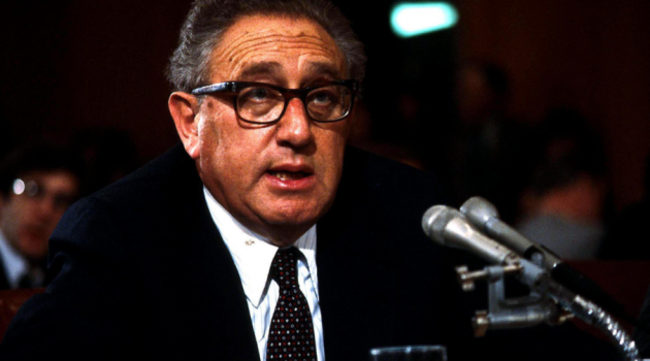
Henry Kissinger, the influential and divisive US diplomat, died at the age of 100 last month. While Kissinger’s intellectual gifts were begrudgingly acknowledged even by his critics, he remains deeply controversial for his ruthless philosophy of realpolitik – the cold calculation that nations pursue their own interests through power.
(The Atlantic, approx 15 mins reading time)
Brilliant, witty, and ambitious, Henry Kissinger made diplomacy the stuff of unrivaled celebrity. He thrived on attention, and would have been thrilled by the flood of coverage that marked his death last week. Whether the obituaries and commentaries put his record in a positive or negative light, almost all of them treated Kissinger as the master of events.
This may be how he wanted to be remembered, but it’s not what really happened. No matter how often Kissinger is described as the Cold War’s most powerful secretary of state and a peerless elder statesman, the truth is that his tenure was often rocky, as full of setbacks as acclaim. By the time he left government, he was viewed by many of his colleagues as a burden, not an asset. Once out of office, the advice he gave his successors was sometimes spectacularly wrong, and frequently ignored.
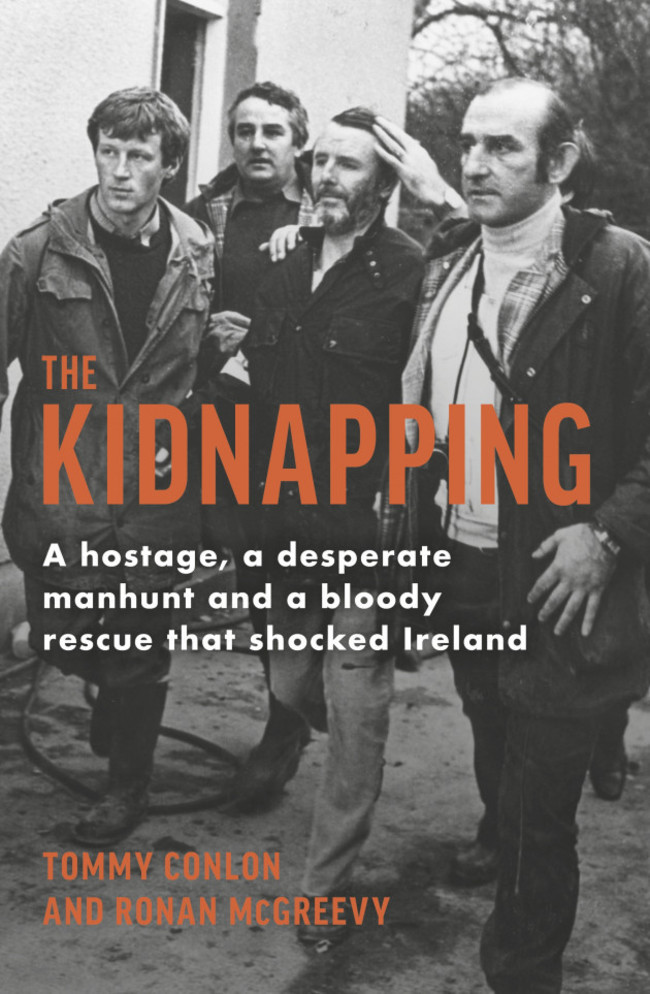
A group for victims of violence related to Northern Ireland this weekend called for a memorial to commemorate two members of the Irish security forces killed by the IRA during a rescue mission 40 years ago.
On 16 December 1983, Private Patrick Kelly and garda recruit Gary Sheehan were killed in Derrada Wood, Ballinamore, Co Leitrim, during an operation to rescue Quinnsworth supermarket executive Don Tidey, who had been kidnapped for 23 days in Dublin.
In light of this, we’re revisiting an extract from The Kidnapping, a book by Tommy Conlon and Ronan McGreevy.
(The Journal, approx 12 mins reading time)
For Paddy, the army was going to be his career. ‘Oh certainly,’ says David. ‘I think he took it very seriously.
From what I can gather, listening to his colleagues, it was his life.’ With his talent for mechanics, Paddy completed an armoured personnel carrier course in 1972 and became an army driver.
It was in March 1974 that he married Caitriona Bradley from Moate, also known as Catherine. He was twenty-six, she was twenty-one. They had first met in The Well pub, a popular country & western music venue in the town.
4. Inside India’s Gargantuan Mission to Clean the Ganges River
The Ganges River is one of the world’s most sacred waterways – and one of its most polluted. To restore it, India is undertaking one of the biggest engineering programmes in the history of sanitation.
(Wired, approx 25 mins reading time)
In the mornings in Varanasi, the air on the banks of the Ganges fills with the scent of burning bodies. On the steps of the Manikarnika ghat—the holiest of the city’s stepped riverbanks, upon which Hindu dead are cremated—the fires are already lit, and mourners assemble by the hundred to accompany their loved ones at the end. Pyres of sandalwood (for the rich) and mango wood (for everyone else) are already burning; on one, a corpse wrapped in white is visible in the flames.
Down at the river, where I’m watching from a boat, some families are engaged in the ceremonial washing of their dead, the corpses shrouded in white linen and decorated with flowers. A few meters away, a man from another family (usually, the honor is bestowed on the eldest son) wades into the water, casting in the ashes of an already cremated relative so that the Ganges might carry their spirit onwards to the next life or even moksha, the end of the rebirth cycle, and transcendence.
5. The terrifying rise in turbulence
What’s the reason for our increasingly bumpy air travel – and does it mean a crash is more likely?
(The Guardian, approx 23 mins reading time)
I look at the people around me: a young woman in a grey hoodie hunched over her phone; a guy watching CNBC. Across the aisle, a smartly dressed woman is inputting data into her laptop in defiance of the return‑your-tray-tables-to-upright advisory, so that when it flies up and imbeds itself in her skull, she’ll be killed by her own spreadsheet.
So, I think, these are the people I’ll die with.
Finally, my mind snags on the thought I have every single time this happens to me on a flight, which, at the moment, seems to be every time I fly: I just can’t believe it. I can’t believe that after all this life, all this effort, all this striving to make things work and get my taxes in on time, and find the right school, and come up with ideas and execute them, and read 10,000-word pieces about the implications of market saturation on TV streaming services, and save for college, and save for retirement, and build a life and sustain it, that this – Whoa, first big bump, there are a couple of yelps and one plucky, “Woo!” – is how it’s going to end: with the bad Game of Thrones reboot in my peripheral vision as we make our initial descent over Delaware.
A Noteworthy investigation has found that dog bite reports continue to rise across Ireland, Patricia Devlin reports.
(Noteworthy/The Journal, approx 13 mins reading time)
When 12-year-old Darryl Brady-Graham was savagely attacked by a dog on the restricted breeds list, his mum Deborah hoped its owner would face the full force of the law.
But in April – two-and-a-half years after the schoolboy received emergency surgery to treat the life-changing injuries to his face – the dangerous dog’s owner was handed a fine.
“The judge issued a €950 fine – tell me that is good enough for a dog that actually could have killed my son,” the north Dublin woman told Noteworthy.
“I walked out of that court that day and I felt sick. People get more of a fine for driving down a bus lane.”
Five years ago our own Daragh Brophy explored how a legal loophole led to an explosion in Irish pirate radio before a 1988 shutdown. We’re revisiting that piece today to mark the 35th anniversary of the event.
(The Journal, approx 11 mins reading time)
At one time, it seemed almost every parish in the country had its own pirate outfit. Broadcast historian Eddie Bohan reckons that between the major players and the smaller, hobby operations there were about 200 stations at the height of the pirate boom.
There had been pirate broadcasters in Ireland going back decades – but on a more limited scale. A court ruling in the late 1970s significantly cut the risk of operating, leading to the subsequent explosion in competition in the sector.
Everything changed after a judge agreed with a station owner’s contention that if a piece of equipment – a transmitter, a mixing desk – could be proven to have an alternative use, then it couldn’t be considered to be illegal broadcasting equipment.
“The loophole meant that if they weren’t able to seize what were known as the crystals in the transmitter they couldn’t prove you were actually broadcasting – so the equipment could be used for anything – for training DJs – anything other than broadcasting,” Bohan explained.
Note: The Journal generally selects stories that are not paywalled, but some might not be accessible if you have exceeded your free article limit on the site in question.

To embed this post, copy the code below on your site












have your say