We need your help now

Support from readers like you keeps The Journal open.

You are visiting us because we have something you value. Independent, unbiased news that tells the truth. Advertising revenue goes some way to support our mission, but this year it has not been enough.

If you've seen value in our reporting, please contribute what you can, so we can continue to produce accurate and meaningful journalism. For everyone who needs it.

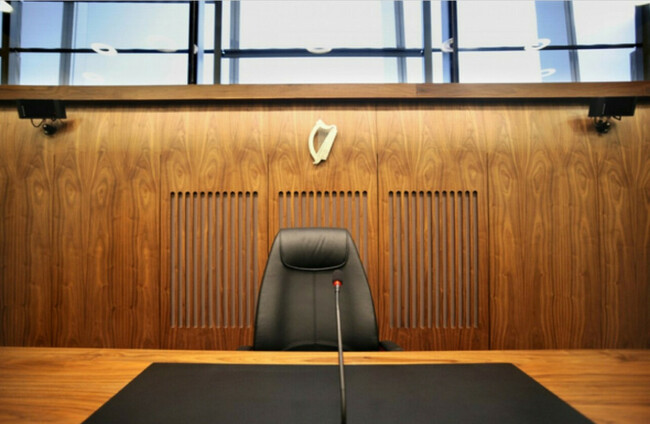
Irishphotodesk.ie

Stepmother facing life sentence after changing plea to guilty of four-year-old stepson's murder

The judge adjourned the matter until 1 December, when the woman will face the mandatory sentence for murder of life imprisonment.

LAST UPDATE | 11 Nov 2025

A STEPMOTHER WHO left her four-year-old stepson with injuries that would typically be associated with car crashes or serious assaults has pleaded guilty to the child’s murder on the fourth day of her trial.

The woman, aged in her 30s, had pleaded not guilty to murder but guilty to manslaughter and was being tried before a jury at the Central Criminal Court.

After the evidence of a child witness was read into the record this afternoon, the accused woman’s barrister Michael Lynn SC asked for time with his client.

When the jury returned at 3.03pm, the accused was arraigned on the charge that she murdered the four-year-old boy at her home in March 2021. She pleaded guilty to the single count.

Mr Justice Paul McDermott thanked the jury for their service and told them they are no longer required to give a verdict on the facts of the case. He adjourned the matter until 1 December when the defendant will face the mandatory sentence for murder of life imprisonment.

The child’s mother, who attended throughout the trial, will make a statement to the court before the sentence is passed.

The defendant can’t be named to protect the identity of the child witness whose evidence was read into the record this afternoon immediately before the guilty plea was entered.

In her opening speech, prosecuting counsel Anne Rowland SC said that the defendant had described to gardaí keeping the boy in his room in the days prior to his death, where he had to sit on the floor and was only allowed out to go to the bathroom or for emergencies.

The defendant said that the boy was a “bold cheeky child” and often had to be grounded.

She told gardaí that on the day the boy suffered his fatal injuries, she “snapped” and recalled “shaking him and screaming at him to behave” before he fell on the floor.

Sentenced

In November 2024, the child’s father was sentenced to seven years in prison having pleaded guilty to endangerment, neglect and impeding the apprehension or prosecution of the stepmother, knowing or believing she had murdered his son.

Passing sentence at the time, Mr Justice McDermott described his actions as “shameful” and said he bore a high level of criminal responsibility for failing to nurture and protect his son.

Authorities first became aware of the abuse against the child when his father called 999 on 13 March, 2021, claiming that the boy had injured his head by falling off the top bunk of a bunk bed.

An advanced paramedic who was first on the scene said he met the child’s father halfway up the stairs. Inside an upstairs bedroom, he saw the child lying on his side on the floor in the foetal position with his head resting on a pillow.

The paramedic noted “yellowish” bruising, suggesting older injuries, and a bump or haematoma on the back of the head. When asked about the older bruises, the father said the child had previously run into a door.

The father also said the child had been “bold, acting up, behaving badly and was grounded and confined to his bedroom,” the paramedic said.

The paramedic said he didn’t want to waste time so he took the boy in his arms and carried him to the ambulance.

The child’s pupils did not react to light, indicating a significant head injury, he said.

He also showed signs of “posturing”, whereby the limbs become extended and stiff, further suggesting a head injury and swelling or pressure on the brain.

The paramedic put a collar on the child to restrict spine movement and called ahead for the paediatric resuscitation room at a nearby hospital to be prepared.

A supervisor who was with the advanced paramedic said she also observed bruises to the boy’s eyes, face, torso and to both legs. He was “very, very pale, almost white” and was not moving.

The child’s father told the paramedic that the boy had fallen from the top bunk of the bed about an hour earlier.

The father also said that the bruises on the child’s face were caused when he had been playing soccer earlier in the week.

He said the child “bruises easily” and when asked about bruising around the child’s eyes, he said the boy “ran into a door the day before or two days before”.

When asked if the child’s mother could be contacted, the father said she was “not in our lives any more”.

Dr Stephen O’Riordan told the trial that he was called in to review the child’s case after he had been brought to a second hospital by ambulance.

He described how the “whole theatre gasped” when they pulled back the drapes and saw the child, covered in bruises.

He documented 17 areas of bruising or injury to both eyes, the ears, arms, legs and back.

The “black eyes,” combined with bruises around both ears are “classic signs of physical abuse,” he said.

Dr O’Riordan said the child’s father had said the black eyes were the result of two falls over the previous two weeks.

Dr O’Riordan said: “Any fall in a four-year-old child that I would see regularly would never have two black eyes. One or the other, but having two would more likely be from a head injury.”

There were possible “grab marks” on one shoulder and to the left elbow and multiple bruises on the back and chest suggesting the boy was “landing on his chest or back a lot, which is consistent with non-accidental injury”.

The most significant injury, he said, was a “hugely extensive injury” to the back of the head.

A laceration to the boy’s liver, Dr O’Riordan said, would have been caused by “extreme force” and would normally be associated with a car accident.

X-rays carried out by another paediatrician showed the boy had previously suffered a fractured rib that was starting to heal.

The healing would suggest that the rib injury was seven to ten days old, Dr O’Riordan said.

Dr O’Riordan said the number of unexplained injuries left him with a “significant concern” about physical or intentional abuse against the child.

A consultant intensive care doctor said the head injuries the boy suffered would usually be associated with a crash where a car hits a wall or a fall from a “very significant height”.

Det Gda Treasa Kelly said she searched the house where the child had lived with his father and step-mother. In the child’s bedroom she found Nurofen for children, arnica ointment and a hot and cold pack for the treatment of minor injuries, sprains and swelling.

The packaging on the arnica ointment, Det Gda Kelly said, indicated that it is a homeopathic remedy for treating bruises.

Garda Michelle O’Carroll said she searched the master bedroom of the house and found dirty laundry including soiled child’s underwear and socks, a soiled bed sheet and a Toy Story pyjama top.

Readers like you are keeping these stories free for everyone...
A mix of advertising and supporting contributions helps keep paywalls away from valuable information like this article. Over 5,000 readers like you have already stepped up and support us with a monthly payment or a once-off donation.

Close
JournalTv
News in 60 seconds