We need your help now

Support from readers like you keeps The Journal open.

You are visiting us because we have something you value. Independent, unbiased news that tells the truth. Advertising revenue goes some way to support our mission, but this year it has not been enough.

If you've seen value in our reporting, please contribute what you can, so we can continue to produce accurate and meaningful journalism. For everyone who needs it.

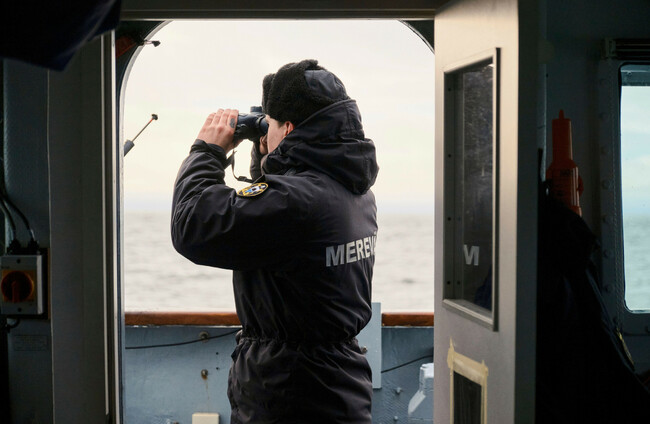
File photo of an Estonian naval ship monitoring the Baltic Sea as part of stepped-up NATO patrols in the region. Alamy Stock Photo

Sweden investigating new Baltic Sea cable damage as EU vows to 'bolster security'

A number of telecommunications and power cables have been damaged in the Baltic Sea in recent months.

SWEDISH AUTHORITIES ARE investigating suspected damage to an underwater cable in the Baltic Sea, following a string of incidents experts believe are acts of sabotage orchestrated by Russia.

Finnish operator Cinia said its C-Lion 1 communications cable linking Finland and Germany had been damaged, but was operational.

“The cable damage is minor and has no impact on the functionality of the data connections through the C-Lion 1 submarine cable. Data traffic can be transmitted over the cable normally,” it said in a statement.

The same cable had previously been cut in November last year with suspicions falling on a Chinese ship.

A string of incidents involving damage to cables and other infrastructure in the Baltic Sea have occurred in recent months, amid soaring tensions between the West and Russia over Moscow’s war in Ukraine.

Swedish police spokesman Mathias Rutegard told reporters that an investigation into suspected “sabotage” had been opened following the latest incident, which occurred east of the Swedish island of Gotland.

“We have opened a preliminary investigation into a suspected broken cable in the Baltic Sea and within the Swedish economic zone,” Rutegard said.

A spokeswoman for the Swedish coast guard, Karin Cars, told AFP they had sent a ship to the site east of Sweden’s island of Gotland and were “assisting with the crime scene investigation”.

Cars said she did not have information about when the damage occurred, but said the coast guard had started heading towards the site the night before.

Swedish Prime Minister Ulf Kristersson said in a post to X that the government was monitoring the situation.

“We take all reports of possible damage to infrastructure in the Baltic Sea very seriously. As I have said before, they must be seen in the context of the serious security situation,” Kristersson said.

EU Response

The EU vowed today to take action to bolster the security of underwater cables in the Baltic Sea after the suspected sabotage of infrastructure.

The European Commission said it would step up security requirements for underwater cables and prioritise financing for the deployment of new and smart cables.

It also said the EU would increase the capacity for the swift repair of damaged cables and would enforce sanctions against “hostile actors” and the “shadow fleet”.

Security analysts say Russia is operating a “shadow fleet” of hundreds of vessels, aiming to dodge Western sanctions – some of whom are accused of damaging cables.

“Today we are taking steps to protect cables, detect and anticipate threats more quickly, and repair damage as fast as possible,” top EU diplomat Kaja Kallas said.

“Anyone found to be responsible for sabotage should be punished accordingly – including with sanctions. Would-be perpetrators must also be deterred,” Kallas said in a statement.

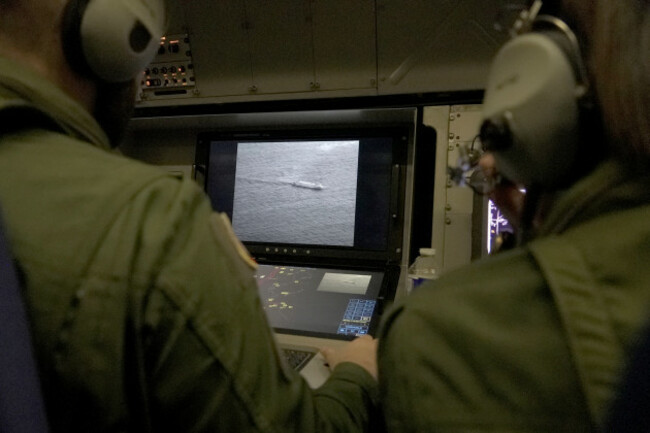
file-crew-members-aboard-a-french-navy-atlantique-2-surveillance-plane-patrolling-over-the-baltic-sea-to-protect-undersea-cables-and-pipelines-from-sabotage-on-jan-23-2025-ap-photojohn-leicest Crew members aboard a French Navy plane patrolling over the Baltic Sea to protect undersea cables and pipelines from sabotage. Alamy Stock Photo Alamy Stock Photo

Western officials have accused Russian vessels of sabotaging undersea communications and power cables in several high-profile incidents in the Baltic Sea in recent months.

European leaders and experts suspect acts of “hybrid warfare” against Western countries supporting Ukraine, and are calling for increased maritime security.

Tensions have mounted around the Baltic Sea since Russia’s invasion of Ukraine in February 2022.

A series of underwater blasts ruptured the Nord Stream pipelines that carried Russian gas to Europe in September 2022, the cause of which has yet to be determined.

In October 2023, an undersea gas pipeline between Finland and Estonia was shut down after it was damaged by the anchor of a Chinese cargo ship.

Two telecom cables, including the C-Lion 1, were severed in Swedish waters on November 17-18 last year.

And weeks later, on December 25, the Estlink 2 electricity cable and four telecom cables linking Finland and Estonia were damaged.

In January, NATO announced the launch of a Baltic Sea patrol mission, Baltic Sentry, to secure critical underwater infrastructure.

According to the International Cable Protection Committee (ICPC), there are an average of 150 to 200 outages per year worldwide, or around three incidents a week.

Tomas Lamanauskas, the deputy head of the UN’s International Telecommunications Union (ITU), told reporters that fishing and anchoring is responsible for 80 percent of all recorded damage.

Author
View 8 comments
Close
8 Comments
This is YOUR comments community. Stay civil, stay constructive, stay on topic. Please familiarise yourself with our comments policy here before taking part.
Leave a Comment
    Submit a report
    Please help us understand how this comment violates our community guidelines.
    Thank you for the feedback
    Your feedback has been sent to our team for review.

    Leave a commentcancel

     
    JournalTv
    News in 60 seconds