We need your help now

Support from readers like you keeps The Journal open.

You are visiting us because we have something you value. Independent, unbiased news that tells the truth. Advertising revenue goes some way to support our mission, but this year it has not been enough.

If you've seen value in our reporting, please contribute what you can, so we can continue to produce accurate and meaningful journalism. For everyone who needs it.

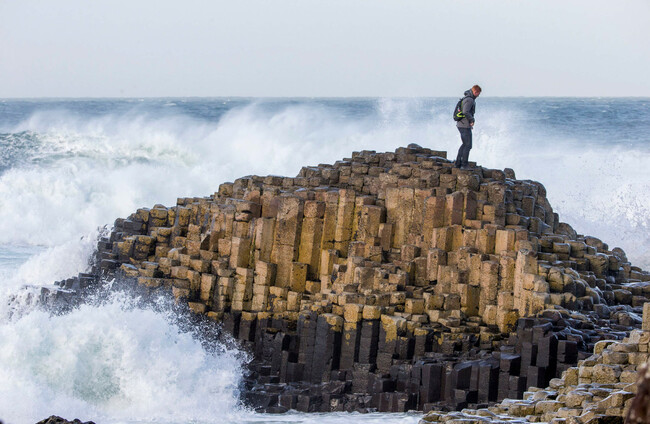
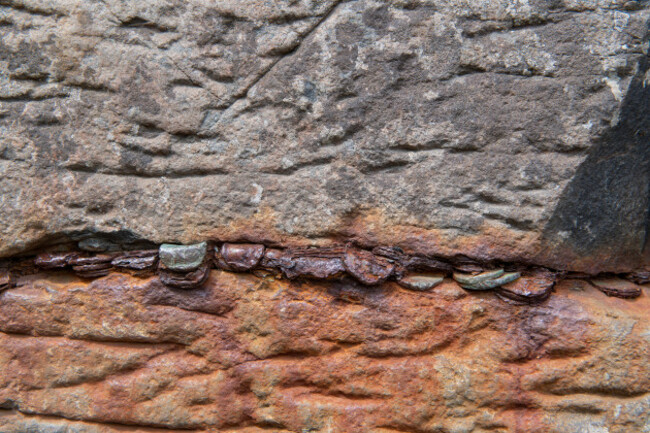
Tourists have been wedging coins into cracks in the iconic basalt rock columns of the Giant’s Causeway. PA

Tourists told to stop jamming coins into Giant's Causeway 'for luck' over fears of damage

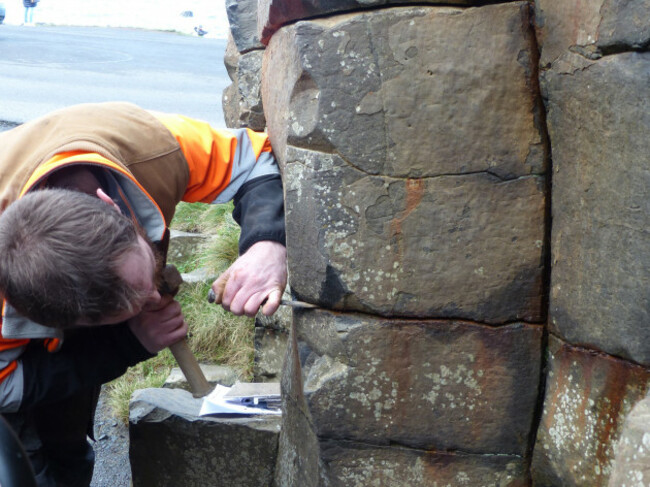
Work is taking place to remove coins which have been left at the Giants Causeway, as they are causing damage to the famous basalt rock formations.

THE GIANT’S CAUSEWAY is being damaged by visitors leaving coins in the cracks of the famous stones.

Scores of coins have been left wedged into the cracks of the basalt rock columns of the Causeway in north Antrim.

Reflecting the broad spectrum of visitors to the attraction, the coins range from UK currency to euros and from the far east and United States.

However the coins go on to rust and expand, putting pressure on the surrounding rock, staining it and causing it to crumble.

coins-pushed-into-cracks-in-basalt-columns-for-good-luck-at-giants-causeway-northern-ireland-uk Coins pushed into cracks in Basalt columns for good luck at the Giant's Causeway. Alamy Stock Photo Alamy Stock Photo

The National Trust said the removal of the coins is expected to cost more than £30,000, and have urged visitors to stop leaving coins at the site.

Dr Cliff Henry, National Trust nature engagement officer at the Giant’s Causeway said visitors should leave no trace.

“We know that visitors really love and cherish the Giant’s Causeway, and many form deep personal connections to this special landscape,” he said.

“We know some may want to leave a token of their visit, but the coins are causing damage and we are urging people to stop the practice and to leave no trace so this natural wonder remains special for future generations.”

He pointed to a report by The British Geological Survey that concludes the coins wedged into the joints and cracks in the rock are having a detrimental impact on the basalt rock of the Giant’s Causeway, both aesthetically and physically.

featureimage

“The report has found that fracturing and disintegration of the basalt rock adjacent to joints and cracks into which coins have been inserted is the result of the ‘expansive delamination of the coins upon oxidation’,” he said.

“In other words, the coins are rusting, and expanding to three times their original thickness, which puts huge pressure on the surrounding rock causing it to crumble. Unsightly streaks of copper, nickel and iron oxides are also staining the stones where the coins are corroding.”

The National Trust, in partnership with Causeway Coast and Glens Heritage Trust, employed specialists in stone conservation to remove as many of the coins as they could without causing further damage on ten test locations.

They hope to go on to remove all the remaining coins, and have appealed to visitors not to leave any more.

Henry added: “It is hoped that if visitors see fewer coins in the stones and hear appeals to stop the damaging practice the problem can be solved.”

“Many coins have a centre of one metal, with a thin coating of another. UK ‘copper’ coins, since 1992, have a steel core with only a thin layer of copper on the outside, while five, 10 and 20 pence pieces are nickel-plated steel.

“When coins start to corrode, the steel often corrodes faster and separates from the different metal of the outer layer. This delamination causes the basalt to flake.

“The coins here also have accelerated corrosion because they are often soaked in saltwater spray and the mixture of metals means they break down faster.

“We protect and care for places so people and nature can thrive. We are appealing to visitors to help us protect the World Heritage Site by stopping the practice of inserting coins into the Causeway stones.”

While geologists will say that the causeway was created by an outpouring of Basalt lava 60 million years ago around the time the North Atlantic was opening up, there are also legends that it was formed by an Irish giant Fionn mac Cumhaill.

The National Trust protects and cares for more than 40,000 columns at the Giant’s Causeway, which is Northern Ireland’s first Unesco World Heritage Site and also benefits from a number of other important designations.

Close
28 Comments
This is YOUR comments community. Stay civil, stay constructive, stay on topic. Please familiarise yourself with our comments policy here before taking part.
Leave a Comment
    Submit a report
    Please help us understand how this comment violates our community guidelines.
    Thank you for the feedback
    Your feedback has been sent to our team for review.

    Leave a commentcancel

     
    JournalTv
    News in 60 seconds