We need your help now

Support from readers like you keeps The Journal open.

You are visiting us because we have something you value. Independent, unbiased news that tells the truth. Advertising revenue goes some way to support our mission, but this year it has not been enough.

If you've seen value in our reporting, please contribute what you can, so we can continue to produce accurate and meaningful journalism. For everyone who needs it.

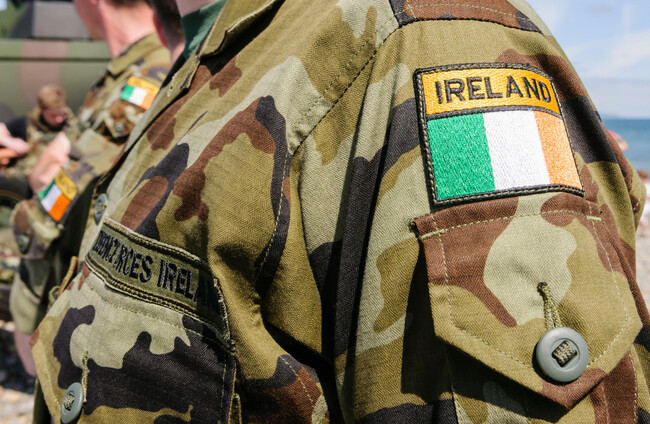
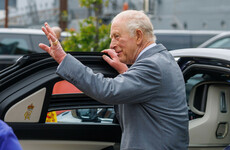
The proposal also seeks to change the number of troops that can be deployed without approval from 12 to 50. Alamy Stock Photo

Proposal to remove UN approval from 'Triple Lock' to be brought to Cabinet this week

Members of the opposition have taken a firm stance against the measure.

LAST UPDATE | 2 Mar 2025

A DRAFT PROPOSAL will be brought before Cabinet on Tuesday by Tánaiste Simon Harris seeking to make alterations to the ‘Triple Lock’ so that a UN mandate is no longer required for Irish troops to be deployed.

Reporting last week suggested the proposal was imminent. Last week, members of the opposition took a firm stance against the measure, and many used time from their contributions about Ukraine in the Dáil to voice their rejection to the plan.

Irish troops in groups of more than 12 cannot be deployed abroad without approval from cabinet, the Dáil and a resolution from the United Nations’ Security Council. The three-step approval is known as the ‘Triple Lock’

Under measures set to be brought before cabinet this week, Government will seek to change the number of troops that can be deployed without prior approval from 12 to 50 and remove the requirement for approval from the UN body.

Speaking to RTÉ Radio One’s This Week, Harris said the requirement for a UN mandate no longer made sense given shifting geopolitical tensions and highlighted concerns that Russia may seek to veto plans to deploy peacekeeping troops to Ukraine in the future.

Harris said the concerns were not only about the Russian Federation, which is a permanent member of the Security Council, but any nation which seeks to block Irish involvement with peacekeeping operations.

The Tánaiste, who is also the Minister for Defence, said Ireland has previously been prevented from joining operations, such as narcotics control and disruption missions, after the state failed to receive a mandate from the UN.

He added that increasing the number of troops who can be deployed without approval from 12 to 50 was based on advice from military and defence force experts, who argue that it is the lowest number of personnel needed to operate effectively.

Members of the opposition this week rejected this claim, and said that a veto from the UN Security Council had not taken place in decades. The Social Democrats repeatedly demanded this week that Harris detail what would replace the UN mandate.

Speaking today, Harris suggested that there would no longer be a Triple Lock, but a double lock. However, the Tánaiste rejected claims that Ireland was seeking to remove the UN from its deployment decisions.

He said that the UN Charter, which gives the Security Council the power to set missions, will be enshrined in the legislation replacing the current laws.

Harris claimed that the Charter ‘talks very powerfully’ about peacekeeping, though the UN admits that the activity is not actually specifically mentioned in the document but rather gives the Security Council the power to set the missions.

Jennifer Whitmore, Social Democrats TD for Wicklow, said today that the inclusion of the UN mandate for the Triple Lock acts as a preventative measure against future governments seeking to approve the deployment of troops without public consensus.

Answering questions by The Journal this week on the issue, Social Democrats’ foreign affairs spokesperson and TD Sinéad Gibney said the current geopolitical make up of the World was the reason why the retention of a UN mandate was important.

She argued that Ireland could instead play a part in requesting and influencing UN reform. Harris today said that reforms to the Security Council were “not looking hopeful”.

He added that there have been instances where Irish troops have also not been deployed to evacuate citizens from conflict zones, and that the state has had to rely on European counterparts for assistance in such circumstances.

“We have to have the flexibility to be able to do that (rescue operations) and do that in a much more efficient way too. And the legislation will provide legal clarity in relation to those sort of situations too,” he said.

Labour’s foreign affairs spokesperson, TD Duncan Smith, expressed concern at the proposed scrapping of the measure. He said that the government is “intent on eroding this key safeguard of our neutrality”.

“Labour has consistently said that any veto over Ireland’s foreign policy, whether from Russia, China, or a future Trump-led America, is concerning. However, simply scrapping the Triple Lock without a full public and political debate is not the answer,” Smith said.

“This is a major shift in how Ireland engages internationally, and the government cannot be allowed to push it through without a serious discussion.” He said that Labour is urging to government to halt and allow cross-party discussion to come to a consensus on the best possible way to balance security with the maintenance of neutrality.

Includes reporting by Emma Hickey

Readers like you are keeping these stories free for everyone...
A mix of advertising and supporting contributions helps keep paywalls away from valuable information like this article. Over 5,000 readers like you have already stepped up and support us with a monthly payment or a once-off donation.

Close
209 Comments
This is YOUR comments community. Stay civil, stay constructive, stay on topic. Please familiarise yourself with our comments policy here before taking part.
Leave a Comment
    Submit a report
    Please help us understand how this comment violates our community guidelines.
    Thank you for the feedback
    Your feedback has been sent to our team for review.

    Leave a commentcancel

     
    JournalTv
    News in 60 seconds