We need your help now

Support from readers like you keeps The Journal open.

You are visiting us because we have something you value. Independent, unbiased news that tells the truth. Advertising revenue goes some way to support our mission, but this year it has not been enough.

If you've seen value in our reporting, please contribute what you can, so we can continue to produce accurate and meaningful journalism. For everyone who needs it.

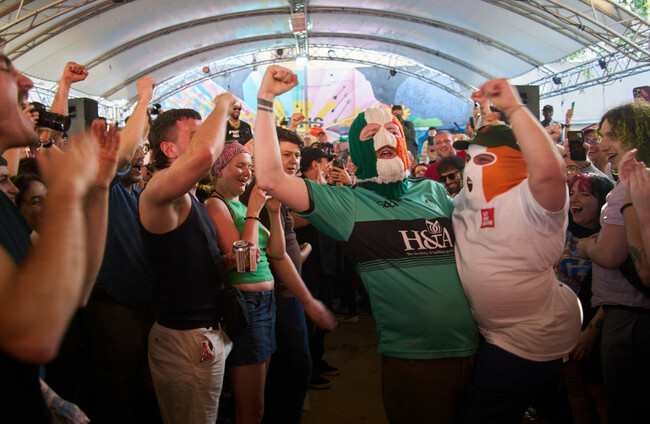
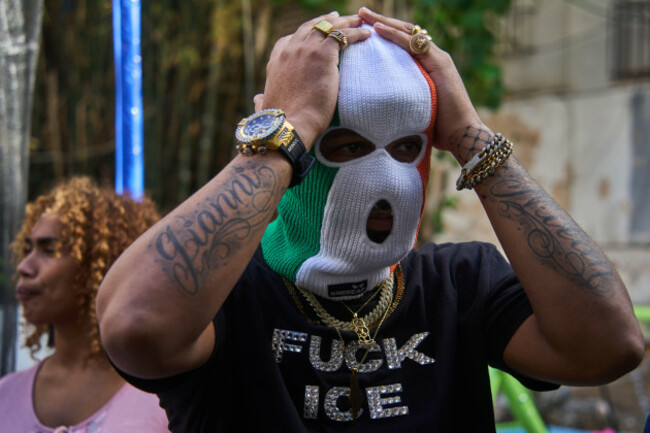
People cheer as members of the Irish-language rap trio Kneecap perform a concert as part of the Our America Convoy in Havana, Cuba, Saturday, March 21, 2026. Alamy Stock Photo

Kneecap in Cuba: Was it an act of protest or propaganda?

Irish solidarity with the Cuban people does not need to involve ‘greenwashing’ the Cuban government, writes Hannah McCarthy.

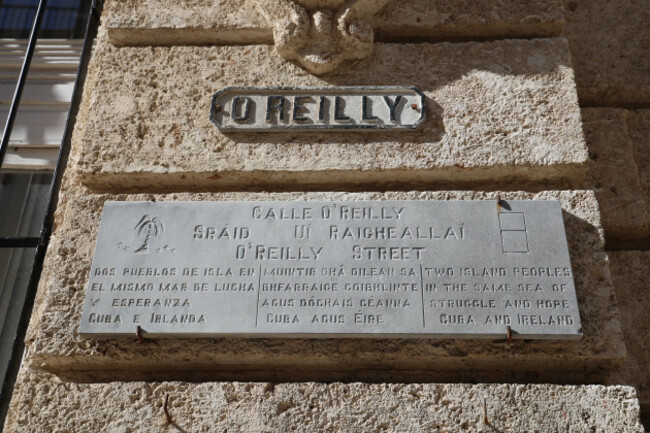
ALONG ONE OF the main streets in Old Havana is a stone plaque which in Spanish, English and Irish says: “O’Reilly Street: Two Island Peoples | In The Same Sea of | Struggle and Hope | Cuba and Ireland.”

On its face, the plaque is a homage to Ireland and Cuba’s shared histories of occupation and colonialism and a call for solidarity between the two countries.

The missing context is that the street’s namesake, Alexander ‘Alejandro’ O’Reilly, who was born in Baltrasna, County Meath in 1723, was not in Cuba during the 18th century as some romantic Irish revolutionary spreading republican ideals.

9F6A9412 O'Reilly plaque in Cuba. Hannah McCarthy Hannah McCarthy

Rather, O’Reilly was deployed to Cuba as a senior member of the Spanish colonial army and partook in some of its worst practices, including public executions and slave-owning.

It is not clear who signed off on the plaque, which ignored the more complex background to O’Reilly Street, although it’s reasonable to assume that a Cuban official must have approved it.

But the plaque does raise questions about how quickly parallels with Ireland’s struggle for independence are drawn – and how important details and facts are obscured when we do.

Cuba is facing multiple crises

Ordinary Cubans today find themselves at the epicentre of several overlapping crises created by the US, their own government and global events. They face the devastating impact of trade and fuel sanctions imposed by the US, the economic fallout from the Covid-19 pandemic, and poor policy planning by the Cuban government, now led by Miguel Díaz-Canel, the first Cuban president since 1959 who is not a member of the Castro family.

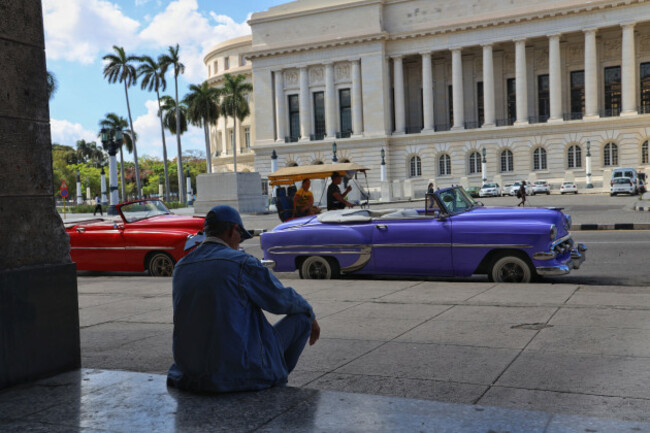
9F6A8566 Vintage cars at the Capitol in Havana. Hannah McCarthy Hannah McCarthy

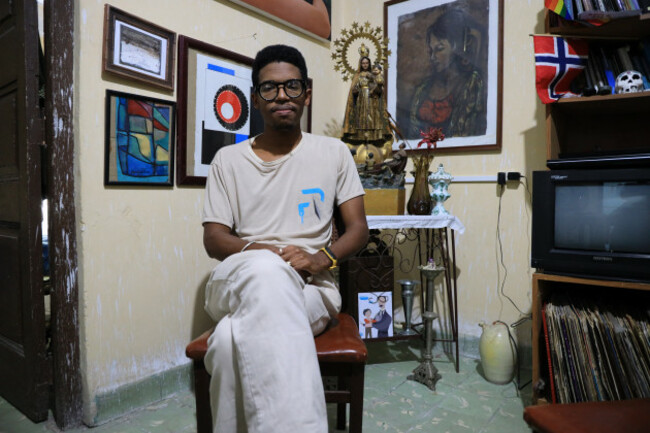
When I was in Havana a few weeks ago, as the fuel crisis worsened, I met with a Cuban academic and filmmaker called Yasmani. At his home in the Cerro neighbourhood, he said: “The Cuban people are held hostage by two abusers. The Cuban government is one abuser, and the United States government is another abuser – but no one romanticises them.”

The Cubans I spoke with had few illusions about US President Donald Trump. “He’s a bad man,” said a waitress at one cafe in Central Havana, who nevertheless said she wanted the US “to do something.”

The average Cuban on the street is largely directing their anger towards Díaz-Canel’s government. After nearly seven decades of a system structured around socialist ideals but tainted by authoritarianism, Cubans appear to want change – or at least, the possibility of change.

Artists on the frontline

Cuban artists and creatives have, in particular, been at the forefront of the rare anti-government protests that have been held in Cuba. When the Cuban government introduced a powerful censorship committee aimed at artists and digital content creators in 2018, a collective of artists and creatives formed the San Isidro Movement in response. The movement faced a violent backlash from the government, and the censorship committee continues to operate today.

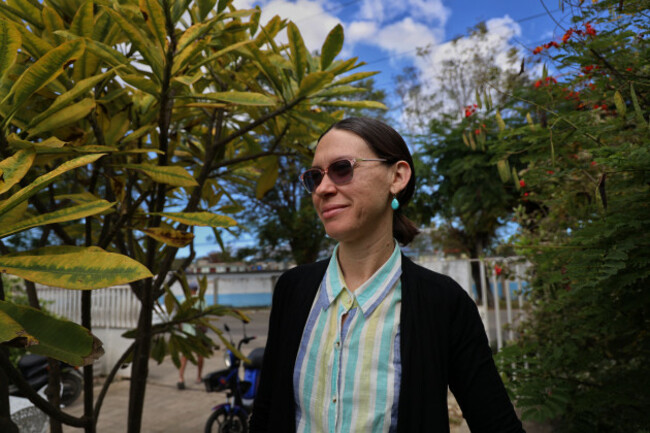
In Havana, I had coffee with a Cuban actress and director called Marcela, who three years ago planned to stage a production of Our Lady of the Clouds, by the Ecuadorian Argentinian playwright Arístides Vargas. “When I tried to stage it three years ago, it was censored,” said Marcela.

9F6A8872 Cuban actress and director Marcela planned to stage a production of Our Lady of the Clouds, by the Ecuadorian Argentinian playwright Arístides Vargas but was barred by Cuba's censorship committee. Hannah McCarthy Hannah McCarthy

The work of Vargas, who fled a military coup in Argentina, often delves into the impact of exile from one’s homeland. In Our Lady of the Clouds, the two protagonists meet in a nondescript location and discover they are from the same town, but neither recognises the other.

For the many exiles who left Cuba due to harassment and intimidation from the government, it is a familiar experience.

Others have paid a higher price than a cancelled show. The Cuban rapper Maykel Castillo Pérez, known as “Maykel Osorbo” helped to write and produce the song ‘Patria y Vida’ (homeland and life), which became a protest anthem at marches held against the government in 2021.

9F6A9121 Yasmani Castro, 34, at his home in Havana's Cerro neighbourhood. Hannah McCarthy Hannah McCarthy

In 2022, Osorbo was sentenced to nine years in jail for offences including public disorder and defamation of institutions and organisations. “He is someone that’s close to a lot of us,” says Salome García, a Cuban activist who tracks political prisoners in Cuba, which she left for Spain in 2018. García now lives in Miami, a heartland for the Cuban American community, which is largely (and often actively) opposed to the Cuban regime in Havana.

US oil blockade

When the Trump administration imposed an oil blockade on Cuba earlier this year in what has been described by UN human rights experts as “a serious violation of international law”, the country was already facing rolling blackouts in rural areas and mass youth emigration.

Since then, traffic in the capital Havana has largely come to a standstill while health workers and teachers have struggled to reach their patients and students. Elderly Cubans living alone are spending long periods without electricity and face delays receiving the care and food packages they rely on from relatives living abroad. Routine surgeries have been cancelled, while pregnant women face stressful journeys to hospitals amid blackouts and fuel crises.

9F6A9811 Hannah McCarthy Hannah McCarthy

The decision for the Nuestra América international aid convoy, including Kneecap, to travel to Cuba by air and sea brought much-needed attention to the crisis facing Cuba. The activists who sailed from Mexico to Cuba in small boats with aid like medicine and solar panels as part of the convoy, in particular, faced a risky journey.

But the overwhelming silence from the Nuestra América convoy regarding the Cuban government’s human rights abuses and the lack of public empathy for the deep frustrations held by many Cubans towards the government in Havana is disappointing.

Kneecap in Havana

When announcing they were joining the Nuestra América convo, Kneecap wrote on Instagram: “The Cuban Revolution is a beacon of hope. Since 1959, Cuba has supported national liberation movements around the world – while sharing its medical expertise with over 130 nations.”

The rap group continued: “The Trump administration is strangling the island, cutting off fuel, flights, and critical supplies for survival”, and said that the convoy will challenge Trump’s imperial aggression, defend national sovereignty and stand up for the cause of Cuban self-determination.

9F6A9382-2 “Fidel Castro is not around nor the historic generation that had this incredible moral authority and support from the population, even from people who weren't communist or socialist,” says Helen Yaffe, a Professor of Latin American Political Economy at the University of Glasgow. Hannah McCarthy. Hannah McCarthy.

When I asked one young Cuban artist in Havana what he thought of the post the Belfast rap duo wrote, he said: “All that propaganda about the Cuban revolution is a big lie that has been maintained for more than 60 years. We could spend years talking about the Cuban dictatorship and its influence on other countries that also ended up in misery.”

Members of Díaz-Canel’s government attended Kneecap’s press conference in Havana. At the conference, Liam Óg Ó hAnnaidh, known as Mo Chara, said: “We as Irish people were Britain’s first colony, we have grown up our whole lives with an understanding of colonialism and oppression and also forced starvation.” While Naoise Ó Cairealláin, known as Móglaí Bap, said they wanted to raise awareness for the “collective punishment that has been dealt to the Cuban people”.

9F6A9063 The Plaza of the Revolution usually attracts scored of tourists taking selfies in vintage cars. Hannah McCarthy Hannah McCarthy

The Irish struggle that Kneecap refers to was not just about 1916 and 1922, but also about 1932 when there was a peaceful transfer of power between the civil war era foes of Eamon de Valera and W. T. Cosgrave. In 1932, Irish voters – many disgruntled not just by The Treaty and Partition but also by the lack of progress on social services and housing in the new Irish state – wanted change.

Many countries in the 20th century emerged from colonisation and occupation, only to have failed to successfully transition to democracy. Ireland remains a rare example from that period where an armed struggle led to independence and a successful transition to a democracy which has endured until today.

Since 1959, there has been no peaceful transfer of power between political parties in Cuba because the Communist Party of Cuba is the sole ruling party. Today, Cuba scores 9/100 on Freedom House’s ranking of political rights and civil liberties (Ireland’s scores 97/100 on the same ranking).

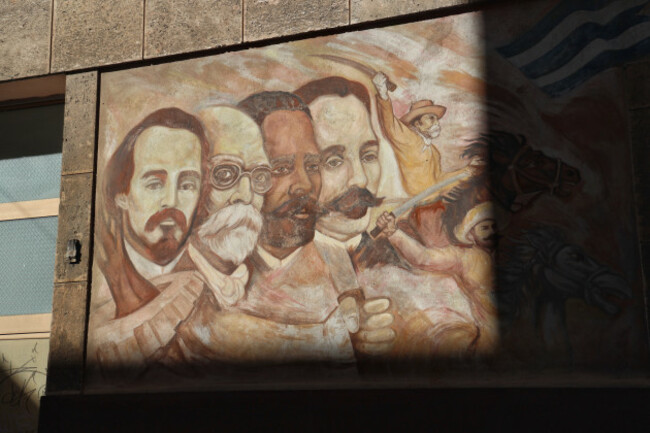
9F6A9798 From left to right: Carlos Manuel de Céspedes (1819 – 1874; Máximo Gómez (1836 – 1905); Antonio Maceo (1845 – 1896); José Martí (1853 – 1895): Martí wrote the Manifesto of Montecristi in 1895 – the foundation for the Revolutionary Party of Cuba – before dying in the Battle of Dos Rios. Hannah McCarthy Hannah McCarthy

In an interview on Channel 4 with Kneecap while they were in Havana, Paraic O’Brien said: “I know you’re not international diplomats or politicians, right? But I’m interested in whether can you oppose the blockade but at the same time call out the Cuban state for like jailing opposition members, curtailing freedom of speech and the press. Can you do both of those things at the same time? And will you?”

Mo Chara replied: “We’re here on human grounds. We’re here down to the fact that people are being starved of food. They don’t have adequate medicine and stuff. We’re not here to tell Cubans how to run the place. We’re just here to provide some kind of relief for the time being.”

He continued: “As you said, we’re not diplomats. We don’t have the ins and outs of this, but we see what’s happening.”

As O’Brien said, Kneecap are not diplomats and no one needs to have a PHD in Cold War history or the Cuban economy to feel able or compelled to do something in response to Cuba’s crisis, where people are facing food shortages and avoidable death just 150 kilometres off the coast of Florida in the year 2026.

But it would not have been hard for Kneecap to draw on their own experience growing up in Belfast and their experience with the British state to find common cause with Cubans who have taken a stand against the Cuban government.

Kneecap did not attempt to draw any parallels between Mo Chara’s own experience of what they themselves called “political policing” and being charged with terrorism offences in the UK (which have since been dropped) for his alleged behaviour during a live performance, with the plight of Cuban musicians like Osorbo, who remain in jail.

eds-note-obscenity-a-friend-of-the-irish-language-rap-trio-kneecap-waits-for-the-start-of-their-concert-as-part-of-the-our-america-convoy-in-havana-cuba-saturday-march-21-2026-ap-photoramon A friend of Kneecap waits for the start of their concert as part of the Our America Convoy in Havana, Cuba, Saturday, March 21, 2026. Alamy Stock Photo Alamy Stock Photo

Despite the Cuban deputy culture minister attending their conference in Havana, the band made no reference to the violence and imprisonment experienced by hundreds of Cubans in 2021 at the hands of the government, after President Díaz-Canel appeared on national television to call on the army to confront protesters – “The order to fight has been given.”

While in Havana, Kneecap did a photoshoot at The National Hotel, a state-owned hotel. The majority of state hotels in Cuba are owned by Grupo de Turismo Gaviota SA, a subsidiary of the Cuban military conglomerate known as GAESA, which is estimated to own 60 per cent of the Cuban economy.

Despite dwindling tourist numbers in the last five years due to US legislation listing Cuba as a state sponsor of terror and the Covid-19 pandemic, the Cuban government has continued to invest significant amounts of money in expanding the island’s number of government-owned hotel rooms, which are both largely unoccupied and unaffordable to the average Cuban. Meanwhile, the education and health care systems that Cubans rely on are crumbling.

At best, the hotel expansion is an example of poor economic planning by a government unwilling or unable to adapt to changing economic winds. At worst, the Cuban military appears to be building hotels on prime real estate as part of a land grab that ensures they will profit financially if Cuba does shift to a market-oriented economy in the future.

9F6A9695 Tourist numbers have dwindled in the last five years due to US legislation listing Cuba as a state sponsor of terror and the Covid-19 pandemic. Hannah McCarthy Hannah McCarthy

I emailed Kneecap’s manager Dan Lambert, to ask whether the band had stayed at a state hotel while in Cuba and whether Kneecap would comment on the Cuban artists in prison and exile.

Lambert replied: “From the framing here, it is pretty clear you have no interest in humanitarian work, the ilegal [sic] blockade or the suffering caused by it. I’m sure you’ll be gutted to hear that no, Kneecap did not stay at the National Hotel.”

When I asked Lambert a follow-up question regarding whether Kneecap stayed at a state hotel, he didn’t answer but said: “Firstly all hotels in Cuba are state owned, that is a well known fact.” (There is a large supply of privately-owned guest houses and small hotels in Havana. I stayed in one a few weeks ago, although I accept they likely have less fuel for generators than the state hotels).

Much like the plaque on O’Reilly Street, the context that Kneecap leave out when they talk about Cuba undermines so much of what they do say.

Readers like you are keeping these stories free for everyone...
A mix of advertising and supporting contributions helps keep paywalls away from valuable information like this article. Over 5,000 readers like you have already stepped up and support us with a monthly payment or a once-off donation.

Close
53 Comments
This is YOUR comments community. Stay civil, stay constructive, stay on topic. Please familiarise yourself with our comments policy here before taking part.
Leave a Comment
    Submit a report
    Please help us understand how this comment violates our community guidelines.
    Thank you for the feedback
    Your feedback has been sent to our team for review.

    Leave a commentcancel

     
    JournalTv
    News in 60 seconds