We need your help now

Support from readers like you keeps The Journal open.

You are visiting us because we have something you value. Independent, unbiased news that tells the truth. Advertising revenue goes some way to support our mission, but this year it has not been enough.

If you've seen value in our reporting, please contribute what you can, so we can continue to produce accurate and meaningful journalism. For everyone who needs it.

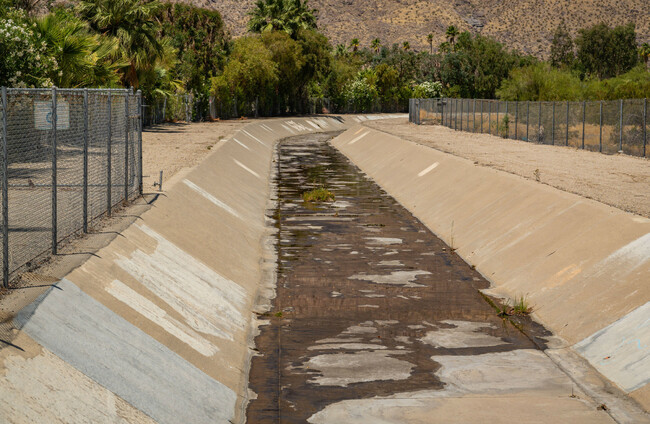
File image of dried up riverbed during long drought in southwestern United States. Alamy Stock Photo

UN warns climate change causing havoc with global water cycle as EU to settle on emissions plan

Divisions on the EU’s green agenda threaten its global leadership on climate change.

CLIMATE CHANGE IS spurring increasingly erratic and extreme swings between deluge and drought across the world, the United Nations has warned.

It comes as EU countries will seek to settle on an emissions-cutting plan to bring to a key UN conference in Brazil, as divisions on the bloc’s green agenda threaten its global leadership on climate.

The UN’s World Meteorological Organisation said in a report today that the world’s water cycle was becoming ever more unpredictable, with shrinking glaciers, droughts, unbalanced river basins and severe floods wreaking havoc.

“The world’s water resources are under growing pressure and – at the same time – more extreme water-related hazards are having an increasing impact on lives and livelihoods,” WMO chief Celeste Saulo cautioned in a statement released with the annual State of Global Water Resources report.

Last year was the hottest on record, leading to prolonged droughts in northern parts of South America, the Amazon Basin and southern Africa.

Parts of central Africa Europe and Asia, meanwhile, were dealing with wetter weather than usual, being hit with devastating floods or deadly storms, the report pointed out.

‘Increasingly erratic’

At a global level, WMO said last year was the sixth consecutive year where there had been a “clear imbalance” in the world’s river basins.

“Two thirds have too much or too little water – reflecting the increasingly erratic hydrological cycle,” it said.

The organisation also flagged how the water quality in major lakes was declining owing to warmer weather, and glaciers shrank across all regions for the third year in a row.

The meltwater had added about 1.2 millimetres to the global sea level in a single year, contributing to flooding risk for hundreds of millions of people living in coastal zones, the report warned.

The WMO has called for more monitoring and data sharing across the board.

‘Face-saving’ deal

The report comes as environment ministers in the EU are gathering in Brussels with the clock ticking down on a UN deadline to produce plans to fight global warming for 2035.

One of the world’s biggest greenhouse-gas emitters behind China, the United States and India, the EU has to date been the most committed to climate action, by some margin.

As such the bloc was hoping to pull ahead and derive its submission to November’s COP30 climate conference from a more ambitious 2040 goal.

But that is yet to be agreed by member states, leaving Brussels scrambling for a last-minute solution.

Denmark, which holds the EU’s rotating presidency, has suggested submitting to the UN a “statement of intent”, rather than a hard target.

That would include a pledge to cut emissions between 66.3% and 72.5% compared to 1990 levels – with the range expected to be narrowed down at a later stage.

“This approach would ensure that (the) EU does not go to (the) UN Climate Summit empty-handed,” said a spokesperson for the Danish presidency of the European Council.

But even that is hardly a done deal and talks today could prove lengthy. One European diplomat suggested reporters prepare “a sleeping bag”.

‘Better than nothing’

The nearly 200 countries party to the 2015 Paris Agreement on climate action were supposed to put forward updated policies in February, providing a tougher 2035 emissions reduction target and a detailed blueprint for achieving it.

But only a handful made the deadline, since extended to September – still allowing plans to be assessed before COP30 starts on 10 November, in the Brazilian city of Belem.

While not as good as a formal submission the “statement of intent” was “much better than nothing”, said a senior EU diplomat.

“It sort of saves the EU face at international level,” added Elisa Giannelli, of the E3G climate advocacy group.

The UN has pushed for world leaders, among them EU chief Ursula von der Leyen, to announce their commitments at the General Assembly in New York next week.

The EU has set a goal of becoming carbon neutral by 2050 under its so-called European Green Deal, and says it has already cut emissions by 37% compared to 1990.

But climate has increasingly taken a backseat in Brussels, as political winds turned.

With wars in Ukraine and the Middle East, security and defence are now top of mind, said Linda Kalcher, director of the Strategic Perspectives think tank, noting that EU leaders’ talks on climate are much less frequent now.

Right-wing electoral gains in several member states and the European Parliament have curbed ambitions, and the European Commission has pivoted to boosting industry, faced with fierce competition from China and US tariffs.

© AFP 2025 

Author
View 12 comments
Close
12 Comments
This is YOUR comments community. Stay civil, stay constructive, stay on topic. Please familiarise yourself with our comments policy here before taking part.
Leave a Comment
    Submit a report
    Please help us understand how this comment violates our community guidelines.
    Thank you for the feedback
    Your feedback has been sent to our team for review.

    Leave a commentcancel

     
    JournalTv
    News in 60 seconds