We need your help now

Support from readers like you keeps The Journal open.

You are visiting us because we have something you value. Independent, unbiased news that tells the truth. Advertising revenue goes some way to support our mission, but this year it has not been enough.

If you've seen value in our reporting, please contribute what you can, so we can continue to produce accurate and meaningful journalism. For everyone who needs it.

Israeli strikes killed at least 112 people and wounded hundreds in Lebanon today. Alamy Stock Photo

US and Iran at odds over ceasefire agreement as Vance claims terms 'just didn't' include Lebanon

Vance claimed that the disagreements over the truce terms “came from a legitimate misunderstanding” over Lebanon.

THE FRAGILE TWO-WEEK ceasefire between the United States and Iran, announced in the early hours of this morning, is already under strain as both sides offer sharply different interpretations of the deal.

The truce was brokered in Pakistan last night, with the US and Iran agreeing to pause hostilities temporarily while negotiations on a longer-term settlement continue.

The ceasefire came after weeks of intense conflict across the region, triggered by joint US and Israeli attacks on a number of Iranian sites last month.

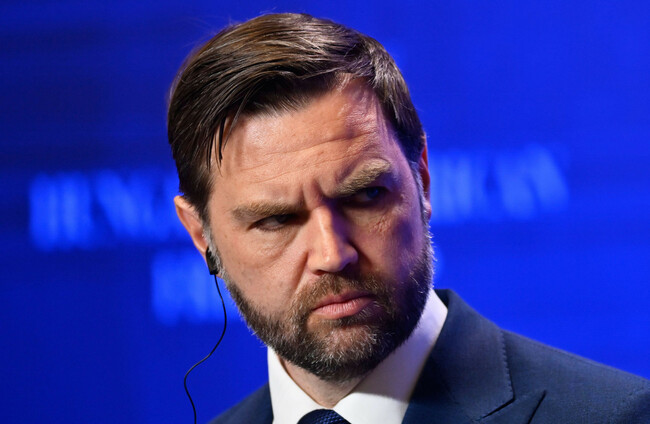
US Vice President JD Vance said today that Iran had misunderstood the scope of the truce.

“I think this comes from a legitimate understanding,” Vance said.

“I think the Iranians thought that the ceasefire included Lebanon, and it just didn’t. We never made that promise,” Vance added, saying that Tehran’s decision to let the deal unravel “is ultimately their choice.”

Vance also said that US President Donald Trump expected Iran to uphold its commitments, warning that breaking the truce could have “serious consequences.”

Iran, however, insists the ceasefire must cover Lebanon.

firefighters-gather-at-the-site-of-an-israeli-airstrike-in-beirut-lebanon-wednesday-april-8-2026-ap-photohussein-malla Firefighters gathered at the site of an Israeli airstrike in Beirut today. Alamy Stock Photo Alamy Stock Photo

Iranian President Masoud Pezeshkian told French President Emmanuel Macron that “establishing a ceasefire in Lebanon has been one of the key conditions of Iran’s 10-point plan.”

Tehran’s parliament speaker, Mohammad Bagher Ghalibaf, accused the United States of violating Iran’s framework, citing ongoing strikes in Lebanon, a drone entering Iranian airspace, and what he described as denied enrichment rights.

“The very ‘workable basis on which to negotiate’ has been openly and clearly violated, even before the negotiations began,” Ghalibaf wrote on X.

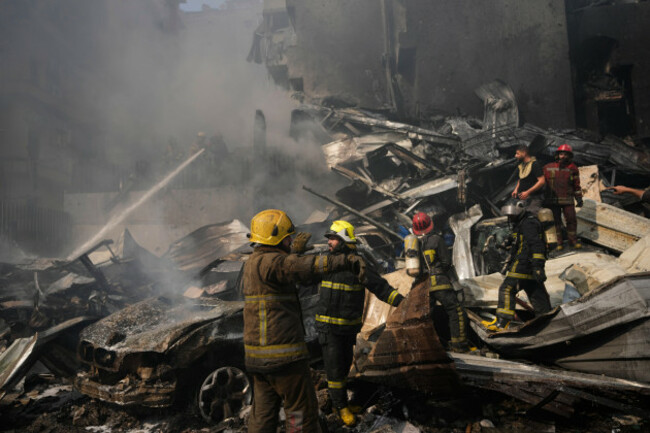
Israel has continued heavy bombardment across Lebanon today, killing at least 112 people and wounding hundreds, despite the US-Iran truce.

Prime Minister Benjamin Netanyahu emphasised that Israel’s operations in Lebanon are separate from the US-Iran agreement.

“We continue to strike Hezbollah with force,” Netanyahu said, warning that Israel’s military objectives remain and insisting the attacks on Lebanon are far from over.

Trump also said that the US ceasefire deal with Iran does not extend to Israel’s operations in Lebanon.

“They were not included in the deal,” Trump said, according to a social media post by PBS News Hour correspondent Liz Landers.

He added that it was “because of Hezbollah.”

Pakistan, which mediated the truce, called on all parties to exercise restraint.

Pakistani Prime Minister Shehbaz Sharif said that violations of the ceasefire agreement had already been reported.

“I earnestly and sincerely urge all parties to exercise restraint and respect the ceasefire for two weeks, as agreed upon, so that diplomacy can take a lead role towards peaceful settlement of the conflict,” Sharif said on X.

The ceasefire has also had wider implications. Iran temporarily reopened the Strait of Hormuz to oil traffic, but reports of closures later in the day by Iranian state media prompted the White House to demand immediate and safe reopening.

Any closure “is completely unacceptable,” White House Press Secretary Karoline Leavitt told reporters earlier.

“I will reiterate the president’s expectation and demand that the Strait of Hormuz is reopened immediately quickly and safely.”

High-stakes talks are scheduled in Islamabad on Friday, with both sides under pressure to clarify the terms and maintain the fragile ceasefire.

Additional reporting from AFP

Need more clarity and context on what is happening in the Middle East? Check out our FactCheck Knowledge Bank for essential reads and guides to finding good information online.

Readers like you are keeping these stories free for everyone...
A mix of advertising and supporting contributions helps keep paywalls away from valuable information like this article. Over 5,000 readers like you have already stepped up and support us with a monthly payment or a once-off donation.

Close
42 Comments
This is YOUR comments community. Stay civil, stay constructive, stay on topic. Please familiarise yourself with our comments policy here before taking part.
Leave a Comment
    Submit a report
    Please help us understand how this comment violates our community guidelines.
    Thank you for the feedback
    Your feedback has been sent to our team for review.

    Leave a commentcancel

     
    JournalTv
    News in 60 seconds