Sign in. It’s quick, free and it’s up to you.
An account is an optional way to support the work we do. Find out more.
Sign in. It’s quick, free and it’s up to you.
An account is an optional way to support the work we do. Find out more.
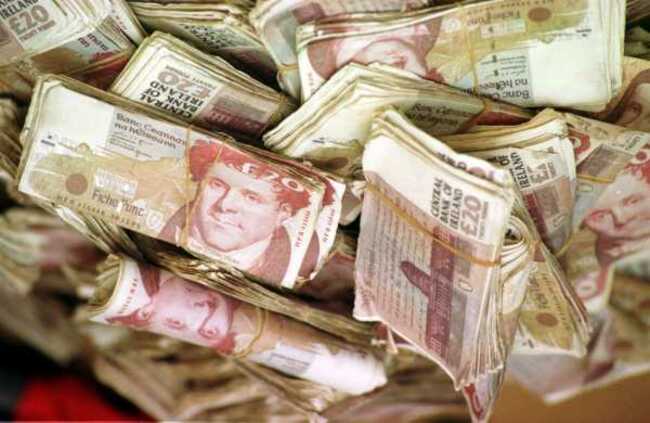
THE CENTRAL BANK has exchanged a staggering €4.1 billion worth of old Irish pounds since the euro came into circulation on 1 January, 2002.
The total figure, £3.24 billion, is the equivalent of €5.7 million every week, or €820,000 a day, for almost 13 years, although the overwhelming majority of it was returned within the first 12 months.
We are still apparently finding punts around the place, however, with more than €1 million being paid out since the beginning of 2015, in return for £872,682.
Finance Minister Michael Noonan this week published the new figures, in response to a parliamentary question from Fine Gael TD Brendan Griffin.
Since 2002, the Central Bank on Dublin’s Dame St has been taking old Irish pounds from the public, at a fixed exchange rate of 0.787564.
This means £100 will get you €127. If you’re exchanging up to £100, you’ll get your euros back in cash, over the counter.
But for anything above that, you have to present your photo ID, fill out this form, and the money will be transferred electronically into your bank account.
You can also send your manky fivers in the post – all the instructions are here.
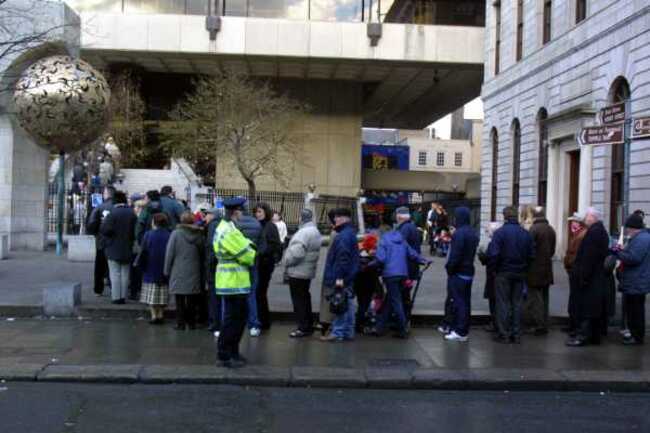
In 2002, the first year of the euro in Ireland, we handed in £3,184,714,329 in return for €4,043,753,052 – the equivalent of more than €1,000 for every man, woman and child in the country at that time.
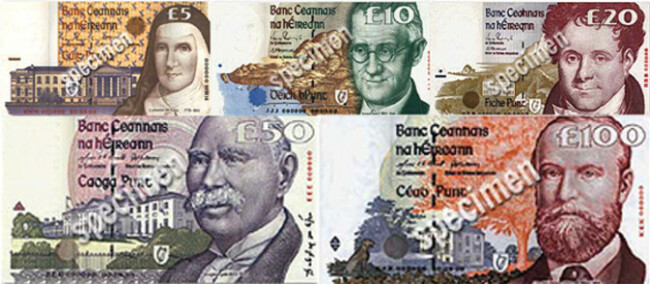
It included:
According to Minister Noonan, the number of annual transactions has been about 1,300 over the last few years.
That works out at an average of roughly €1,125 per exchange.
You might think that, after £3.24 billion worth of jacket pockets, we’ve run out of punts.
But according to figures obtained by this website back in 2013, there was €231.3 million still lying around.
Which would indicate that, as of today, there is still €228.7 million worth of punts at large in Ireland.
So – check behind the couch (again).

To embed this post, copy the code below on your site













have your say