We need your help now

Support from readers like you keeps The Journal open.

You are visiting us because we have something you value. Independent, unbiased news that tells the truth. Advertising revenue goes some way to support our mission, but this year it has not been enough.

If you've seen value in our reporting, please contribute what you can, so we can continue to produce accurate and meaningful journalism. For everyone who needs it.

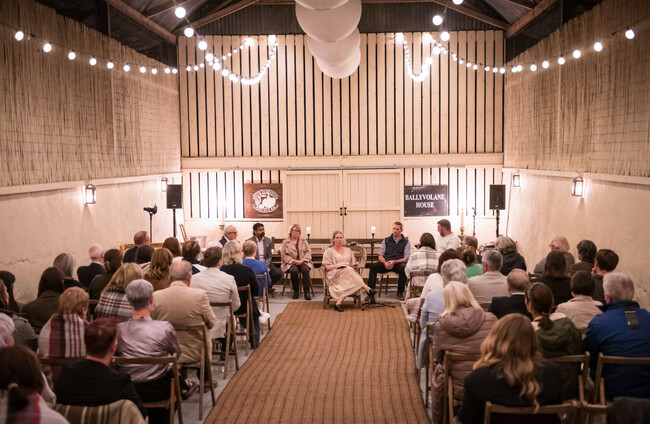
Jane Gormley/Craicly

Trending: Why the Irish storytelling tradition is having a moment

Jane Gormley, founder of Craicly, tells us why people are so drawn to live storytelling.

STORYTELLING IS HAVING a moment in Ireland, with buzzy events offering people the chance to share true tales in a live setting.

But what draws people to setting up these events – and why do audiences love them so much?

One of the country’s most popular storytelling communities is Craicly, run by Jane Gormley who’s based in Co Kildare. It’s gone from being set in a straw shed at her and her husband’s farm to taking place in heritage properties and at festivals.

Gormley grew up in Greystones and moved to rural Kildare around seven years ago. Craicly has its roots in her love for reading and stories, but also in the changes she noticed as the world became more digitised. While she welcomed its positive sides, she became more cognisant over Covid about the digital world’s negative impacts.

While reading an article about the ‘loneliness epidemic’ in Ireland, she wondered if storytelling events could help reconnect people. She thought about “how nice it is to spend time just listening to people or talking to people”, and decided to host a storytelling event at a large shed on her and her husband’s cattle farm. 

At the first Craicly night there were 20 people, 10 of whom were friends of Gormley’s and who were encouraged to bring someone she didn’t know. “At the beginning of the evening, everyone was unsure about what to expect, and double-checking they were not going to be asked to tell a story,” laughs Gormley.

“By the end, nobody wanted to leave. There was such an intimacy to it.”

Because people aren’t professional storytellers, there’s a real sense of gratitude to somebody telling you their story.

Each night involves storytelling, chat and food, and every story lasts around 5 – 10 minutes. The theme links in with the event location, and Gormley helps participants to prepare in order to put nerves at ease.

Seanchaí

Storytelling events build on a long Irish tradition of oral storytelling. The seanchaí were storytellers famed in Irish folklore for passing down tales from generation to generation, ensuring myths, legends and personal stories stayed alive in people’s memories.

One of the most impactful storytelling events in contemporary times is The Moth, which began in the USA in 1997. It has held live events internationally (including here in Ireland) and has a podcast, The Moth Storytelling Hour.

It’s no doubt because we live in such a digitally connected world that Craicly and other events like SeanchoicheDublin Story Slam, and the Cape Clear International Storytelling Festival (which will host events as gaeilge) are so in demand. They get people off their phones and allow them to connect with others in real time. There’s also an intimacy that can’t be replicated online.

“It’s very old school… and it just allows people to feel comfortable talking to each other and asking questions,” says Gormley of Craicly. “Everybody leaves feeling a great sense of purpose. That’s the feedback we keep gathering.” 

Authenticity – Barántúlacht

What makes a good story? A big element is purpose, says Gormley. 

“Your story doesn’t have to be extraordinarily groundbreaking, but when you’re talking about something with a lot of sincerity and authenticity and interest [it works]. You could listen to somebody talk about dry plaster for half an hour, if they really know what they’re talking about.”

What I’m trying to do is find people in local communities who are doing really interesting things and living really interesting lives. And maybe these lives aren’t in the headlines. 
There’s a calmness to it that really encourages people to talk to each other again, and really listen to what people are up to.

What accounts for the recent growth in interest in storytelling events? “I think it comes back to that sense of personal connection,” says Gormley. 

“Irish people are great storytellers,” she adds. “We’re a very lyrical nation, and I think we’re really good with people, really good at bringing people together.”

‘The response was incredible’ – ‘Bhí an freagra dochreidte’

As Craicly’s popularity has continued to grow, Gormley (who has a full-time job in tech recruitment) has brought the night to events like the Waterford Food Festival and the Púca Festival.

She is currently collaborating with Historic Houses of Ireland, hosting Craicly events in open and private houses belonging to its members. The next event is on Friday 27 June in Cork at Ballyvolane House, with the theme ‘Stories of the Irish Salmon’.

The event will include storytellers Frank Hederman of Belvelly Smoke House, Conor Arnold of Arnold Angling Centre, Michael Fawl of Fisheries Ireland and Justin Green of Ballyvolane House. (The price is €70 and includes a welcome drink and a two-course supper. Tickets can be bought via Craicly Stories or Ballyvolane House.)

Storytelling has added a huge amount to Gormley’s life, and she’s happy to see the practice spread. She’d even like to see people “bring little Craicly formats to their homes – [or] do it for their friends for their birthday”.

This summer she’s planning more Craicly events on her farm, while a campaign around championing local rural shops is on the cards for later this year.

“I think rural Ireland is beautiful – there’s so much to celebrate [but] it gets a bit neglected,” she says. “The communities there could do with getting a light shone on them.”

No better way to shine a light on a place than to let its locals tell their stories. 

Close