We need your help now

Support from readers like you keeps The Journal open.

You are visiting us because we have something you value. Independent, unbiased news that tells the truth. Advertising revenue goes some way to support our mission, but this year it has not been enough.

If you've seen value in our reporting, please contribute what you can, so we can continue to produce accurate and meaningful journalism. For everyone who needs it.

Alamy Stock Photo

X to snub Oireachtas committee today, despite Taoiseach writing to company about its attendance

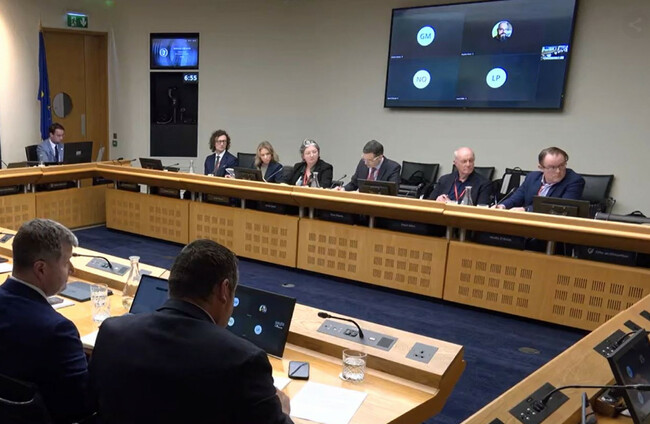
TikTok and Meta reps will be questioned by politicians today but X has refused to attend today’s meeting.

TECH FIRM X, owned by Elon Musk, is to snub the Oireachtas Media Committee today, despite facing calls for the company to answer questions on the Grok AI-generated non-consensual images controversy. 

The refusal to attend today’s committee meeting comes after Taoiseach Micheál Martin wrote to the company seeking it to attend today. 

Last month, Grok, which is available as a standalone app but is most prominently used on the social media site X, began generating non-consensual sexual imagery at the behest of users. Some of this imagery included the digital “undressing” of children.

It prompted government figures to condemn the software and pledge to do more to protect users, particularly children.

The European Commission is now investigating X over reports that child sexual abuse material and non-consensual intimate images of adults were generated through the Grok tool and disseminated on the platform.

The company had given written assurances to Irish regulators and the minister of state with responsibility for AI, Niamh Smyth, that such functionality had been switched off “globally” on 20 January.

X snub to committee

Speaking about representatives from X refusing to attend today’s meeting, chair of the committee, Labour TD Alan Kelly said it is “worrying” and particularly disappointing after Taoiseach Micheál Martin also asked the tech multinational to appear before the committee.

Kelly had sought the help of the Taoiseach last month asking him to encourage X to attend. 

A spokesperson for the Taoiseach confirmed that Martin wrote to the company after Kelly’s request. They said:

“The Taoiseach was asked in the Dáil to contact X about appearing at the Oireachtas Media Committee, and he agreed to do so.

“Following this, the Taoiseach’s office wrote to X in support of the request.

“The Taoiseach has convened a number of meetings on this issue and Coimisiún na Meán is engaging with the European Commission, who have launched a formal investigation into X and Grok’s functions.”

Despite X not attending today, representatives from Meta, Google and TikTok will attend this afternoon.

In its opening statement to the committee today, Susan Moss, head of public policy and government relations at TikTok in Ireland, states that the company continues to make improvements to enhance its content moderation processes.

“The minimum age to use TikTok is 13, and we already take a multi-layered approach to
detect and confirm when people may not have provided their correct date of birth,” she said. 

In the coming weeks, Moss said Tiktok will begin to roll out enhanced technology in Europe to support how its moderation teams detect and remove accounts that belong to someone under the age of 13.

“We remain the only major platform to transparently publish every quarter the number of suspected under-13 accounts that we remove. This follows an initial pilot in Europe over the last year, which led to the removal of thousands of additional underage accounts,” she said. 

Moss said the company has achieved its highest-ever rate of removing violative content through automated technologies (91%) while also increasing its rate of removing content that is reported to TikTok by users (99.3%). 

Meanwhile, Dualta Ó Broin, the director of public policy for Meta in Ireland, is to tell committee members today that Meta believes in freedom of expression, but that it also wants its platforms to be a safe place, particular for young people. 

Speaking specifically about AI-generated imagery, he will tell the committee that Meta takes an extremely strong stance against non-consensual intimate imagery, whether it’s real or AI-generated.

‘Most serious of policy violations’

“We consider sharing of non-consensual intimate imagery to be among our most serious policy violations. Our AI tools are trained not to comply with requests to create nude images or to remove clothes from people shown in images – and we have built-in safeguards to prevent these violating images from being created,” Ó Broin states. 

The question of age verification is complicated, he states, however Ó Broin said Meta believes “that the time has come to move forward with an effective solution at the European level that addresses the concerns of all stakeholders including parents”.

“We want the same thing as lawmakers: safe, positive online experiences for young people and believe parents should decide which apps their teens use, so we support laws that empower parents to approve teen app downloads on the app store,” he said.

Action at a European level to ensure that parents only need to verify the age of their child once would be welcome, he states, adding that a child can then be placed into an age appropriate experience on every single app.

“We believe that the most efficient and effective way in which this would work would be at the operating system or app store level – but we are not dogmatic about this,” he states. 

Speaking ahead of the committee meeting today, Kelly said politicians wanted to hold the meeting with the tech firms to examine how major online platforms approach regulation, online safety and the protection of children and young people.

Aside from today’s committee meeting, Media Minister Patrick O’Donovan will bring a number of memos to Cabinet today on the same subject, including a plan to make online safety a priority during Ireland’s European Union Presidency later this year.

In line with recommendations from the AI Advisory Council, Ireland’s EU Presidency will, in addition to prioritising online safety, be used to advocate for adding the AI generation of intimate images to the list of prohibited practices under the EU’s AI Act.

O’Donovan also intends to ask Coimisiún na Meán to lead an information and awareness campaign to support public understanding and reporting of this type of content. 

Age verification pilot

The minister will also update colleagues on his plans in the coming weeks to begin the rollout of a pilot age verification through the national digital wallet in a bid to keep children safe online.

The need for further criminal justice legislative measures in this area is currently being considered by the minister for justice and the attorney general and online safety will be a core pillar underpinning the new National Digital and AI Strategy 2030, which will be brought to the government shortly by Enterprise Minister Peter Burke. 

Readers like you are keeping these stories free for everyone...
A mix of advertising and supporting contributions helps keep paywalls away from valuable information like this article. Over 5,000 readers like you have already stepped up and support us with a monthly payment or a once-off donation.

Close
JournalTv
News in 60 seconds