Sign in. It’s quick, free and it’s up to you.
An account is an optional way to support the work we do. Find out more.
Sign in. It’s quick, free and it’s up to you.
An account is an optional way to support the work we do. Find out more.
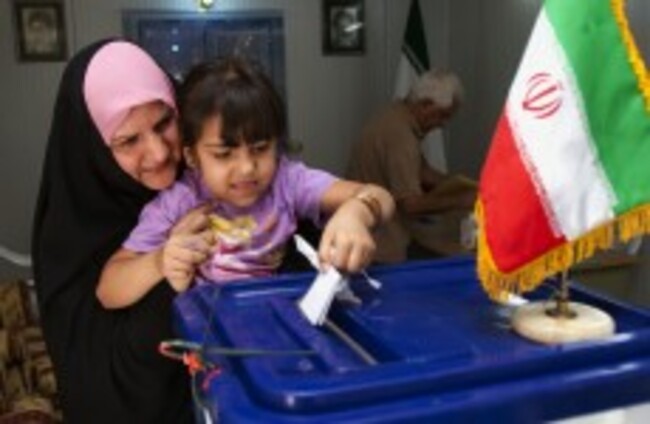
IRAN HOLDS its presidential election today, as tens of millions of voters go to the polls to choose a replacement for Mahmoud Admadinejad.
Here are five things you should know.
Iran’s election overseers allowed eight candidates on the ballot to succeed Ahmadinejad, who cannot run again in this election because of term limits. Six candidates remained on the final ballot.
Most are solid loyalists to the ruling Islamic theocracy, headed by Supreme Leader Ayatollah Ali Khamenei.
Among the main questions: Will pro-reform voters rally behind one of the relative moderate candidates, former nuclear negotiator Hasan Rowhani, or boycott in protest of the relentless crackdowns in recent years?
The Iranian president does not have a direct say in major policies such as the country’s nuclear program or relations with the West.
Those decisions are in the hands of the ruling clerics and its defenders, including the powerful Revolutionary Guard. The presidency, however, can help sway views.
The president also directs the economy, an increasingly important role as international sanctions bite deeper over Tehran’s disputed nuclear program.
Rowhani has surged in recent days as reformists, liberals and others helped his campaign gain momentum.
Rowhani is backed by prominent reform-minded figures including former President Akbar Hashemi Rafsanjani, who was denied a spot on the ballot by Iran’s election overseers.
Rowhani’s campaign adopted purple as its signature colour.
Iran’s security forces are on high alert. In 2009, massive protests rocked the country after Ahmadinejad’s rivals claimed the outcome was rigged in his favour.
There have been no indications of widespread demonstrations this time. Authorities, however, are clamping down on everything from pro-reform gatherings to social media.
The leaders of the 2009 protests, Mir Hossein Mousavi and Mahdi Karroubi, have been under house arrest since early 2011. Both ran against Ahmadinejad and alleged vote fraud.
Mousavi is a former prime minister. Karroubi served as speaker of Iran’s parliament.

To embed this post, copy the code below on your site











have your say