TheJournal.ie uses cookies. By continuing to browse this site you are agreeing to our use of cookies. Click here to find out more »
Dublin: 10 °C Monday 20 May, 2013

Fewer houses for sale in Dublin that at any other time in last five years

Real-estate firm Savills says that the average number of houses for sale in Dublin has fallen by 30 per cent in the last year.

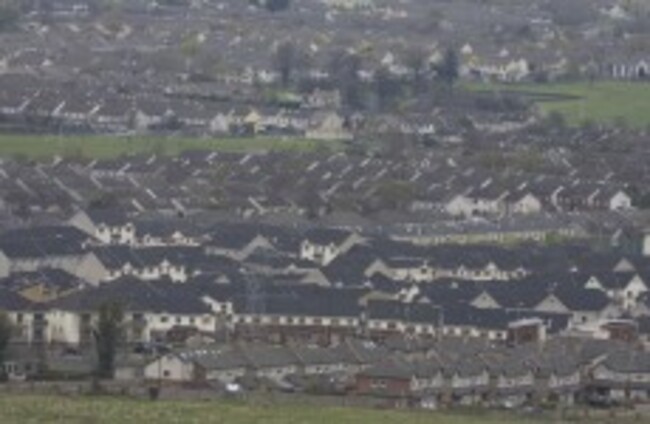
Homes in west Dublin (File photo)
Image: Eamonn Farrell/Photocall Ireland

THERE ARE now fewer houses for sale in Dublin than at any other time in the last five years according to the property group Savills.

The average number of houses for sale in Dublin has fallen by 30 per cent in the last year, Savills says, with the reduction in stock varying greatly depending on which area of the county people are looking in.

From August 2011 to April of this year, there has been an average drop of nearly a third across the board but in areas such as Donnybrook, Ballsbridge and Killester, stock levels have dropped by as much as 60 per cent.

In Blackrock, the reduction has been smaller at less than a fifth (19 per cent) in the last year. Howth, Sandycove and Dalkey have seen a limited drop or none at all.

“Although we have noticed stock levels declining slightly ourselves, it is interesting to see that there are now fewer houses for sale in Dublin that at any other time since mid-2007,” Savills director Ronan O’Hara said.

Sales data from Savills has also shown that the profile of buyers has changed with a market once dominated by a first time buyers now replaced by families who are looking to trade up or down, mostly up according to the figures.

Investors account for just under 6 per cent of those now buying according to figures for the fist quarter of this year with a just over a third (34 per cent) accounting for first-time buyers.

There is also an increasing number of people who sold their house in the period between 2007 and 2009 who are now looking to buy back in.

O’Hara continued: “When we contrast 2012 data with the same period last year and even 2010, we find that First Time Buyers led the activity in those years, followed closely by returning Ex-pats and other overseas buyers.

“The trader-uppers didn’t really feature.  We now see a return of families seeking to trade up or down which ultimately it is starting to have a positive effect on activity.”

Forty per cent of buyers are now purchasing properties in the €300,000 to €400,000 price range, this is the highest percentage followed by nearly a fifth (18 per cent) who are buying properties in the €700,000 to €1 million bracket.

Just under 6 per cent are buying properties valued at €1 million or over that amount.

Savills said this was primarily due to access to funds, lower property prices in general and a more cautious buyer.

Read: Residential property prices continued decline in April – CSO

Read: Number of properties available to rent hits three and a half year low – Daft report

Read next:

Comments (13 Comments)

  • I’d of thought daft.ie would be a better representation as to the availability of houses in Dublin, rather than an estate agent with a vested interest.

    “Oh no look, less houses in Dublin available for sale, prices going to go up now. Time to get in and buy. ”

    When’s this property sales database coming online again?

    Reply
  • I seriously can’t see the IMF standing over this for much longer. It’s blatantly a system designed to protect vested interests.

    We need to see drastically reduced property costs to make the economy more competitive, otherwise we can’t grow out of this mess.

    People need to realise that high property prices drove costs up here. They trickle down to every aspect of the economic life of this country.

    Prices of consumer goods, groceries, restaurants, your cup of coffee etc etc are high largely because cost of rental commercial properties were astronomically high. This drove prices up and kept competition low as the cost of doing business became unattractive to new entrants eg major chains etc Then wage inflated to both pay for high home prices and to keep pace with prices which inflates largely due to huge rents.

    It’s a pyramid system that only benefits a handful of big property speculators.

    A well run country has good quality, affordable housing.

    Reply
  • All I see in Ireland is a long history of manipulation of the planning process and now, it would seem NAMA is distorting the market too, to ensure that maximum profit is made for developers (property speculators) at all times.

    I think the IMF really needs to investigate what’s going on as it’s now funding it and it will directly impact on our ability or inability to dig ourselves out of this mess.

    Whatever about other aspects of our economy, we have a deep, systemic problem with property speculation and associated manipulation of the free market.

    I can’t really see how the housing market in Ireland could possibly inflate. There’s just nothing fundamentally there to prop it up.

    I’m sure you will see a few dead cat bounce moments where there’ll be a slight rise in a small sector of some urban markets. The rental market may also not drop quickly as there will be demand from people who can’t buy due to lack of access to mortgages, but essentially the market’s bust.

    Real situation in Ireland at the moment:

    1) Falling incomes in terms of actual paid wages.
    2) Substantially higher taxes, charges and other costs like insurance and interest on loans.
    3) Massively reduced access to credit resulting in consumer spending slumps and collapsing businesses.
    4) Massively reduced access to mortgages.
    5) Emigration.
    6) Reversal of trend where high-paid migrant construction workers from Eastern Europe filled a lot of rental units. Anecdotally, there would seem to be way fewer people from Poland etc around than there were even last year.
    7) Macroeconomic climate – total instability. We don’t even know if our currency will be around in 6 months!
    8) State day-to-day costs being met by the IMF!!!

    On the supply side :

    1) Massive over supply in most areas.
    2) Market distortion due to houses & apartments being kept off the market.
    3) Artificially high commercial rents due to upward-only reviews in lease agreements.

    If there was a property revival in that climate, it would be utterly bizarre and would probably set all sorts of alarm bells off in Christine Lagarde’s office!

    Ireland needs to see a rise in real GDP/GNP and actual exportable commodities and services and a major reduction in unemployment rates.
    Selling / renting piles of bricks to each other is not economic activity. It’s just yet more speculation!

    We should be benefiting from lowering costs due to lowering commercial rents and lowering residential property costs as it should be making our economy more competitive.

    Instead, we are allowing hype-mongers to whip us into property hysteria again.

    Also, I wouldn’t believe ANYTHING that a newspaper says about property. They spend nearly two decades being entirely funded by their property supplements and all lament the loss of all that advertising space.

    You’re far more likely to get a non-biased story from non-print media e.g. the likes of RTE, which to be fair to Prime Time, George Lee etc did actually point out the enormous property bubble that was coming our way.
    It was largely the print media that stoked the fire.

    Reply
  • The problem is that NAMA has essentially become a developer itself i.e. it has a heap of properties and is drip feeding them onto the market to ensure maximum profits.

    It’s just a state-owned property speculation fund.

    The whole thing seems daft. Instead of letting the market correct and find its actual value and allowing the fire sales to occur and losses to be taken, we are distorting the market using NAMA.

    The result is that the Irish economy is not seeing the benefits of a housing market collapse and is instead using tax payers’ money to ensure that the banks, their investors, and speculators do not make a substantial loss on their absolutely insanely bad investments.

    The deal we got was : 1) Pay over the odd for houses and get into extreme negative equity and then 2) have the state essentially use our money to place a price floor on the market to ensure that we do not benefit from the down cycle of the market thus totally protecting the idiots who slashed money into a bubble.

    It’s a lose:lose deal for the normal punter and a can’t lose deal for the big speculators and banks.

    Reply
  • A fifth of people are purchasing properties in the 700k to 1 million euro bracket. This in itself speaks volumes. When you consider that banks are very reluctant to give out mortgages on this scale, it demonstrates that there is still a signifigcant amount of wealth in the country, despite the huge resistance to the property charge.

    Reply
  • No surprise given the complete lack of repossessions. Why would people sell if the banks are letting them stay in their houses for free? We need repossessions now to get the market moving.

    Reply
  • Eric 12/06/12 #

    I wonder has Ireland seen the last generation of property owners. We have to rid ourselves of the fetishisation of owning property and seeing it as the de facto means of wealth creation, instead adopting a more continental approach and seeing property as a commodity.

    It’s madness to pour your life savings into one asset whose value is influenced wildly by forces completely beyond your control, and leave you crippled with debt for years . The “rent is dead money” brigade will no doubt tear me to pieces but really and truly, I don’t think I know anyone who is ever planning on buying a house.

    Reply

Add New Comment