TheJournal.ie uses cookies. By continuing to browse this site you are agreeing to our use of cookies. Click here to find out more »
Dublin: 18 °C Wednesday 19 June, 2013

‘Four critical decisions’ led to 14-year-old girl’s cancelled transplant

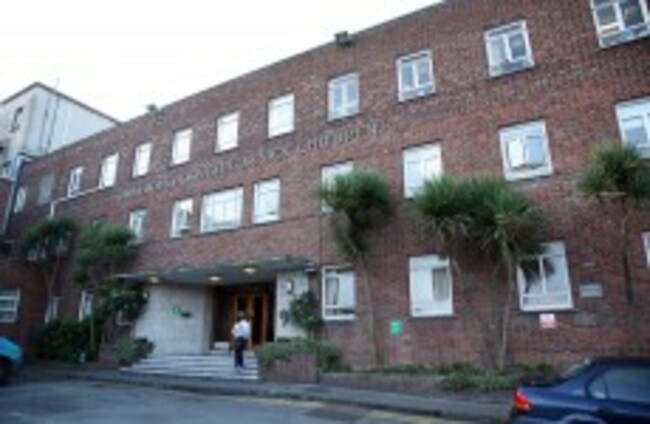
Meadhbh McGivern missed the chance for a liver transplant, because a flight bringing her to London was organised too late.

Image: Albert Gonzalez/Photocall Ireland

THE HIQA REPORT on how a 14-year-old Leitrim girl was denied the chance to travel to London for a liver transplant has identified four critical decisions that led to her having to turn down the donor organ.

Meadhbh McGivern, who has acute liver disease, had been on the transplant list for 11 months before an organ came at 7:20pm on 2 July – but transport could not be arranged to bring her to London before 2am, the time within which the organ was viable.

An Air Corps jet, which was overseas with the President, had come back to bring Meadhbh to London – but by then the HSE had made alternative arrangements with the Coast Guard in Sligo.

By the time the Coast Guard had arranged its transport, by helicopter from Sligo due to leave at 11:30pm, the arrangement was called off – because the journey would have taken four hours, meaning she would miss the 2am deadline.

Crumlin Children’s Hospital had meanwhile sourced a private jet, but had to let the offer pass because its funding director had not approved its hire.

This morning an official HIQA report into the botched transport said there was no single body responsible for overseeing transport in those circumstances – and identified a number of key failures which led to the transport being cancelled.

The report said King’s Hospital had not told the Emergency Medical Support Services that the liver set aside for transplant to Meadhbh was “from a non-heartbeating donor” – meaning that the timeframe to carry out a transplant was shorter. They also did not inform them of a latest-possible arrival time in London.

When the Sligo coastguard helicopter – the mode of transport ultimately provided for the McGoverns – was deemed a viable means of transportation, the report said an earliest estimated time of arrival was not offered.

‘Four critical decisions’

The report further outlined four criticial decisions which contributed to the failure to get Meadhbh to London in time. These were:

  • The decision made for the McGiverns, at 7:45pm, not to leave Leitrim for Dublin when they were told of the organ being made available;
  • The decision by Crumlin hospital, between 9:45pm and 10pm, to cancel the chartered aircraft and opt for the use of the coastguard helicopter;
  • The failure of the HSE national ambulance service, at 9:45pm, to consider reverting to the Air Corps to check the status of a fixed-wing aircraft (though this was found to be in line with the usual protocol); and
  • The failure of the coastguard, at 11:15pm, to advise the HSE national ambulance service about its expected arrival time in London – meaning the HSE had not been prompted to again check on whether a fixed-wing aircraft was available.

The report elsewhere states that an Air Corps jet had arrived back at Baldonnell at 10:30pm that night, and could have been available to bring Meadhbh to London pending the necessary conditions and availability being met.

“It is impossible to predict what might have happened for Meadhbh on the night if the key pieces of information had been provided, if Meadhbh had made progress towards Dublin and if the National Ambulance Service had become aware that a fixed-wing aircraft was in Baldonnell at 22:30,” the report concludes.

However, the culmination of these factors meant that, on 2 July, any opportunities for the successful transfer of  Meadhbh were greatly diminished as time passed.

The report urges that Ireland “learn from Meadhbh’s experience and put in place the actions that we need to take as a State,  together with our colleagues in King’s College Hospital, London, in order to reduce the likelihood of such an incident.”

  • Share on Facebook
  • Email this article
  •  

Read next:

Comments (5 Comments)

  • Unfortunately another occasion where bureaucracy resulted in the endangerment of a child’s life. It’s so sad.

    Reply
  • We need another body to co-ordinate these emergency transport activities??

    From the EMSS website:
    “E.M.S.S was established to provide Emergency Medical Team Transport within Ireland and to co-ordinate any transport services required outside the country especially in the U .K and Europe.”

    So why didn’t they do their job – it’s obvious that it needed someone during the critical times to call NOT GOOD ENOUGH. But that didn’t happen.

    Typical HSE – dodge the problem, which is that somebody just screwed up – let’s have some accountability!!!

    Reply
  • The four critical decisions? It seems that the one critical issue here is that the HSE seem to have a robust plan in place to deal with airlifting a patient at short notice nor have they seem to have communicated any such plan to patient. It seems that this report is pushing the blame to other parties when really it lies squarely on the HSE.

    The first point seems to be blame the patient!

    It would seem logical that that if you are Leitrim that you would immediately start moving towards Dublin. Why weren’t the family told to do this? At the time the were informed there could have been the possibility of getting a commercial flight.

    The HSE thought that helicopter would only take 1.5hrs to get to London? WTF? This should be easy-peasy stuff for people in the EMSS. At this stage they should be experts at what aircraft are potentially available. There are 6 Coastguard helicopters operating from defined bases, the Air Corp operate two types of helicopters and 3 other types of aircraft from Baldonnel. It’s a small pool. Then you have your private hire, charters or your commercial flights.

    It really sounds to me the people making the decisions don’t know enough and there’s no plan in place – all I can see in the report is “no aeronautical knowledge” and “no protocol” . Translated that means we don’t know anything about planes and we’ve no plan in place. There also seemed to be an ignorance of how urgent this mission was from the onset. Unfortunately, you do get the impression that cost might have been in the back of peoples mind.

    I do think that one thing is evident. If you are living in Ireland and awaiting a transplant in the UK that you should move to within a short distance of a major airport, namely Dublin. This should be included as part of the transplant package and puts the patient in the best position to take advantage of all opportunities.

    On hopes that the HSE will put a little ready reckoner of aircraft types, performance and a written protocol in place for the patient. I also hope that Meabh gets the transplant quickly and all goes successfully.

    Reply
  • first and foremost we see that the family are blamed for not shifting fast enough!
    tell me please, with a liver transplant patient do you not think that the emergency services could have arrived at the VERY DOOR to pick up a child?
    this is a huge responsibility for parents with children with severe and life threatening conditions.
    one error may have been forgivable. FOUR, and we are talking about life saving services?
    i mean, surely we have swung it to work a plan for transport in all incidents of getting people to england on time?
    why did the Crumlin Hospital director refuse funding the plane?
    surely this could have been recouped somehow AFTER the transplant?
    bloody hell we do get it so wrong, too often

    Reply
  • @ann K the report says that the patient was ready to roll 10 min after the call with a Garda escort. With the absence of a written protocol they had to wait to be told where to go to.

    You can’t help wondering if they would have been better driving to Dublin airport and getting on the next commercial flight. I’m sure there the airlines would have accommodated her.

    Reply

Add New Comment