Sign in. It’s quick, free and it’s up to you.
An account is an optional way to support the work we do. Find out more.
Sign in. It’s quick, free and it’s up to you.
An account is an optional way to support the work we do. Find out more.
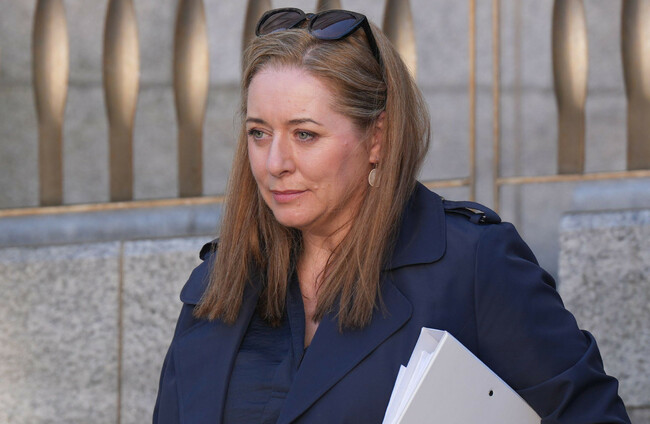
A BBC JOURNALIST has said she ‘stands over’ her work on a programme which interviewed a source who claimed Gerry Adams had sanctioned the killing of a spy in 2006.
Reporter Jennifer O’Leary said she took the allegation, which is now the subject of a defamation case by the former Sinn Féin leader against the BBC, with the “utmost care and responsibility” given its seriousness.
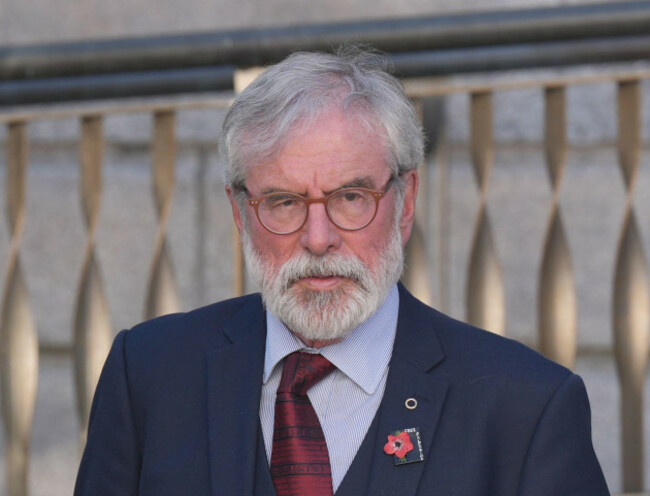
Adams claims that the accusation in the BBC’s Spotlight programme that he sanctioned the killing of a former Sinn Féin official revealed to be a British informer was a “grievous smear”.
He denied any involvement in the death of Denis Donaldson and claims the programme, which first aired in 2016, and accompanying online story defamed him. A garda investigation into the incident was ongoing when the programme was first broadcast.
Denis Donaldson was shot dead in 2006, months after admitting he was a police and MI5 agent for 20 years. The Real IRA claimed responsibility for the killing in 2009.
Under cross examination by Adams’ barrister Tom Hogan SC today, the Spotlight reporter agreed that it was “of the utmost seriousness” to accuse someone of sanctioning a murder, but said “care” was taken to corroborate the allegation.
In the programme an anonymous source, identified as “Martin”, said he was an informant for Special Branch within the IRA and claimed that the shooting was sanctioned by the political and military leadership of the IRA and that Adams “gives the final say”.
The BBC has said the claim was corroborated by five other sources, and the reporter involved said the confidential source who made the allegation would likely be “killed” if their identity was revealed.
O’Leary today said that after the interview with Martin was recorded, she was “non-stop on the road” to meet credible sources. She said she had more than 60 meetings after the interview was recorded.
She said taking care with the allegation involves corroborating, systematically testing and querying of all the allegations in the programme.
“I wouldn’t be here if I couldn’t stand over the programme and the allegations made in the programme,” she told the court. “I’m here to defend the journalism Mr Hogan, and the points of law that the case is being defended are points of law.”
O’Leary said that the claim was presented as an allegation in the programme, and she said Martin was stating his belief based on his experience. She said the programme used terms such as “Martin believes” and “Spotlight understands”.
“Any reasonable person watching the programme would know we are making an allegation,” she said, adding that it is “not unusual” in journalism to broadcast an allegation.
“I have reported on several stories that have made serious allegations – concerning sexual abuse, concerning episodes of the Troubles – it’s not what the allegation is, it’s the care you take to be able to broadcast the allegation.”
O’Leary agreed that the word “sanction” which appears in the headline of the online article, is not said by Martin in the Spotlight programme. She said that Martin used the word at a meeting with her where he first mentioned the Adams claim.
She said it was “not unusual” for a headline to reflect the claims in the detail of the article, but said she did not write the article so could not explain the rationale behind it.
Asked about her experience, she said she was appointed as a Spotlight reporter in 2012 and “proved myself in that role fairly fast”.
“I was well capable of getting stuck in and getting good stories and getting sign-off and being forensic in the work that I did.”
She added: “I’d be out on my ear if anyone at editorial level at the BBC thought I had an agenda.”

To embed this post, copy the code below on your site














have your say