Sign in. It’s quick, free and it’s up to you.
An account is an optional way to support the work we do. Find out more.
Sign in. It’s quick, free and it’s up to you.
An account is an optional way to support the work we do. Find out more.
IRELAND INTRODUCED A ban on married women working in 1933.
It wasn’t alone. Many countries implemented the same rule as a response to high unemployment.
However, it endured in Ireland far longer than in most other jurisdictions.
Disappearing quickly from statute books around the world in the 1950s, it remained in Ireland until 1973. The only exception to the rule was for teachers. A temporary shortage of teachers in the 1950s led to the lifting of the marriage ban for that profession in 1957.
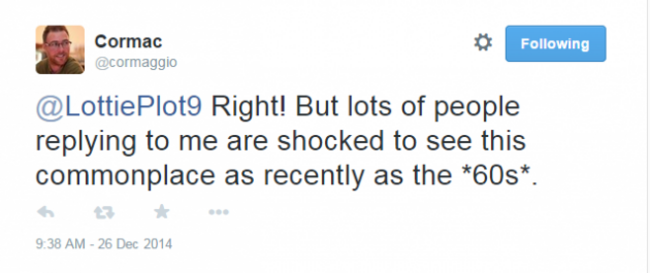
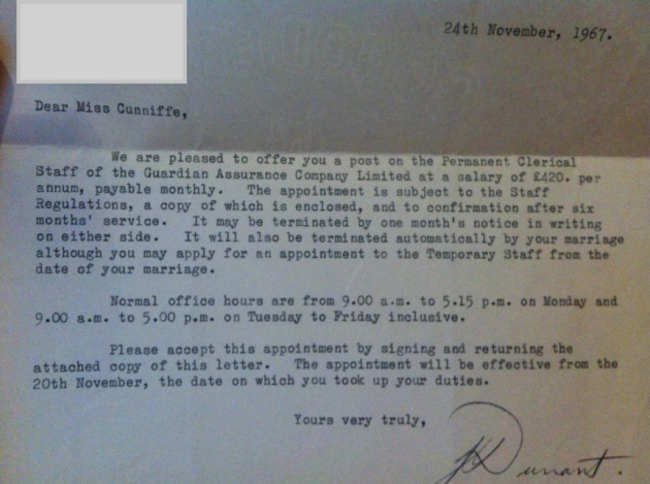
The bizarre longevity of the law in Ireland is often fodder for family dinner-table conversations. One family shared the stark evidence of the ban this Christmas with a letter of employment dated 24 November 1967.
Despite our knowledge of the ban, seeing those words – “It will also be terminated automatically by your marriage…” – seemed to make people stop and think about it properly for the first time.
The idea that women had to automatically leave their employment because they got married shocked some.
Cormac’s mother, the Ms Cunniffe referred to here, was also “pleasantly surprised” by the reaction.
Here is the letter, in full:
We’d love to hear about your (or your mother’s/aunt’s/relative’s) stories in the comments.

To embed this post, copy the code below on your site














have your say