Sign in. It’s quick, free and it’s up to you.
An account is an optional way to support the work we do. Find out more.
Sign in. It’s quick, free and it’s up to you.
An account is an optional way to support the work we do. Find out more.
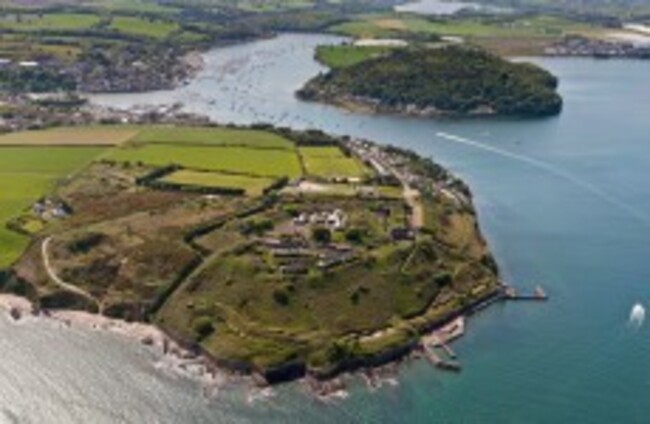
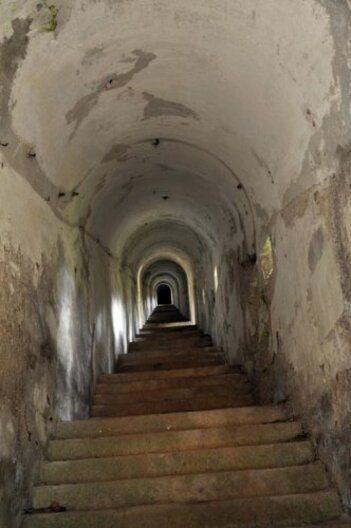
CAMDEN FORT MEAGHER is internationally recognised as one of the finest remaining examples of classical coastal artillery forts in the world – but it has the community spirit of local residents to thank for still standing proud today.
With fortifications dating back to 1550, the a 45-acre fortress in Crosshaven Co Cork was originally known as James’s Battery, then Ram’s head Battery, and finally Fort Camden in 1795 after the Lord Lieutenant of Ireland of the time, John Jeffreys Pratt.
The fort has also been used for a range of purposes; it was first occupied by the British authorities until 11 July 1938, as part of the Treaty Port Fort Agreement, before the Irish Army took up residence during the so-called ‘Emergency’, after which Irish Troops were stationed full time there until the mid-1960s. After this period it was used as a Summer training camp for Defence Forces such as the Slua Muiri, FCA, Auxiliary Fire Service, and Civil Defence.
At the mercy of vandals
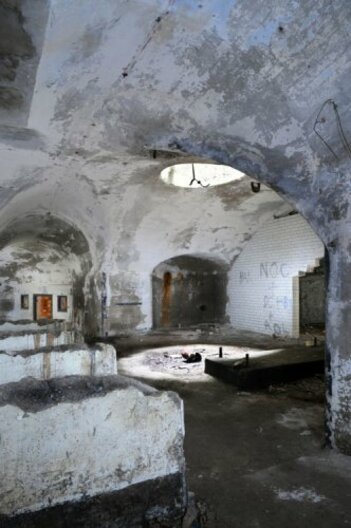
In May 1989, the army handed the fort over to the local authority – Cork County Council – which has expressed a hope of developing it as as a tourism and heritage centre. However, despite efforts to develop the building, the fort remained closed and derelict for another decade and eventually fell mercy to vandals and looters.
Finally, in June 2010, a breakthrough was made when the County Council agreed to allow the Crosshaven Community to become a tenant on a 12-month rolling contract, allowing “Rescue Camden” to be born and – most importantly – allowing work to begin.
Work on the fort began immediately with six workers from Fás’ Community Employment scheme, a site manager, and a group of volunteers – who set to work on stripping back 21 years of overgrowth from around the grounds and rejuvenating the building.
Thanks to their efforts, the fort partially reopened to the public in August 2010 – allowing visitors to see a contained area within the Fort, as well as two beautifully restored Billets, one a Reenactment history room and the other a Gallery housing a photographic exhibition of the fort itself.
Cork County Council’s ‘fantastic’ support
Speaking to TheJournal.ie Chairman of the Rescue Camden Committee, Paul Brierly, thanked Cork County Council for its “fantastic financial and logistical support” in helping to bring the old fort back towards its former glory.
The reconstruction of the fort not only honoured the rich past of the area, but also provided for the current inhabitants: by March 2011 staff numbers at the fort reached 21, including a number of apprentices from the FÁS Redundant Apprentices Scheme which allowed apprentices who had been made redundant due to the economic downturn were employed and trained onsite.
Camden Fort Meagher re-opened in July 2011 with the help of 14 volunteers – who managed to welcome more than 13000 visitors over 13 weeks. To date, more than 21,000 visitors have enjoyed the fort’s reversal of fortunes.
Camden Fort Meagher currently closes outside of the summer months in order to facilitate restoration – check Rescue Camden’s Facebook page for the most up-to-date details.
Read more stories from TheJournal.ie’s Hidden Ireland series

To embed this post, copy the code below on your site













have your say