Sign in. It’s quick, free and it’s up to you.
An account is an optional way to support the work we do. Find out more.
Sign in. It’s quick, free and it’s up to you.
An account is an optional way to support the work we do. Find out more.
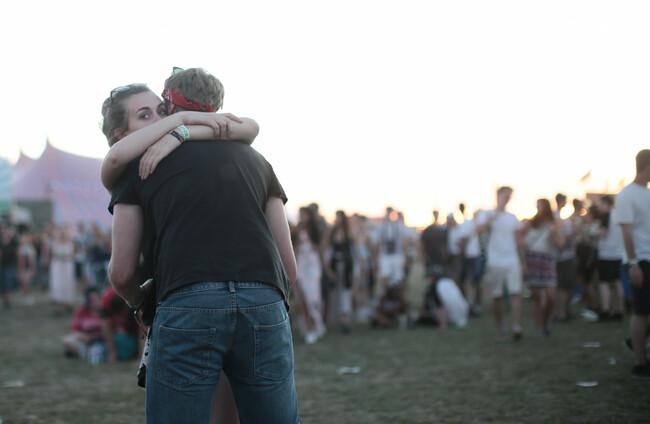
RECEIVING HUGS MAY help tackle harmful mood changes arising from conflict with others, a study in the United States has found.
The study, conducted by Michael Murphy and colleagues at Carnegie Mellon University in Pennsylvania, examined a wide range of social partners and interviewed 404 adult men and women every night for 14 days straight.
Participants were asked about their conflicts, how many hugs they received as well as positive and negative moods.
Receiving a hug on a day of conflict, for instance, resulted in a smaller decrease in positive feelings and a smaller increase in negative ones, the study found.
The effects of a hug may linger, too, the study has found, with participants reporting a reduction in negative moods the next day.
‘Simple yet effective’
In the past, it has been proposed that interpersonal touch, like hugging, can help a person’s well-being. It is possible that touch, the new study notes, might be a particularly effective counter to interpersonal conflict.
That’s important because conflicts with others are often associated with “a large range” of harmful psychological and physical outcomes.
Past research on this topic is limited because studies have largely focused on the role of touch in romantic relationships.
More research is needed to determine possible mechanisms, according to the authors of the new study.
However, the findings from the 404 adults who took part in the experiment suggest that hugs “may be a simple yet effective method of providing support to both men and women experiencing interpersonal distress”.
Speaking yesterday, Murphy of Carnegie Mellon University said; “This research is in its early stages. We still have questions about when, how, and for whom hugs are most helpful.
However, our study suggests that consensual hugs might be useful for showing support to somebody enduring relationship conflict.

To embed this post, copy the code below on your site















have your say