Sign in. It’s quick, free and it’s up to you.
An account is an optional way to support the work we do. Find out more.
Sign in. It’s quick, free and it’s up to you.
An account is an optional way to support the work we do. Find out more.

LAST UPDATE | 2 Sep
I’VE SPENT THE last two years talking to a lot of people doing brilliant things for Irish nature. I’ve introduced a few to you on The Journal before. Landowners, animal rescues, individuals humbly doing their part to restore our landscape and often without proper recognition.
There is also a growing number of farmers who want to do something for biodiversity, but don’t know where to start, don’t have the time to wade through paperwork, and can’t afford to gamble money on it.
That’s exactly the gap ReFarm was built to fill, and when I heard about their project in Wicklow, I had to learn more.
ReFarm is a not-for-profit set up by Anke Heydenreich, a sustainability investor focused on a range of social impact, biodiversity and sustainable development initiatives, and Dr Brendan Dunford, the ecologist behind two decades of farmer-led restoration work such as the Burrenbeo Trust — the charity responsible for initiatives such as Farming for Nature, The Hare’s Corner and the Burren Winterage Festival.
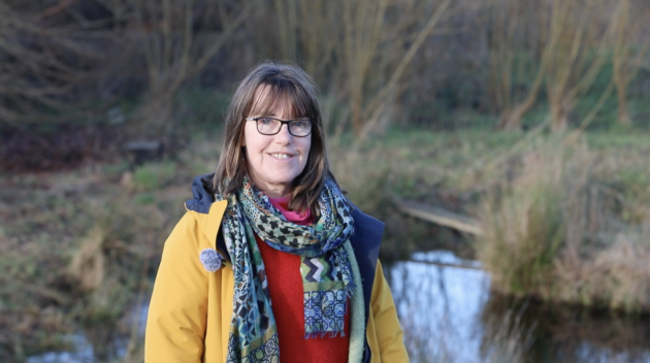
The idea is simple, but genuinely clever: rather than buying up land to rewild it, ReFarm raises blended finance — a mix of public and private funding — and pays farmers directly to carry out biodiversity actions on the land they already farm. I’ll come back to exactly how that funding model works a bit further down.
Given that farmers manage roughly 70% of the land in this country, that’s not a small detail. As Brendan put it to me, “when it comes to the crisis that we have in Ireland at the moment around biodiversity, we view farmers as the solution, and we’re prepared to invest in that.”
In conjunction with the actions, Trinity College Dublin, ReFarm’s independent research partner, is leading a multiannual research programme, led by Professor Jane Stout and Professor Martha O’Hagan.
But what struck me most, talking to farmer after farmer, wasn’t just the smart funding model or the research. It was how fast and how easy the whole process is.
ReFarm works with farmers all over Ireland, and its first public-private partnership project was trialled in County Wicklow. In partnership with Wicklow County Council, ReFarm’s milestone project focused on one crucial wildlife habitat: ponds.
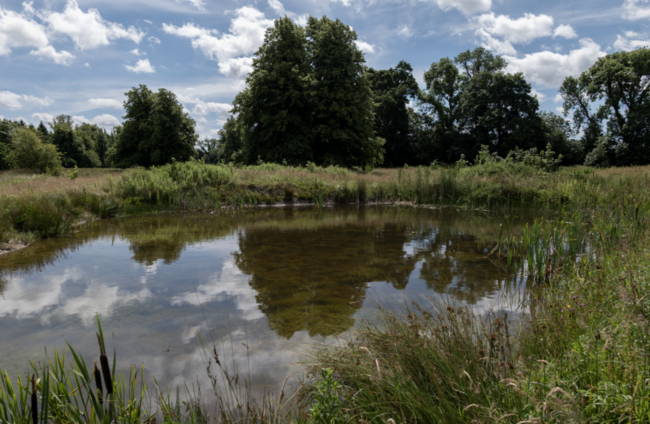
Not garden ponds — proper wetland habitats, with a minimum size of 150 square metres and a budget of up to €3,000 per farm, though the average pond dug in Wicklow has come in at around 761 square metres.
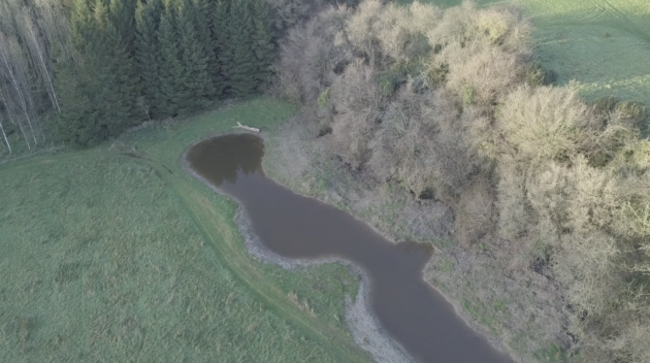
It’s a strong habitat to start with. As ecologist Aoife O’Rourke, who works with farmers on the ground to plan and site each pond, explained to me: “Ponds are hotspots for wildlife. They support 60% of all of our native freshwater species. They’ve been shown to host more freshwater animal and plants than their larger water body counterparts, such as rivers, lakes, streams and ditches.”
Brendan agrees ponds were the right place to focus. “We considered the ponds to be a really good place to start, because they’re very powerful for wildlife,” he told me. “It’s also very important in terms of managing water flow. And I think from the point of view of wellbeing, personal wellbeing, they’re really important as well. So they’re a fantastic investment.”
Paul Carberry farms 50 acres in West Wicklow with his wife Kathleen, and had already dug two ponds on the land before ReFarm came along. He participated in the ReFarm project and said the application itself was refreshingly painless: “the process of the whole application for the grant aid… was reasonably simple to do.” Because the ponds are shallow — under a metre deep — there’s little in the way of planning hurdles either.
For Paul, it’s not his first go at this, so he knows what’s coming. “With ponds, they form a life of their own,” he told me. “All the amphibians and different plants and birds, and particularly wetland birds… it’s fantastic.” He’d recommend it to any farmer with even a small awkward corner of land: “the value that brings to the farm… I’d rather have a pond any day”.
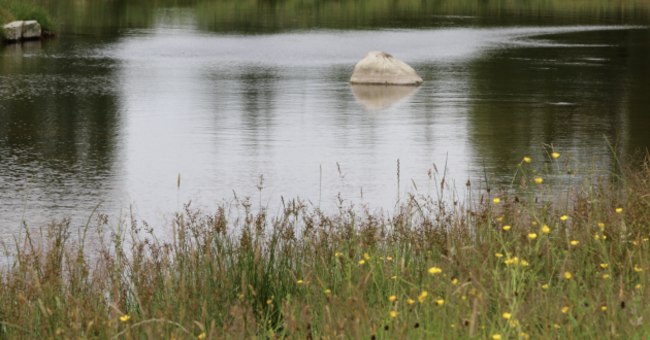
Down the road at Castleruddery Organic Farm, Hilda Crampton had a similar experience, but hers really brings home just how quick ReFarm can move.
“Communication was practically instantaneous,” she said. “Everything to do with payments and repayments, it happened so quickly. We were absolutely in shock at how fast it all happened.”
An ecologist visited her farm, walked the land with her, and identified the perfect spot for a pond in a damp, boggy corner that wasn’t doing much for the farm anyway. Two days after the diggers arrived, there was a fully formed pond where scrubby wet ground had been. “It looks like it was always there,” she said.
So how does the funding actually work? ReFarm’s co-founder Anke Heydenreich describes it as blended finance: money from businesses and public bodies, invested in farmers, who in turn invest it in nature.
“ReFarm Wicklow is a perfect example of how blended finance came together to work with farmers, to invest in nature,” she told me.
“The idea is to prove that it makes environmental, social and economic sense so we can replicate it nationally across different counties and possibly further afield.”
One of the businesses backing ReFarm is construction firm John Paul Construction. Their funding, alongside a mix of other corporate and philanthropic funders and public funding from Wicklow County Council, has financed the Wicklow ponds. Mike McLoughlin, the company’s head of health and safety and sustainability, described it to me as a genuine public-private partnership for nature.
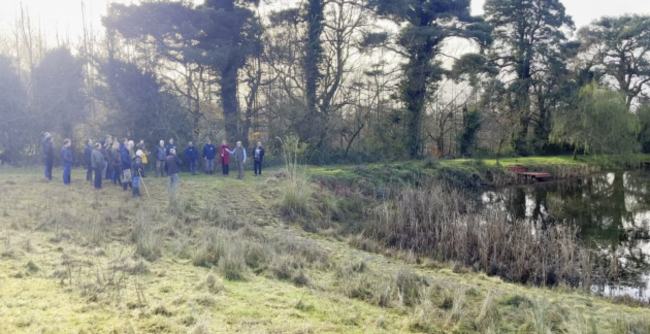
With growing pressure on businesses to report on sustainability, he said ReFarm stood out because of the credibility behind it: “You have the research side from Trinity, you have Brendan, that level of expertise… It’s a recipe that can really work.” He was also clear-eyed about the scale of the opportunity: “This is a project with 100-plus farmers, but this is something that every farmer in Ireland could be involved in.”
On the public side sits Wicklow County Council. Biodiversity officer Hannah O’Kelly said the council chose to start with ponds specifically because they knew it would capture people’s imagination — and it worked. “We very quickly got a dozen farmers or landowners who were interested,” she said, “there was very little paperwork involved… it was all very clear what they had to do and what they were going to get in return.”
For Hannah, ReFarm is one piece of a much bigger puzzle.
Wicklow’s new Biodiversity Action Plan carries 50 actions over the next five years, and she’s clear that no single scheme will reverse biodiversity loss on its own — but partnerships like this one, bringing together councils, businesses, researchers and farmers, are exactly the kind of collaboration needed to make a dent.
Following a successful first year, Wicklow County Council is providing its own funding for a second ReFarm Wicklow pilot in 2026 — a round that’s already closed, having been heavily oversubscribed with farmers looking to take part. The model is spreading too, with four more county councils — Leitrim, Longford, Laois and Meath — launching their own county pond projects with ReFarm this year.
Ireland has lost a huge number of its ponds to decades of agricultural drainage. Kate Harrington, an ecologist and researcher with Trinity College Dublin, was keen to stress how disproportionately valuable the ones that remain — or the new ones being dug — really are.
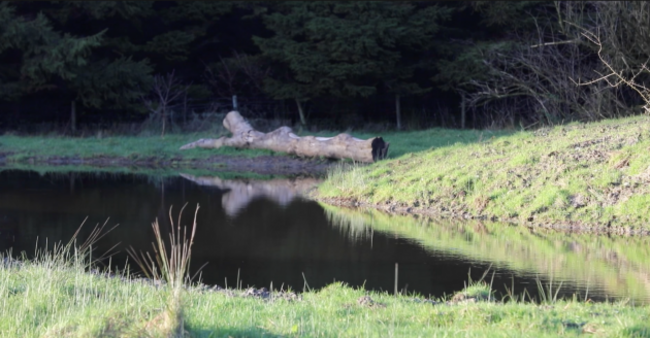
“There’s been some studies done which have shown that with ponds across a landscape, there can be more biodiversity there than there can be in river or lake systems,” she told me. “Even though they’re small, they’re greater than the sum of their parts.”
What comes through in every single conversation I had in Wicklow is that this isn’t a scheme bogged down in red tape. It’s fast, it’s well supported by ecologists on the ground, and it pays farmers properly for land that, in a lot of cases, wasn’t doing much for them anyway.
As Brendan put it, ReFarm has worked with around 80 farms across Ireland so far, and the plan now is to keep learning, keep sharing those findings openly, and keep growing the number of farmers and funders involved. ReFarm is on track to double the amount of funding deployed and double the number of farmers participating in 2026.
ReFarm’s next round is already oversubscribed, a clear sign that this is a wanted and needed initiative. But the bigger message coming out of this pilot is a wider one — for funders, local authorities and the public alike, it’s a clear demonstration of just how valuable a resource our farmers are when it comes to restoring Irish nature.
As Aoife O’Rourke put it: “If there was one action that I would ask people to take, if they wanted to bring nature back to the land, it would be by creating a clean, fresh water wildlife pond.”
You can follow Jack Morley’s Irish nature journey on his Instagram @the_rewildlife or on YouTube @TheRewildlife. If you have land you’d like to rewild, you can learn more here: Rewildyourland.ie. For more on ReFarm, visit refarm.ie.
To embed this post, copy the code below on your site














have your say