TheJournal.ie uses cookies. By continuing to browse this site you are agreeing to our use of cookies. Click here to find out more »
Dublin: 8 °C Thursday 23 May, 2013

How well is Ireland set up for electric cars?

Prices, charging points and government grants: TheJournal.ie looks into electric vehicle ownership in Ireland today.

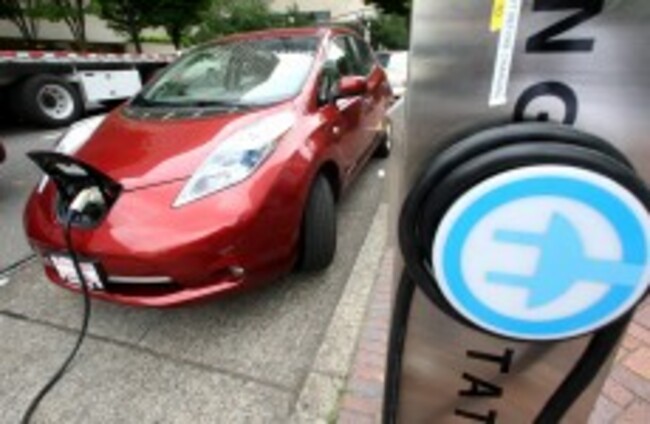
A Nissan Leaf charging in Portland, Oregon.
Image: AP Photo/Rick Bowmer/PA

THE IRISH GOVERNMENT has committed to getting enough electric passenger vehicles on the road by 2020 to account for 10 per cent of all vehicles (a projected 230,000 electric vehicles).

But how are we doing on that pledge? And how well are we set up for the electric cars that are currently on the Irish roads?

Charging points…

There are currently three different categories of charging point available for electric cars in Ireland: home charge points (usually installed on an external wall and supplied through your domestic electricity connection), public charge points, and fast charge points.

Public charge points can be found on-street and at some commercial premises and charging takes between one and six hours depending on the battery size and car type using the charge point.

The fast charge points deliver higher power to the cars and are much quicker than domestic charging points (potentially charging a car up to 80 per cent full in about half an hour).

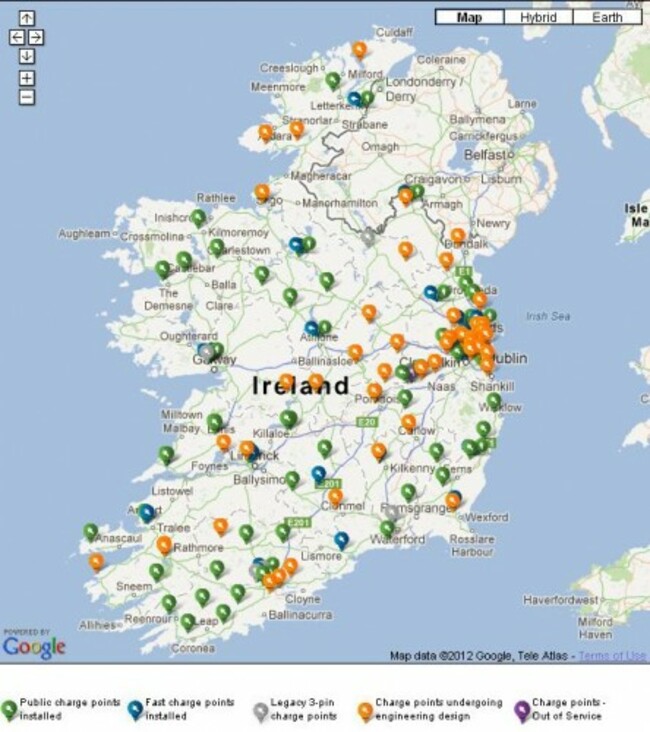
Over 700 charging points have been installed around the state. Of these , 256 are public charge points, while a further 397 are in homes and commercial premises. Twenty-eight are fast charge points.

A regularly-updated map of public charge points can be found online here via the ESB eCars website (and a screenshot is pictured below).

The ESB, which is responsible for Ireland’s eCar charging infrastructure, is offering free installation for a home charge point for the first 2,000 electric car owners who register for the installation. The cost of installing a charge point in your home after this scheme has ended will be around €1,000, according to the ESB.

Meanwhile, the Irish Hotels Federation says that its members are considering installing car points for their guests, but only if demand increases.

“Electric car charging points are demand-driven which is relatively low at the moment. However, if demand were to increase and if charging points were offered at a reasonable and cost effective rate, hoteliers around the country would be very interested in providing these services to guests,” Michael Vaughan, president of the Irish Hotels Federation told TheJournal.ie.

Charge points

(Image via ESB.ie/Google Maps)

… and prices

Electric cars aren’t cheap; prices range in Ireland from €8,000 for the very compact Renault Twizy Urban to around €30,000 for a Mitsubishi iMiEV and around €32,000 for a Nissan Leaf (pictured below).

Running an electric car for a year over a distance of 16,000km should cost around 80 per cent less than running an equivalent diesel or petrol engine vehicle, according to figures from the Sustainable Energy Authority of Ireland.

Fully charging a battery at home from zero to 100 per cent will cost approximately €1-3 using the cheaper night rate, according to ESB figures, while fully charging a battery from zero at a public charging point will cost €3-5. Currently, charging at public stations is free of charge until a national payment scheme has been rolled out.

Some commercial premises have had charging points installed and are testing the level of demand in the Irish market, while others are considering having points installed but are waiting to see a build-up in electric car numbers. There are charging points at four Tesco Ireland branches around the country: Maynooth, Tramore, Mallow and Swinford. A spokesperson from the company said that electric car charging points are part of Tesco’s interest in ‘environmental retailing’.

Meanwhile, the Irish Hotels Federation says that its members are considering installing car points for their guests, but only if demand increases.

“Electric car charging points are demand-driven which is relatively low at the moment. However, if demand were to increase and if charging points were offered at a reasonable and cost effective rate, hoteliers around the country would be very interested in providing these services to guests,” Michael Vaughan, president of the Irish Hotels Federation told TheJournal.ie.

Funding

The government is currently offering two different grants for the purchase of electric vehicles. For domestic vehicles, grants of €5,000 are avaiable, while a €3,800 grant is open for commercial vehicles. VRT relief is also available for the owners of electric vehicles.

The SEAI is administering the grants on behalf of the Department of Transport; some of the SEAI’s funding also comes from European Structural Funds. The grants aim to provide support in helping to get the eCar market moving and to help early adopters of electric cars to access vehicles, according to the organisation, and a list of registered dealers are posted on its website.

Declan Meally, head of Energy Demand Management at the SEAI told TheJournal.ie that although take up for the grant scheme launched in April 2011 was initially slow, the applications are increasing and have shown a “good upturn” in recent months – particularly since more of the larger car companies are offering eCar or hybrid options. Three manufacturers offer electric vehicles in Ireland which are eligible for the grant: Mitusbishi, Renault and Nissan.

“The big guys are starting to release vehicles,” Meally said. “Last year there was just one or two but now there are several different types here so it’s starting to pick up for consumer choice. We’re also seeing development on the battery range being extended, giving more kilometres per charge.”

“The grant numbers are low at the moment, we’re talking about just over 100 vehicles on the road at the momemt, but the [car] choices are coming, the prices are starting to come down and the grants are acting as a stimulus.”

Meally also said that enthusiasm for the electric vehicle driving experience is building something of a momentum internationally.

Writing recently for TheJournal.ie, DeLorean CEO Stephen Wynne said he believes that the biggest barrier to the widspread introduction of electric vehicles is the public’s perception of electric cars’ driving performance:

I love cars, I’m a car nut, and I believe electric is the way for cars to go. The performance that you’re able to get from en electric car is quite remarkable and we’re only scratching at the surface of it right now. The electric DeLorean is faster than the petrol one by a long shot. So for a car enthusiast that likes performance – it’s there with electric.

Wynne is currently working on producing an electric model of the iconic DeLorean early next year.

Meanwhile, the SEAI, electric vehicle supplier Green Machines and Merrion Fleet Management are involved in a three-year research programme on the Aran Islands. Meally said that the location is an ideal microcosm for the Irish market because the islands have to import all of their fuel and because the vehicles will be undertaking short journeys.

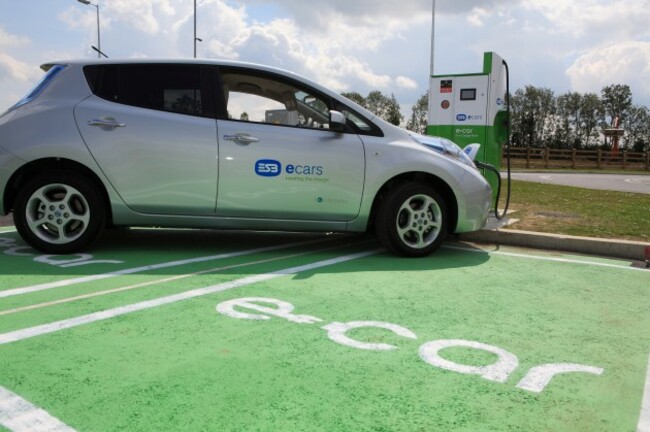
ESB ecar

Nissan LEAF at ESB ecar fast charge point in Monasterevin, Co Kildare. (Image: ESB)

Read next:

Comments (58 Comments)

  • Aaron t 04/06/12 #

    The charging spots in limerick are always being used by people with regular cars as a regular car parking space. Imagine owning one of these cars and every time your in need of a charge and in the city, not being able to charge because some idiot with a regular car has taken the charging spot.

    Reply
  • Who makes Steve Guttenberg a star?

    Reply
  • gerry 04/06/12 #

    I would buy one today if I could afford it. Nissan dealer I recently spoke to said a leaf on part payment was approx €700 per month without deposit/trade in. Taking out my petrol costs vs charging costs and difference in tax etc it’s still an extra €350 a month it would cost me

    Reply
    • I would buy one today if they had a few fast charge points distributed along the Cork – Dublin, Galway – Dublin, Belfast – Dublin roads. Etc.

      At the moment if you want to do any of these routes in an electric car you have to reserve a charge point off route.

      Charge infrastructure is still too poor and inconvenient.

      I don’t even do long distance that often but I would feel restricted.

      Reply
  • Elrat 04/06/12 #

    Nissan have their own connection cable which plugs into ordinary sockets . It cost about €550

    Reply
  • Oh my goodness! An electric deLorean…..I WANT!!!!! :D

    Reply
  • plato 04/06/12 #

    How far / how long would you get on a fully charged battery in an electric car?

    Reply
  • Electric cars are cheap now but there is v little tax on them. If there was no tax on petrol the fuel would be 50% cheaper. The gov will just switch the taxes over once revenue on traditional cars run dry.
    We are seeing this already with the scheme introduced by the Greens.

    Reply
  • Sounds good until I heard Renault where involved.

    Reply
  • Did the ESB pluck a nice round fat installation figure from Phil Hogans rear end?
    €1000.00 to install a socket?

    Reply
  • elmo 04/06/12 #

    I love cars but I’m not sold on electric cars yet, the km range is crap, proven to be much lower than advertised by fifth gear and Renault/Nissan can’t even get an electric window to work right, never mind a whole car!!!

    Reply
    • That’s a very good point. 99% of the issues i’ve had with cars over the years have not been mechanical, but electrical! Can you imagine the teething problems with a fully electric car??!!

      Reply
  • Dmc 04/06/12 #

    Hydrogen technology is already there but governments wont make money out of it. Batteries damage the environment and they only last a few years

    Reply
    • Indeed your right, remember the hy-wire. That was a concept that should have gone into production. Electric is good but hydrogen could power your house and your next door neighbors houses and maybe the whole estate. But sure who would want a car that could do that.

      Reply
    • Dmc 04/06/12 #

      I cant figure out why anyone would give a fair comment thumbs down!!

      Reply
    • Is it not true that they haven’t figured a method of transporting large volumes of hydrogen without it mixing with oxygen at some point and exploding?

      Reply
    • Just like petrol?

      Reply
    • Hydrogen infrastructure is far too costly and there still a of issues with the production of such. It will definitely come one day but it at the very least 50 years away, that’s why electric us the current focus for manufactures and utilities. Electric cars currently meet the needs of 80 to 90 % of people and already have an electric infrastructure. No need for tankers transporting fuels etc You need to do bit research before saying hydrogen the solution to giving us a cleaner sustainable and independence from the oil countries.

      Reply
    • plato 04/06/12 #

      Mixing hydrogen and oxygen.. OMG the danger of making H20 :-)

      Reply
    • @Plato they don’t just mix to give water. The chemical reaction occurs by the combustion of hydrogen in oxygen to give 2H2 + O2 —> 2H2O and this only occurs through a massive release of heat AKA an explosion.

      Reply
    • The problem with hydrogen cars is that it ties you into using hydrogen as a fuel. Not as bad as petrol or diesel, but still a limitation.

      The big plus for electric cars is that you are not tied into any one source. Wind, waves, solar, nuclear, whatever. This makes it harder for the original supplier to hold a world-crippling monopoly (See the oil-rich nations today).

      Reply
    • For a hydrogen fueled car to be efficient you need to carry the hydrogen at an extremely compressed state. A crash with a highly compressed tank of hydrogen would be far more catastrophic than the currently used non-compressed petrol. Add to that, the the process of producing hydrogen from water is more energy intensive than what the hydrogen will provide means there is a negative energy gain.

      Reply
    • Hydrogen technology is not already there. 2 Big problems exist.
      1) Fuel cells – price – still way too expensive & fragile. Palladium ain’t cheap.
      2) The Hydrogen – Where does it come from?
      Currently the dominant technology for direct production is steam reforming from hydrocarbons (Oil/Gas industry)
      The other ways to making it cost too much. Energy in Vs. Energy Out.

      Batteries can damaging to the environment if they are not recyclable.

      …..In an ideal world we’d be cycling/using more public transport/electric car sharing.

      Reply
    • Hydrogen is not an energy source, but is an energy carrier. Hydrogen is mostly made from natural gas or methane.
      To produce Hydrogen by electrolysis of water uses 3 times more energy then the Hydrogen energy produced. Hydrogen for transport is a negative energy fuel source After the Hydrogen is produced it then has to be transported and stored.

      Some practical problems with Hydrogen storage. It is very bulky whether stored as a high pressure gas or as a liquid (liquid storage requires storage at a temperature of −253 degrees C). At high pressures of circa 700 bar very large and very strong and often very heavy storage vessels are required. Furthermore, hydrogen gradually leaks out of any “practical” container. If you park your hydrogen powered car with a full tank and come back two weeks later, you should expect to find most of the hydrogen has vanished. Hydrogen for combustion with oxygen (2H2O) is exceptionally volatile and dangerous..

      Many car companies (Ford, Renault, Nissan) have stopped research into Hydrogen cars because the practical realities are too difficult to overcome and the costs are far too high. Instead they are focusing on Hybrids and electric vehicles. Hybrid vehicles are much easier to produce, are accepted as normal and are profitable. Hybrid cars are also seen as the transition vehicle to full electric cars. In developed countries electricity is generally ready available and easily accessible.

      Reply
  • I, along with hundreds of thousands of other people in Ireland, live on the top floor of an apartment block. How do i charge my electric car at night? Get a 600m cable that stretches from my living room, drapes over the green to my parking spot?! Might have to as I cant see them investing in individual charging points for every apartment spot in the country!

    Reply
  • ahhh the end of high petrol n diesel prices are coming to an end… also helping the planet with less fumes and not tied into the megalomaniacs who control the worlds oil reserves..!! the world looks better already..!! shame i’ll be dead when its an affordable and efficient system to travel for all.

    Reply
  • we are thinking of picking one up when savings mature latter this year, getting rid of a 1.6 diesel that is only used local (daily to train station) and occasion trip to dublin round trip 140km. I’m following a blog that someone is doing similar distance. my only problem is initial cost.

    http://selfficiency.wordpress.com/

    Reply
  • €6000 to install a plug in my home because of rural setting, no local socket and nearest points in limerick normally have some crap box non elec car parked in them. BTW how do we make electricity in Ireland? Oh thats right burning fossil fuels. Le sigh.

    Reply
  • Great idea but you rent your batteries yearly according to Renault big money as well could be driving their top of the range and own it as well for that price over time green and cheeper is what we need

    Reply
  • Jeremy Clarkson in the Sunday times had an interesting review of the ford focus Eco boost which has a 1 litre engine but the performance of a 1.6 litre.

    Reply
  • If the government are in favour of it, then I am against. I fell for the old petrol/diesel bait-and-switch a few years back, only to see taxes on diesel and taxes on diesel cars go up. With this buch of clowns, it’s always a scam in disguise.

    Reply
  • Eggfuel 04/06/12 #

    Numbers of cars bought by the public says it all… Most are bought to demonstrate the technology… The numbers sold so far are not only pathetic the show a clear refusal by people to be swindled into a loose loose situation by a govt who is too lazy and unimaginative to properly embrace a good idea and fund it correctly.. The idea of 10% was a farce from the start and now a few years later the figures reflect exactly that… This govt similar to the last is all talk and no action so we will b lucky to ever see electric Vehicles on the road in numbers of any significance. I did embrace the clever idea of electric motorcycles but the greens at the time shunned them as useless and never allowed them in their press coverage.. They are the current realistic electric alternative and as expected they are not supported for some unknown reason… If its a stupid idea then the Irish govt tend to back it and pay for it but any truly good ideas get ignored…
    Let’s trundle on in ignorant bliss….

    Reply
  • Just for note I have seen battery warranties for 100k miles advertised; electric cars have fewer moving parts in there drive system, the electric motor being the bulk of it which is far more reliable than the complex internal combustion motor more over the breaking system of an EV gets a hand from the motor giving longer life on the break pads and the likes. All in all servicing an EV happens less and costs less from what I have researched. Keep in mined I haven’t scratched up the coin to buy one yet so this is just from research. Also recycling lithium-ion batteries like many use has been done for some time now you don’t throw them in the trash.

    The argument that the gov will just tax electric heavier once petrol dies is a bit off as well, according to my research on energy use of the car and assuming common practice of generation of electricity an EV is wasting about 10% of the energy required to drive it; from generation at the plant to movement on the road this compared to 70-80% waste for internal combustion systems i.e. its simply more energy efficient aka you get more bang for your effort out of an electric motor vs a combustion motor. All in all its cheaper because you waste less energy if electric and petrol cost the same per unit of energy the EV would still be notably cheaper to operate.

    The main problem with EVs that I can see is the entry cost; I can buy a banger petro car for under a 1000 it will be a heap but it will get me from point A to point B and while it will cost me a ton more over the year in fuel, maintenance, tax, etc. it doesn’t change the fact that I cant yet scrape together the 10-20k I need to get in an EV but I can scrape up the 1k or so I need for the petro car.

    If they want to make EV the future they need to get the entry point in range for the average user. There are a lot of ways to do that, tax breaks are nice but as we have seen in other countries with other topics the gov or even dealer could buy your petro banger off you for a premium if you buy an EV. Since many like my self just need a ride from point A to B why not offer a no frills low cost option i.e. to sale me an EV, you have to compete with the junker petrol car heap down the street not the top end sporty car in the show room.

    Reply
  • IF electric cars become the norm anyone that lives in an apartment is going to have problems getting a home charging point installed. My parking space is about 200 feet from my apartment so it would be a real headache for me to get a home charging point installed

    Reply
  • Electric cars are for the rich, subsidized by the poor.

    Reply
  • Damien 04/06/12 #

    Why not have an account system where you pay a set fee per month and are given a code.

    Input this code into a machine and it opens, you take out your old battery and insert it into the machine and this releases are fully charged one to put into your car, no waiting around.

    Reply
  • Why is this a 26 county map, do we not travel though NI anymore? Am I correct in assuming that charge points are atandardised across eu/world?

    Reply
  • Stupid stupid stupid

    Reply
  • Worst idea ever

    Reply

Add New Comment