Sign in. It’s quick, free and it’s up to you.
An account is an optional way to support the work we do. Find out more.
Sign in. It’s quick, free and it’s up to you.
An account is an optional way to support the work we do. Find out more.
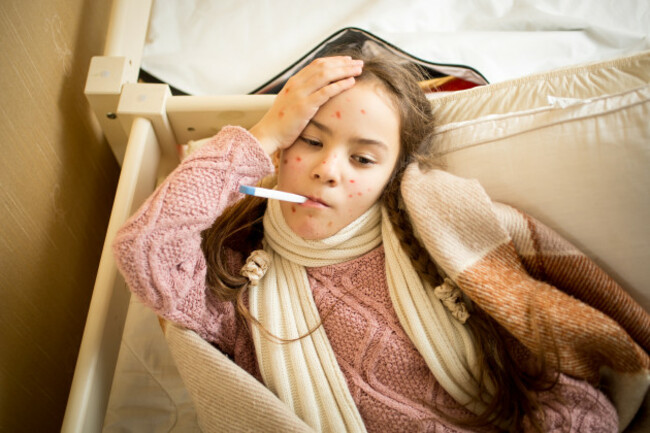
THE HSE HAS confirmed a number of further outbreaks of measles in different parts of the country.
The source of the infection is believed to be most likely another European country where such cases have been occurring.
Earlier in May the HSE confirmed that it was investigating the second case of measles in the country this year.
That figure has now grown to 19 cases – 13 confirmed and six deemed probable – all of which have occurred in individuals less than 30 years of age.
Most of those who have been infected do not have the MMR vaccine, which remains the most-effective way of preventing the disease.
Highly infectious
In drawing attention to this outbreak Dr Kevin Kelleher, consultant in public health, says that the HSE is seeking “to raise public awareness around the signs and symptoms of the condition and ensure that anyone with concerns addresses them immediately in order to receive a rapid diagnosis”.
“Measles is highly infectious, and if cases are isolated early, the risk of transmission to vulnerable individuals decreases,” he said.
The time between exposure to the virus and developing measles rash is normally 14 days, with a range of between seven and 21 days. People are infectious from four days before rash starts until four days after.
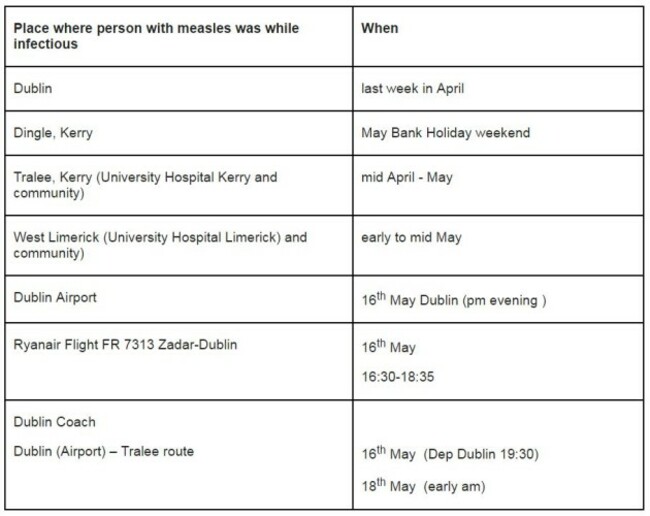
Click here to view a larger image
Measles is highly infectious and is spread easily, and there is a high chance that people who have not been fully vaccinated will develop measles if they are exposed.
There are generally only a handful of cases of measles seen in Ireland each year. The HSE has said that Ireland is striving to eliminate measles entirely.
Measles symptoms include:
If anyone develops measles symptoms, they should:

To embed this post, copy the code below on your site












have your say