Sign in. It’s quick, free and it’s up to you.
An account is an optional way to support the work we do. Find out more.
Sign in. It’s quick, free and it’s up to you.
An account is an optional way to support the work we do. Find out more.
TÁNAISTE MÍCHEÁL MARTIN has urged any Irish citizens currently in Lebanon to leave before there is any further escalation of tensions in the region.
Speaking in Paris, he said that there are currently approximately 100 Irish citizens in registered with the Department of Foreign Affairs (DFA) in the country.
“In the event of any escalation, egress out of Lebanon could become very difficult in the event of an airport being bombed or something similar,” he said.
He said that Ireland remains committed to it’s peacekeeping responsibilities in the country as a part of the United Nations Interim Force in Lebanon (UNIFIL).
He also said that he will be meeting the French Foreign Minister today to discuss the escalating tensions in both Lebanon and Gaza and that any further escalation will have global implications.
“We need to deescalate, the world does, fairly rapidly here.”
Early this week, the Tánaiste, who is also the Minister for Foreign Affairs, reiterated his department’s advice that any Irish citizen intending to travel to Lebanon should reconsider.
The advice matches that of other embassy’s, with the UK and US advising their citizens against travel to the country.
Tensions between Lebanon and Israel have escalated rapidly this week.
On Saturday, a strike on a playground in the Golan Heights killed 12 young people. Israel were quick to blame the Lebanese group Hezbollah, who said that they had “no connection” to the attack. They said that it was caused by an Israeli anti-missile projectile.
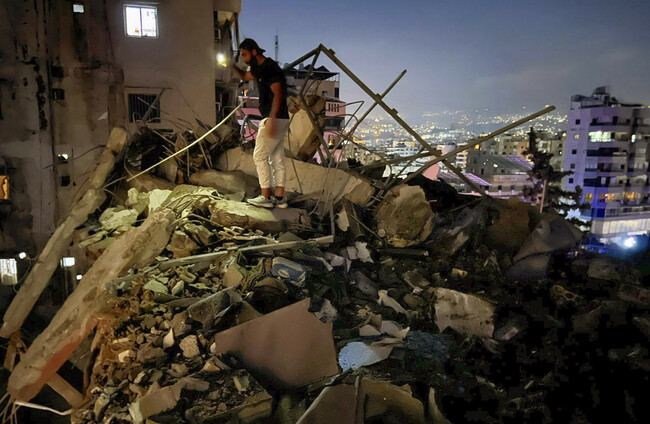
In retaliation, Israel bombed a suburb in Beirut, the Lebanese capital, killing Fuad Shukr, a top Hezbollah commander, who was a founder of the group in 1982.
A second attack in Tehran killed Hamas’ political leader, Ismail Haniyeh. Israel has yet to comment on the assassination.
The killings have severely weakened hopes for a ceasefire and deescalation of tensions in the region. Both Iran and Hezbollah have promised retaliation against Israel. Iranian leader Ayatollah Ali Khameni promised a “harsh punishment” for the killing of Haniyeh.
At his funeral, senior Hamas official Khalil al-Hayya said that the group will continue to “pursue Israel until it is uprooted from the land of Palestine”.
A further retaliatory strike against Israel is also expected from the Yemeni Houthi movement. Last week, in response to a drone strike by the group on the Israeli capital of Tel Aviv, Israel bombed a port facility in the Yemeni city of Hodeidah.
This morning, US Secretary of State Antony Blinken called on all parties to cease any further escalation, and to work towards a ceasefire in Gaza.
Achieving peace “starts with a ceasefire, and to get there, it also first requires all parties to talk and to stop taking any escalatory actions”, Blinken told reporters in Mongolia.
With reporting from Sinead O’Carroll in Paris, and © AFP 2024.

To embed this post, copy the code below on your site














have your say