The New York Times reported that the US had agreed one-on-one talks with Iran after the November presidential election but the White House has denied this.
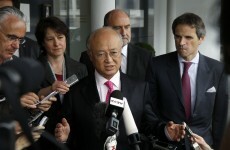
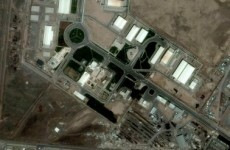
A deal has been reached with Iran that will allow the UN nuclear agency to restart a long-stalled probe into suspicions that Tehran has secretly worked on developing nuclear arms.
Iran halted oil shipments to Britain and France yesterday, in an apparent pre-emptive blow against the EU after it imposed sanctions on Iran’s crucial fuel exports.
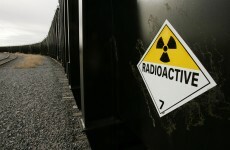
Luggage destined for Iran that was seized at Moscow airport contained 18 pieces of highly radioactive metal – however it is not clear whether they could be used in Iran’s controversial nuclear programme.
France, Germany and the Netherlands have all recalled their ambassadors to Iran, while Italy and Norway are taking precautions. EU foreign ministers are to meet in Brussels today to discuss Iran and its disputed nuclear programme.
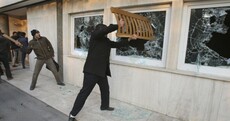
British diplomatic staff in Iran have been withdrawn following an attack on its embassy in Tehran yesterday – during which protesters shouting “Death to England” smashed windows, burned British flags and set a car alight.
The EU is to impose asset freezes and travel bans on additional Iranian officials and companies over the country’s nuclear programme – meanwhile, Iran has announced it is to impose sanctions on the US over its “human rights violations”.
FOLLOWING A STATEMENT from a United States Admiral regarding an alleged US contingency plan to invade Iran, Tehran has responded by digging mass graves for American soldiers.
US Admiral Mike Mullen said last week that the American military has a plan to attack Iran if necessary – however, he did stress that this was not a desirable option.
Iranian General Hossein Kan’ani Moghadam, said graves have been dug in Iran’s southwestern Khuzestan province, near where the state buried Iraqi soldiers killed during the Iran-Iraq war in the 1980’s.
“The mass graves that used to be for burying Saddam’s soldiers have now been prepared again for US soldiers,” Moghadam told the Associated Press,”This is the reason for digging this big number of graves.”
The friction between Iran and western powers has been intensifying lately, following a forth round of sanctions applied to Tehran by the United Nations over the country’s nuclear programme.
The US has claimed that Iran is developing a nuclear weapon, but Tehran insists that it is enriching uranium for energy and medicinal purposes.
See footage from Iran’s semi-state news agency, Fars, of the graves:
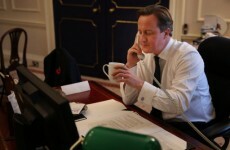
DAVID CAMERON made his latest diplomatic gaffe as he addressed a group of residents in the English town of Hove on Thursday.
Speaking on the topic of Turkish accession to the European Union, Cameron seemed to bluntly accuse Iran of possessing a nuclear weapon.
When outlining the benefits of Turkish EU accession, Cameron said Turkey would have “a very good political influence” on the UK and could help to “solve some of the world’s problems like the Middle East peace process and the fact that Iran has got a nuclear weapon.”
The blunder is the latest in a series of ill-received statements made by Cameron – leading some to say that, as the UK’s youngest Prime Minister in two centuries, he is beginning to show signs of his inexperience.
First, The British Prime Minister called his country the “junior partner” to the the USA, which ruffled a few domestic feathers. Then, speaking in Turkey a few days later he referred to Gaza a “a prison camp” – the timing and location for such a statement was condemned by those who felt it was exacerbating diplomatic strain between Turkey and Israel in the wake of the Mavi Marmara deaths.
Last week, Cameron caused a stir in Pakistan, when he seemed to imply that the country bred terrorism. He warned the Pakistan not to “tolerate in any sense the idea that this country is allowed to look both ways and is able, in any way, to promote the export of terror”.
The latest gaffe about Iran, a country at the centre of extremely sensitive diplomatic proceedings in relation to its nuclear programme, has been criticised as not only clumsy but as dangerous. It has led some commentators to question if Cameron is the new George W Bush of foreign policy blunders.
However, Cameron’s Downing Street Office said it was “perfectly clear” that the Prime Minister had been referencing to the pursuit of nuclear capabilities and that Cameron was simply speaking his mind.
IRAN HAS SAID that it is willing to return to negotiations with western powers about the exchange of nuclear fuel, despite the European Union imposing harsh new sanctions on the country on Monday.
EU countries agreed to self-impose investment restrictions in Iranian oil and gas in response to Iran’s nuclear programme. Sanctions will also include a suspension on EU dealings with Iranian banks and insurance companies.
These are the latest extension on sanctions against Iran, against following similar UN, EU and US actions earlier in the year.
Despite Tehran insisting that the country is enriching uranium for peaceful purposes (medicinal and energy uses), suspicions that Iran is attempting to build a nuclear weapon have brought a slew of economic sanctions.
Last June, Turkey and Brazil agreed a fuel swap with Iran in an attempt to reduce escalating international tension surrounding Tehran’s nuclear ambitions. Under the terms of the agreement 1200 kg of Iran’s 3.5% enriched uranium would be sent to Turkey in exchange for 120 kg of 20% enriched fuel.
Nevertheless, the following day the United States, Britain, France, Germany, China and Russia all agreed to impose economic sanctions on Iran.
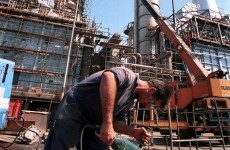
The nature of the sanctions are designed to hit Iran hard. Despite the country being the fifth largest crude oil exporter in the world, it has a extremely limited capacity to refine petroleum and so relies on foreign imports for about 40% of its domestic consumption.
Refined oil, such as gasoline, is essential for personal and commercial transport and business. The country has been relying on friendlier nations like Turkey and China for gasoline imports.
Mark Fitzpatrick, an Iran specialist at the International Institute for Strategic Studies, told Reuters that the EU did not fear other countries rushing in to provide commercial imports for Iran as the areas chosen for the sanctions are ones in which Europe has “substantial leverage.”
She continued by adding: “Not so many other countries can provide the kind of financial services that will be cut off. Few other countries supply technology for liquefied natural gas, nobody else does re-insurance … The European Union has very wisely found areas over which it has real leverage and cannot be supplanted.”
However, some countries object to the new round of sanctions, including Russia. Iranian IRNA news quotes Maxim Shevchenko, president of the Center for Strategic Research on Modern Religion and Politics, as saying that “any pressure on the country to stop its program will be unjust, unacceptable and discriminatory,” and that “Iran maintains cordial relations with several powerful countries including Indonesia, Malaysia, China, Turkey, Brazil and Japan… (which would) foil the effects of sanctions on Iran.”
“The majority of people in this country consume alcohol in a moderate, responsible manner that is entirely compatible with a healthy lifestyle and in line with European norms,” said Kathryn D’Arcy, director of Alcohol Beverage Federation of Ireland.
Some people can no longer afford to drink alcohol, others could be looking after their health, while many have suggested that the reduction in consumption could be related to emigration rates.
So today we want to know what do you think. Have you reduced your alcohol consumption in the past year?