Sign in. It’s quick, free and it’s up to you.
An account is an optional way to support the work we do. Find out more.
Sign in. It’s quick, free and it’s up to you.
An account is an optional way to support the work we do. Find out more.
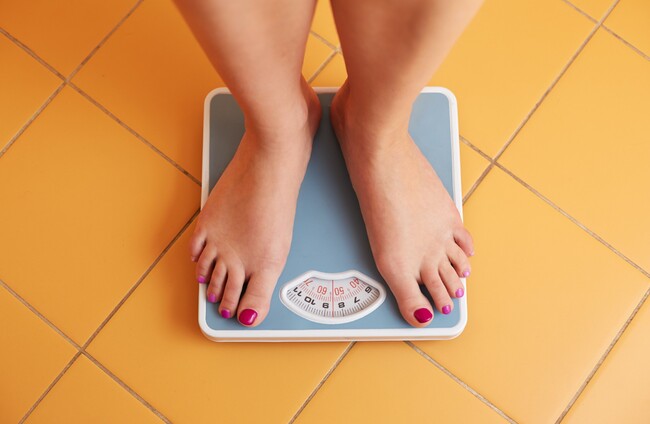
THE NUMBER OF obese people worldwide has risen from 105 million in 1975 to 641 million in 2014, according to the latest research on body mass index (BMI).
Now the Lancet reports that by 2025, Ireland is set to have the second-highest levels of obese women in Europe (37%) just a percentage point away from the UK (38%), and above Malta (34%).
When it comes to BMI, men in Ireland have the highest BMI in Europe, along with Cyprus and Malta. Women in Moldova have the highest average BMI in Europe.
By comparison, 43% of US women and 45% of US men are predicted to be obese in 2025.
The research shows that the proportion of obese men has more than tripled (3.2% to 10.8%), and the proportion of obese women has more than doubled (6.4% to 14.9%) since 1975.
Meanwhile, the proportion of underweight people fell by around a third in both men (13.8% to 8.8%) and women (14.6% to 9.7%).
A global view
The UK has the third highest average BMI in Europe for women equal to Ireland and the Russian Federation and tenth highest for men along with Greece, Hungary, and Lithuania.
Almost a fifth of the world’s obese adults (118 million) live in just six countries: Australia, Canada, Ireland, New Zealand, UK, and USA. Over a quarter (27.1%; 50 million) of the world’s severely obese people also live in these countries.
Over the past four decades, the world’s population has effectively become on average 1.5kg heavier each decade.
If the rate of obesity continues at this pace, by 2025 roughly a fifth of men (18%) and women (21%) worldwide will be obese, and more than 6% of men and 9% of women will be severely obese.
Low body weight
However, the research shows that excessively low body weight remains a serious public health issue in the world’s poorest regions.
The authors of the study warn that rising obesity “should not overshadow the continuing underweight problem in these poor nations”.
In south Asia, almost a quarter of the population are still underweight, and in central and east Africa levels of underweight still remain higher than 12% in women and 15% in men.
“Over the past 40 years, we have changed from a world in which underweight prevalence was more than double that of obesity, to one in which more people are obese than underweight,” explained senior author Professor Majid Ezzati from the School of Public Health at Imperial College London, London, UK.
If present trends continue, not only will the world not meet the obesity target of halting the rise in the prevalence of obesity at its 2010 level by 2025, but more women will be severely obese than underweight by 2025.
He said that new policies that can slow down and stop the worldwide increase in body weight must be implemented quickly and rigorously evaluated, “including smart food policies and improved health-care training”.
Facts and figures
The findings come from a comprehensive new analysis of the global, regional, and national trends in adult (aged 18 and older) BMI between 1975 and 2014.
Data from 1698 population-based studies, surveys, and reports were pooled, totalling 19.2 million men and women aged 18 years or older from 186 countries. This covered 99% of the world’s population.
The research also showed:

To embed this post, copy the code below on your site














have your say