TheJournal.ie uses cookies. By continuing to browse this site you are agreeing to our use of cookies. Click here to find out more »
Dublin: 17 °C Wednesday 19 June, 2013

Column: I don’t have political leanings – but neither, it seems, has Labour

This week, former trader Nick Leeson explains how he left London believing all UK political parties were the same – and how it looks like Ireland’s Labour party is also losing its Robin Hood status.

Nick Leeson

OUR POLITICAL LEANINGS are very much shaped by the environment that we grow up in. They can change over time but I believe that our early environment and the influence of our parents have a very large part to play.

I’m aghast at some of the more recent austerity measures that have been brought forward to resolve the country’s difficulties. I can’t fail to be astounded by the inequality of the measures where the Household Charge is concerned and the relative inappropriateness where the pursuit of pensioners is perceived to form part of the solution. And I can’t figure out how they are happening under the watch of the Labour party.

I have found myself questioning my own political leanings and realised: I have none. I struggle to remember if I have ever actually voted. I have a faint recollection of attending the local polling station when I was 18, relatively wet behind the ears and vaguely remember casting a vote but can’t remember the vote that was registered. Some people will be appalled that I haven’t chosen to exercise my constitutional right and some may point to my own actions as a symptom of the general malaise when an election comes around. Either way it wouldn’t really have changed what I did.

I grew up principally in the 1970s and early 1980s. It would be fair to say that politics were then a fair degree more confrontational than they are now. In the UK, there was a very clear divide between left and right and a fairly ineffective party in the centre that represented little more than a wasted vote. I come from a very working class background and grew up in a working class town, Watford, but it had distinct aspirations, so I attended a good school, was well educated but was always confused politically.

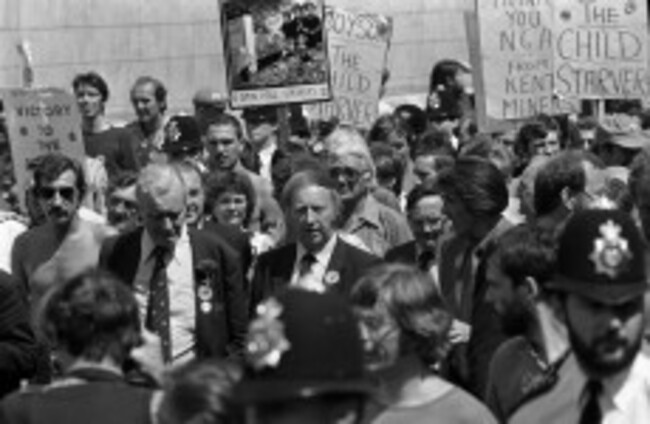
I had an aunt that was the secretary of the conservative party, parents who voted in opposite directions and my main political memory from that period was Arthur Scargill and the miners marching to London and the route passing the end of our street. Everyone was out on the streets cheering or jeering and I wasn’t sure what to do.

I went to work in the City and subconsciously became a capitalist. To a large degree that remains the case. I don’t like everything that happens in the world of finance and I understand totally the anger and distrust that is aimed in its direction but I am also realistic enough to understand that nothing will make it change.

When I worked in London, I wouldn’t have been one of the noisy buffoons who would have threatened to leave the country and set up as an exiled banker if taxes were raised but I would have silently sympathised with many people in that position. My salary wouldn’t have been sufficient to worry about it anyway but my views did become coloured. The left and right political parties all moved more closely to the centre and in my opinion the vote for one or the other became largely the same. This convinced me further that there was no need to vote.

I spent the next decade away from England and never had the inclination to post my vote. I became very insular, not to the extent that it was all about me but to the extent that unless something really impacted me or my family, I wouldn’t give it too much thought. Prison compounded that in a separate but distinct way. Because I learned that there were things that I could influence and things that I couldn’t, I rather softly succumbed to the fact that if I couldn’t influence something I just wouldn’t let it worry me.

Robin Hood’s legend was borne out of inequality, a rich/poor divide

Now, with three young children, the prospect of a lost decade on the horizon and increased austerity, I need to change.

We all know the story of Robin Hood, the outlawed fugitive who stole from the rich to give to the poor. The story is folklore where my father grew up, a small mining village in Nottingham. The fugitive’s actions were borne out of the inequality of the tax system and the rich/poor divide.

God only knows how he (Robin Hood) would have dealt with austerity in Ireland. The last election effected change, a coalition government between Fine Gael and Labour, clearly not at fault for the difficulties that we face but totally responsible for the methods to solve the situation.

With a Labour slant to the ruling coalition you would expect the measures proposed for solution to be fair. These latest measures are anything but. They are Robin Hood gone wrong, with the government are increasing the burden on the poorer to pay for the mistakes of the rich, the banks and the people who work within their walls.

I’m not privy to the numbers but a minor increase in the higher rate of tax or a third tier of tax would be a more equitable solution. The general public is already overladen with the burden of the bailout. Many have been pushed closer, if not over, the breadline: Adding more charges to an ever-increasing list of levies is not the solution.

I would have expected a traditional Labour party to be campaigning heavily against this but maybe, like in the UK, the political parties in Ireland are all now pretty much the same. Many may threaten to leave, few actually will.

Read Nick Leeson’s columns for TheJournal.ie >

  • Share on Facebook
  • Email this article
  •  

Read next:

Comments (21 Comments)

  • Democracy as it stands is in its death-throws, and its illusionary freedoms are as apparent as that of the words best dictators.
    As we moved into 2011 there has been a shift in the leanings of people towards the true freedom from slavery from the powers that be. The Arab spring is but an extension of our battle to overthrow our own less obvious dictators THE BANKS. These dictators as more face less compared to the dictators of countries around the world but carry its legitimacy due to our support of the illusion through another illusion called democracy which requires elections.
    The election process is but a Circus, which many clowns entertain us by tripping each other up to make us laugh, at the end of the performance we end up with the best clown. Take a look at our clowns in government, Take a look at the clown show going on in the US at the moment.
    This is not entertaining anymore for people who just want to live free. A silent revolution is very much in the making and when it blows it will be something to appreciate because of the need to change the nightmare we are experiencing, created from a few peoples dream to be rich at our expence.

    Reply
  • there is absolutely no difference between fianna fail, fine gael, labour, all centre rightish parties. then we have all the rest. there is no party to represent the hard working middle class, which is the majority of people. the middle class as defined in my opinion as those earning up to about 50 grand. those at the top and the elite will never have to take a hit financially. we should also not attack the Poor and those genuinely out of work through no fault of their own. unfortunately, I don’t think their is such a thing as a fair society for all.

    Reply
  • @Ardo Big business run ireland, thats rubbish, its the civil service that run ireland, or at least the top civil servants, and the problem is we pay them 100,000+, so they are rich and try to make themselves richer, so they have no idea what normal workers think or how normal workers are effected by their policies

    Reply
  • Just because we can vote in elections does not mean we have democracy or representation!
    And there are a few true socialists left in politics, but the right wing press has labeled them as loonies and commies for so long that the general public has bought it

    Reply
  • Ardo Ci 10/01/12 #

    ‘Right-on’ Nick ‘write-on’. I am a socialist to my marrow but I haven’t been able to vote since what happened to the miners in the UK. The powers that be behind the powers that be have blurred the lines between political parties everywhere over the last 50 years – and now Ireland – so that people don’t get a choice. They only get a new management face. And truth to tell it’s because politicians no longer run countries – big business does. The ‘elected’ ones are only there for the money and to act as capos. Oh! And all the time ‘they’ – the powers that be -

    Reply
  • An excellant critique of irish politics. No left/right divide. Lab before election talked about third tax rate but FG attacked n they threw policy out. We have gone too far with austerity. Solicitors accountants consultants can all afford higher taxes. Hardly call they job creators.

    Reply
  • Socialism in the Labour Party has been dead for a very long time!
    It is most evident with the Labour Partys’ T D’s, who always make the same mistake of going into Government with either Fianna Fáil or Fine Gáel and helping those ‘right wing’ Parties to implement their ‘right wing’ policies!
    Labour TD’s do this for one reason only and that is ‘the taste of power’ and all the bonuses that come with it!

    As the founder of the Labour Party said and I quote
    ” Yes,Friends, Governments in Capaitalist socitiy are but committees of the rich, to manage the affairs of the capitalist class”

    Yes indeed, there is a big vacuum in Irish Politics!

    Reply
  • In my opinion there will never be true democracy as long as political parties exist. When the ancient Greeks and the Romans began practicing democracy and set up their much vaunted senates they elected representatives from the people for the people.

    Those representatives would go through hell and high water to support the people who support them because if they didn’t another Senator would be elected. Then along came political parties and the politicians stopped supporting the people and instead began to put aside their constituents issues for the sake of gaining political power. Big business dominates political goals and the people are left to suffer. People rarely vote for people now, they vote for parties.

    No party has done more selling out than Irish Labour, they’d sell their fecking grannies for a few extra seats in the Dáil at this stage. Left or right it doesn’t matter Labour will break bread with them if it means getting more power.

    Reply
  • SMcB – Blair/Brown’s government in the UK were as far from socialism as Thatcher was. That was evident from the beginning when they scrapped Clause 4.

    Reply
  • @Louise Hannon. Just to play devil’s advocate, over to George Carlin:
    http://www.youtube.com/watch?v=xIraCchPDhk
    “I don’t vote. Two reasons.
    First of all, it’s meaningless; this country was bought and sold a long time ago. The shit they shovel around every 4 years *pfff* doesn’t mean a fucking thing.

    Secondly, I believe if you vote, you have no right to complain. People like to twist that around – they say – ‘If you don’t vote, you have no right to complain’, but where’s the logic in that?
    If you vote and you elect dishonest, incompetent people into office who screw everything up, you are responsible for what they have done. You caused the problem; you voted them in; you have no right to complain.I, on the other hand, who did not vote, who in fact did not even leave the house on election day, am in no way responsible for what these people have done and have every right to complain about the mess you created that I had nothing to do with.”
    - George Carlin

    Reply
  • ” I have none. I struggle to remember if I have ever actually voted.” In the words of Rev Jesse Jackson.. ” If you don’t exercise your vote you have no right to complain”

    Reply
  • Ardo Ci 10/01/12 #

    ………bully people withe notion they have to vote as it’s their duty. I think the best way now to return democracy to the people is to get them ‘not’ to vote. Those who do get into power then at the hands of the diehards will be impotent as they will not hold a majority mandate to rule.
    Then we bring back Brehon Law. Democracy is a failed system. It is purely for the benefit of capitalism. Brehon Law is for the benefit of everyone.

    Reply
  • We are at the beginning of the new corporate feudalism. Pensioners are paying for the low corporate tax rates. They have a gun to your head. You’re not going to correct this by asking nicely for reform.

    Reply
  • Terrific insight here…

    Reply
  • The growing rise in centrism (as opposed to distinct right and left parties) has been seen not just in Ireland and the UK, but across most countries in the past few decades. To get elected and into government, particularly when people are more fickle and less aligned to a particular party than ever before, parties and politicians need to maximise their vote getting ability. This has led to a blandness as most parties shift to the centre ground. For example on the one hand you had Tony Blair going beyond the markets deregulation process started by Thatcher, while on the other you have David Cameron introducing same-sex marriage – both issues which you’d expect them to have very different positions on. So I’d argue that in many ways the rise of centrism has been brought about by democracy and the demands of the electorate.

    In Ireland we’ve seen smaller parties emerge which tend to be on the fringes of the political spectrum (PD’s on the right; ULA, Greens on the left) where as in the past the individuals in the individuals in these parties would have probably joined larger parties and influenced the direction of the larger party.

    As regards Labour, don’t forget they’ve a certain core constituency. In the case of Labour it is the unions and their members, who signed the Croke Park Agreement. I often see comments here regarding FG or FF’s core constituencies, but Labour are just as guilty of pandering to their core supporters as well.

    Reply

Add New Comment