We need your help now

Support from readers like you keeps The Journal open.

You are visiting us because we have something you value. Independent, unbiased news that tells the truth. Advertising revenue goes some way to support our mission, but this year it has not been enough.

If you've seen value in our reporting, please contribute what you can, so we can continue to produce accurate and meaningful journalism. For everyone who needs it.

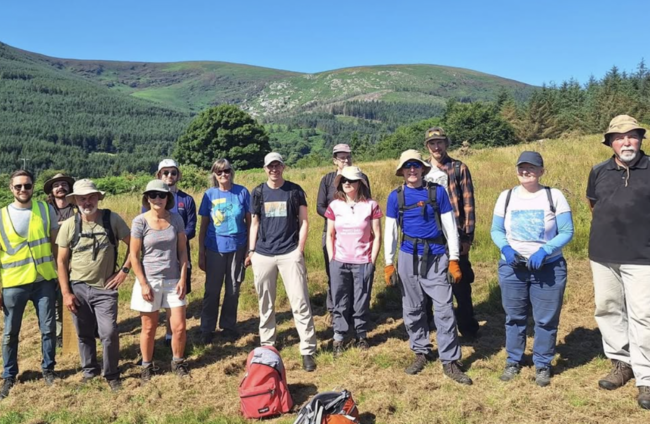
A number of volunteers working with Rewild Wicklow. Instagram/rewild_wicklow

Ireland's nature heroes Meet the grassroots guardians of the country's wild spaces

Jack Morley meets the people working tirelessly to protect and restore Ireland’s nature in its greatest time of need.

THIS IS THE second of a series of articles in which I set out to highlight the work of ‘Irish Nature Heroes’ — dedicated individuals, volunteer groups, social enterprises and charities who are doing incredible work to restore Irish nature and bring our biodiversity back from the brink.

Two years ago now, motivated by the birth of my son, I set out to rewild five acres in County Wicklow. The goal was to do my part to help our wildlife, but also to create a space where my son could build memories similar to my own childhood ones — playing at my grandparents’ house in Wexford, always surrounded by birdsong and the excitement of discovering new creatures in the garden. Memories I worried would not be possible to make in the future.

REWILDLIFE / YouTube

Although my passion has always been for nature, my background and career have been spent as a creative, building video campaigns for brands. As I began this rewilding journey, I knew my expertise wasn’t in ecology or land management, so I sought advice from experts and practitioners along the way.

At the same time, I realised I could share my learning process. My background is in video and communication, not conservation, so I picked up a camera and started documenting the journey and interviewing the experts I met — first on YouTube, then on Instagram, showing what I was doing, learning as I went, and inviting others to come along for the ride.

The response was remarkable. My channel, The Rewildlife, grew rapidly, drawing a large and engaged community who weren’t just watching but actively participating — asking questions, sharing their own experiences and encouraging progress. This taught me two important things: first, that people genuinely care about Irish nature and second, that there’s a real appetite to understand what we can all do to help restore it.

This series aims to tell the stories of people across Ireland who are doing exactly that — people quietly dedicating their time and energy to bring life back to our landscapes, through tree planting, habitat restoration, species protection and much more. Some are well known, others less so, but all contribute to a growing movement of nature restoration.

They need to be celebrated, and their stories need to be shared. Not only to highlight and support the great work they do, but also because we need a good dose of positive news. There’s no question our nature is struggling, but the good news is out there too.

I document one Irish Nature Hero every week on my Instagram. Here are a few:

Pocket Forests: Tiny trees, tremendous impact

There’s something quietly magical about a patch of native saplings bursting up between the cracks of urban life — and Pocket Forests have been making that magic in communities across Ireland since 2020.

Co‑founded by Catherine Cleary Ashe Conrad‑Jones, this social enterprise has mastered the art of transforming tiny plots — sometimes as small as a ping‑pong table — into lush havens for wildlife and wonder.

Their approach, inspired by the Miyawaki “tiny forest” method, combines densely planted Irish‑grown saplings with regenerative soil-building using cardboard, compost and other organic waste.

In just four years, they’ve helped communities plant more than 100 pocket forests — from schoolyards to urban skips — and involved over 1,500 people of all ages in hands-on workshops that teach people to regenerate soil, plant native species, and fall in love with the living world around them.

These green patches aren’t just pretty — they’re alive with birdsong, pockets of pollinators, and a growing sense of togetherness. One teacher even describes how students now use their pocket forest for Spanish class, music lessons, or a quiet moment in nature — right on school grounds.

I met Catherine Cleary last year to understand more about the Miyawaki method before I set about planting one on my own land and documented it for my Youtube. In this video, she explains all about the benefits of green spaces, particularly in an urban landscape. 

REWILDLIFE / YouTube

Pocket Forests didn’t stop at planting. They created Ireland’s first urban native tree nursery at The Digital Hub in Dublin 8, growing birch, rowan, alder and more to scatter across neighbourhoods low on green cover — and offering workshops on compost, soil, biodiversity and community care.

The result? Not just tiny forests, but growing communities — enchanted, connected and rooted, in green and in shared purpose.

Pocket Forests work with schools, resident groups, sports clubs, business, housing bodies, universities and private garden owners to create

ReWild Wicklow & the Alvey Family: A grassroots push to let nature lead

ReWild Wicklow was born of a dauntingly large challenge: that the uplands of Wicklow, long dominated by commercial conifer plantations and overgrazed peatlands, could be restored to healthy ecosystems.

That idea came from the Alvey family — siblings Simon, Ian, Danny and Enya — who, in 2021, launched a petition calling for rewilding in the county. Within a few months, over 10,000 people had signed on, and the petition was brought to the Minister for Heritage.

The family went on to establish ReWild Wicklow as a community-led and volunteer-driven environmental group focused on practical restoration. Since then, they’ve worked with volunteers and local landowners to plant native tree species — alder, birch, hazel, rowan, oak and Scots pine — across degraded and abandoned land. Their tree nursery, supplied with seed from native Irish sources, supports this long-term effort.

The group also carries out riverbank restoration, invasive species control, and public education. In 2022, they joined a Europe-wide camera trap project coordinated by UCD’s School of Biology and Environmental Science. Over two months, they installed 47 motion-triggered cameras across 220 square kilometres in Wicklow, collecting over 180,000 images. The data revealed the extent of non-native Sika deer dominance — 72% of all mammals recorded — a finding they’ve used to highlight the need for deer management as part of successful rewilding.

With support from volunteers, local environmental groups, and small grants, ReWild Wicklow has expanded its work to include peatland restoration and river catchment improvement projects. In a short time, the Alveys have helped turn rewilding in Wicklow from an abstract idea into a series of concrete, community-driven actions.

I interviewed Danny Alvey a few months ago to better understand the term ‘Rewildling’ and see the amazing work Rewild Wicklow does for myself.

REWILDLIFE / YouTube

In the above video, I also interview our next Nature Hero, ecologist and author, Richard Nairn.

Richard Nairn: A lifetime of championing Ireland’s wild

Richard Nairn’s commitment to nature in Ireland spans decades — from working as a nature reserve warden and serving as the first National Director of BirdWatch Ireland, to practising hands-on restoration on his own Wicklow land and writing books that both educate and inspire.

Richard has been an integral part of my journey into the Irish nature space, advising me on my rewilding project and introducing me to many like-minded and passionate nature enthusiasts.

Screenshot 2025-08-14 at 19.58.43

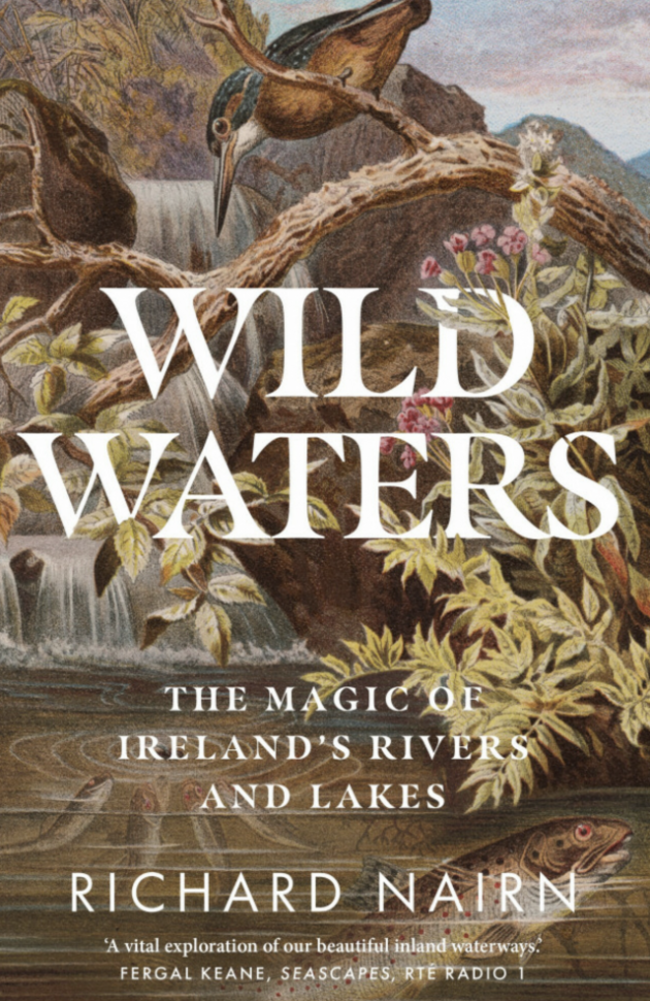
He’s authored a compelling trilogy that takes readers through Ireland’s rivers, shores, and woodlands: Wild Waters: The Magic of Ireland’s Rivers and Lakes (2023), Wild Shores: The Magic of Ireland’s Coastline (2022), and Wild Woods: The Magic of Ireland’s Native Woodlands (2020). Each book blends natural history and personal observation with thoughtful commentary on how landscapes are changing—and how they might be restored.

That journey now leads to his latest book, Future Wild: Nature Restoration in Ireland, published in late 2024. In it, Nairn explores a diverse array of restoration efforts — from small-scale community tree-planting projects to state-led peatland rewetting — and argues that nature’s innate resilience can be harnessed to mend the damage of intensive land use.

The book has been described as “by turns shocking, hopeful and finally positive,” showcasing how restoration is already underway in places across the country, with thanks in large part to the many people I dub ‘Nature Heroes’.

Beyond writing, Nairn continues to shape public discourse on restoration: he’s spoken at events like the Dublin Book Festival and the Hodges & Figgis launch in October 2024, and remains an active advocate for reversing habitat loss — urging a future in which Ireland’s landscapes are richer, wilder and more biodiverse.

You can follow Jack Morley’s Irish nature journey on his Instagram @the_rewildlife or on YouTube @TheRewildlife. If you have land you’d like to rewild, you can learn more here: Rewildyourland.ie.

Readers like you are keeping these stories free for everyone...
A mix of advertising and supporting contributions helps keep paywalls away from valuable information like this article. Over 5,000 readers like you have already stepped up and support us with a monthly payment or a once-off donation.

View 4 comments
Close
4 Comments
This is YOUR comments community. Stay civil, stay constructive, stay on topic. Please familiarise yourself with our comments policy here before taking part.
Leave a Comment
    Submit a report
    Please help us understand how this comment violates our community guidelines.
    Thank you for the feedback
    Your feedback has been sent to our team for review.

    Leave a commentcancel

     
    JournalTv
    News in 60 seconds