TheJournal.ie uses cookies. By continuing to browse this site you are agreeing to our use of cookies. Click here to find out more »
Dublin: 10 °C Wednesday 22 May, 2013

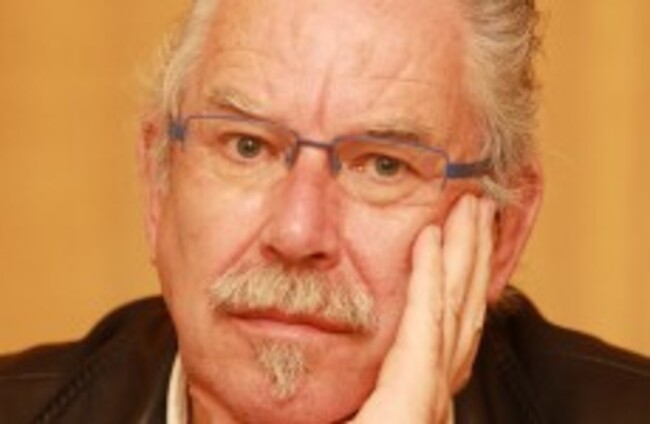
Interview: ‘Citizenship I learnt from my father’: Robert Ballagh on life & politics

Irish artist Robert Ballagh explains when his interest in politics began and why he calls himself a socialist.

Robert Ballagh

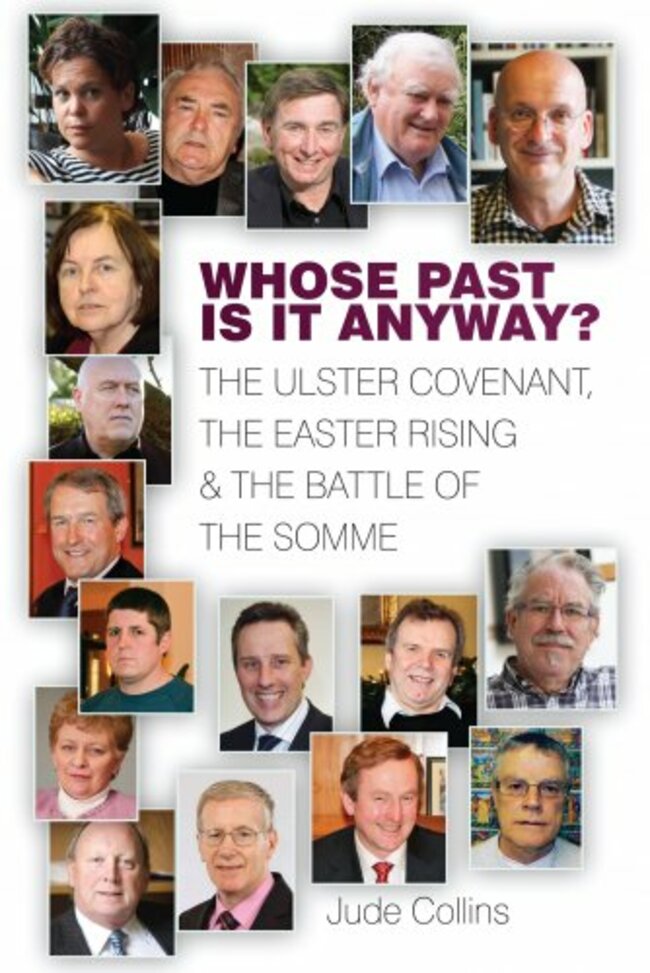
In Jude Collins’ new book, Whose Past is it Anyway? The Ulster Covenant, the Easter Rising and the Battle of the Somme, Irish artist Robert Ballagh discusses politics, citizenship and why he believes democracy is being etched away in Western societies. He says:

POLITICS WERE NEVER discussed in my home and much later on I discovered one of the possible reasons why. On my mother’s side, during the Civil War, my grandmother and my grandfather were on opposite sides and ended up, I think, not talking for about a decade.

So I can appreciate why my mother felt that politics was not a proper subject. In the case of my father, who came from a radically different background (my mother was a Roman Catholic, my father was a Presbyterian), he had no objection to talking about politics at all; but because his wife didn’t talk about politics, certainly when I was a child, I didn’t hear much discussion in the home.

When I became older and I would talk to him and we discussed politics quite a bit. He was what I would call an armchair socialist, an armchair republican. He never got involved in anything but his views would be quite contrary to the class in which he found himself. He was a manager in a wholesale drapery in Dublin and I’m sure the management weren’t too keen on socialism and things like that.

He was also a very keen golfer and I would imagine that sitting at the bar in the golf club, going on about socialism and republicanism, wouldn’t have gone down well with his fellow golfers.

‘My pictures’

It wasn’t until I was a teenager that we discussed things. I think what I got from him more than anything was the notion of being a civic republican. I remember as a kid being amazed when one day I said, “What are you doing?” and he said “I’m going to see my pictures”. I said, “What are you talking about?” And he said, “I’m going into the National Gallery to see my pictures”.

His attitude was that the National Gallery belonged to the people of Ireland and the pictures belonged to the people of Ireland, so they were his pictures. He loved parks and all those civic institutions that were part of the people’s heritage. I think I learnt that from him – that sense of citizenship and that sense of civic pride in the things that belong communally to all of us.

I became interested in politics from the time I was in school and I became a doubter – and at the same time became very concerned about social issues and about inequality in society. I was privileged to be sent to one of the ‘better’ schools in Dublin.

I remember I got into trouble with some other boys at one stage. Believe it or not we were hauled up in front of the whole school – about a thousand pupils, it was a very big school – and were described as disgraceful and guilty of letting down the school. Our crime was to have talked to a group of girls at a football match! Believe it or not, in the 1950s that was a disgraceful thing to do.

‘Future leaders’

The thing I remember was that the president of the college, in criticising us, spoke to the whole college and said “You’ve got to understand, you boys, you are going to become the future leaders of this society, and you have a responsibility to behave properly and give a good example”. And I remember thinking at the time “Is he mad?” Because I was well aware that a lot of my school comrades were not the brightest; how in the name of goodness could he suggest that these were going to become the future leaders of society?

He was right, of course. But I remember that made me think. Why is society constructed like this, where some people whose parents happen to have the desire or the money to send their children to a certain school can guarantee that their kids are going to run the country, whereas other parents who cant afford that and who have to send their kids to to other schools, the Christian Brothers or something like that, they are going to be the drawers of water and the hewers of wood?

So-called Western World

Nowadays, I would say I’m first of all a democrat. I believe in democracy. That’s one of the reasons I’m profoundly depressed at the moment: I see in Ireland and Europe, but also across the world – our so-called Western World – an almost continual hollowing-out of democracy.

We’re given the charade of being allowed to vote every four or five year, but in between that crucial decisions are made, time and time again – in some cases going to war, in our case bailing out banks. Decisions on all of these issues that will impact not only me but on my children and my grandchildren and possibly their children as well, are made without any consultation with the people, or without taking into account the views of the people on these particular issues. That would be a great concern of mine. I suppose I would also be a socialist, but I don’t know how to define socialism nowadays. But if socialism means equality and justice for all, then I’m a socialist.

Whose Past is it Anyway? The Ulster Covenant, the Easter Rising and the Battle of the Somme written by Jude Collins. Published by The History Press of Ireland.

Read next:

Comments (23 Comments)

  • Great article, no one should be ashamed to say they stand for equality and justice.

    Reply
    • I think Martin you fail to recognise that Ballagh offers an overly simplistic analysis based on the principle that all the problems with western democracy stem from the fact that the people that are “not the brightest” run western countries. This promotes the delusion of ‘rule by retards’ and its corollary that rule by intellectuals would probably yield better government. The simple fact of the matter is that western politicians are heavily under the influence of the “bringer of jobs” et al. We demand jobs thus we will put on the blinkers when the carrot of jobs is dangled. Moreover we are blind to the fact that the ruling class are invisible and have no need to engage in the public politics when politicians and the political system can be easily surreptitiously manipulated.

      Reply
    • I don’t see any suggestion of “rule by intellectuals” in that article. What Ballagh is suggesting is that everyone should have a say on an ongoing basis, not a vote every 4 or 5 years. In fact he explicitly says that towards the end of the article.

      Reply
    • Rule by intellectuals is the corollary of the statement where the author suggests under the subheading ‘Future leaders’ that we are led not by the brightest.

      Reply
    • Think the point he was making there was that there’s no merit to those people ending up in power, they get there because they’re lucky enough to come from a position of privilege, not through any hard work of their own.

      Reply
    • Yep Martin and my point is that he is missing the bigger story!

      Reply
    • Charles. Where does he say the problems with western democracy stems from “not the brightest” people running the countries? He just said that at a point in time he realised that this wasn’t fair. Bright people usually read articles and see what they say, not what they think they say.

      Reply
    • I know it is late Paul McGovern and so below I present you with the relevant extract. BTW would I be correct in suggesting that those who are “not the brightest” are ones that do not know the meaning of the word ‘corollary’.

      “I was well aware that a lot of my school comrades were not the brightest; how in the name of goodness could he [the school principal] suggest that these were going to become the future leaders of society? He was right [...] parents happen to have the desire or the money to send their children to a certain school can guarantee that their kids are going to run the country”

      Reply
  • “There is all the difference in the world between treating people equally and attempting to make them equal.”

    Friedrich August Hayek

    Reply
    • People should know that Friedrich August Hayek supported Augusto Pinochet. Hayek was perfectly willing to have a dictatorship initiate his complete free market utopia. “As long term institutions, I am totally against dictatorships. But a dictatorship may be a necessary system for a transitional period…”

      Hayek was generally in favor of limiting democracy as much as possible, exactly what Robert is complaining about here. For Hayek nothing should get in the way of the operation of the free market and the movement of capital, not social welfare, not public healhcare, not public transport, not regulations on banks, nothing, it should just all be let rip.

      Reply
    • @ Dave. Top marks for the character assassination of a Nobel prize winner.
      Hayek’s quote in full:
      ” I am totally against dictatorships. But a dictatorship may be a necessary system for a transitional period. Personally I prefer a liberal dictator to democratic government lacking liberalism. My personal impression – and this is valid for South America – is that in Chile, for example, we will witness a transition from a dictatorial government to a liberal government.”

      To put some context to this quote:
      Firstly, it was translated from German (Hayek’s native language) to Spanish to English.
      Secondly, like many European Jews who were forced to flee the democratically elected Nazi’s in the 1930’s, Hayek was well aware of the shortcomings of democracy and that, of itself, it is not a panacea against tyranny or authoritarianism. Hence, his reference to a democratically elected illiberal government.
      To imply Hayek was somehow a fascist is disingenuous. Hayek was one of the twentieth centuries most ardent anti-fascist and this was the subject much of his work including his best known book “The Road to Serfdom”.

      Hayek did not wish to limit democracy. What he did wish to limit, and what concerned him greatly, was the excessive influence and size of the nation state, which he believed would ultimately lead to loss of personal freedoms, authoritarianism and ultimately an economic crash. Similar to the one we are currently experiencing.

      Reply
  • Well said! We so obviously don’t have real democracy in Ireland but a sick sham where we are made pay the gambling debts of the criminal classes in power.

    Reply
  • The great German thinker Jurgen Habermas, a forceful advocate of a European project drew hos concerns none the less about the post-democratic nature of modern Europe. An excellent piece that is worth reading in conjunction with Ballagh’s concerns.http://www.guardian.co.uk/commentisfree/2011/nov/10/jurgen-habermas-europe-post-democratic

    Reply
  • He’s dead right about the schools. Some schools just assume they are preparing the next elite to carry on the control of politics and wealth. Its very arrogant and apartheid in nature. I’ve often been asked where I went to school. In Ireland, the answer to that questions can determine how someone judges you from that point on.

    Reply
  • Well said Bobby Ballagh – a well informed Irish Republican .
    You speak it , as you see it !

    Reply
    • I’m sorry Mr Barrett, but it’s not the fashion right now to be republican. Don’t you know we’ve “matured a nation” etc etc and the queen of England loves us god bless her. I assume that’s why you’re getting thumbs down.

      Reply
  • When will we rise up and create a second republic. France has had five Republics, retirement age is 60 and they don’t tolerate crap from politicians!

    Reply
    • It will take a serious ‘rising’ to force the current holders of power and wealth to change anything, having carefully crafted this satelet of ours into their own cash delivery machine providing them and their families with wealth and power for generations past and future.
      The Labour party made a big play out of their constitutional review but it was just a promise of change which they abandoned when they took office.
      A ballot box rising is our best chance and we know what we have to do to bring the chance about.
      But it remains just a chance because our radicals, if they got into the ministerial offices, might become reluctant to turn down the chance of power and wealth for their families and friends.

      Reply
    • France has a revolution in living memory, 1968, the may days, the students and the biggest general strike in human history (I think this might have been topped by Egypt now but not sure), but its not something that people just read about in history books, they remember it, and they remember their power.

      Reply
  • bobby is the best

    Reply
  • Defining ‘socialist nowadays’??
    How about just someone who aint convinced ‘that there is no such thing as society’, or that ‘greed is good’??
    Having a slightly broader horizon than the bottom line in the greasy till.
    No doubt that qualifies me for terror status. Is that a drone on the phone..or just Pat Rabbitting on again?

    Reply
  • Very insightful, but hardly earth shattering, my parents left school when they were fourteen and they told me the same thing this man did and they didnt even go to that school. The civics my father taught me was, “if you ever end up before a judge always say “yes your honor”" , and if you buy a Garda a couple of rounds in the pub and give him money to help you get out of a situation, he may not stand by his word. So I got a college degree and every time im in court, I say “yes sir your honor”

    Reply

Add New Comment