Sign in. It’s quick, free and it’s up to you.
An account is an optional way to support the work we do. Find out more.
Sign in. It’s quick, free and it’s up to you.
An account is an optional way to support the work we do. Find out more.
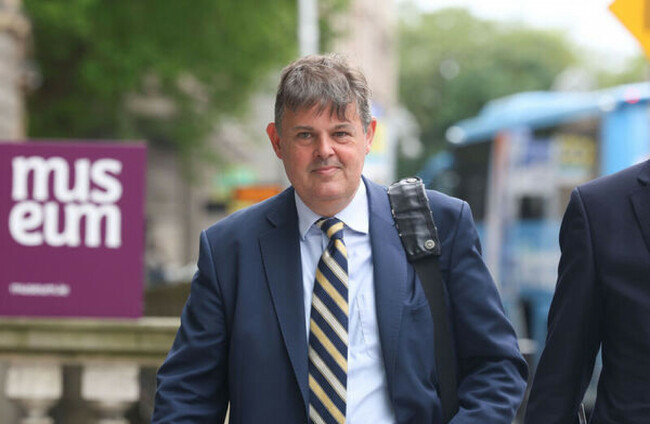
LAST UPDATE | 20 May
RTÉ EXECUTIVES WERE back in Leinster House for another Oireachtas committee grilling on Wednesday.
Almost three years since the broadcaster was first embroiled in scandal over Ryan Tubridy’s pay, new questions were raised over payments, transparency and governance.
Director General Kevin Bakhurst and deputy director general Adrian Lynch came under heavy pressure from TDs and senators over RTÉ’s revised highest-paid presenters list, which was updated last week to include Derek Mooney after he had previously been classified as a producer rather than a presenter.
Speaking today during today’s hearing, Bakhurst said that the decision to classify Mooney’s wages as such was made by his predecessor Dee Forbes.
Committee members also expected to question executives on payments made to Claire Byrne and Ray D’Arcy after they left RTÉ Radio One last year, as well as broader concerns over pay transparency and governance reforms.
We reported developments from the committee hearing as they happened.
Good afternoon and welcome – RTÉ are appearing before the media committee.
It comes after recent pay revelations uncovering that Derek Mooney was not included in the top-10 highest-paid presenters list, even though he was paid enough to feature every year between 2020 and 2025.
Mooney, however, was reclassified as a producer in his contract, and the broadcaster said he had not been considered for inclusion in the list since then.
RTÉ’s Director General Kevin Bakhurst and deputy director Adrian Lynch should face some backlash from the media committee members for this, as well as a number of wider governance issues plaguing the broadcaster.
We’ll have the latest for you here.
A reminder – here’s the revised list of RTÉ’s top 10 highest paid presenters for 2025:
Committee chair Alan Kelly has opened the session, criticising RTÉ for only providing the Director General’s opening statement to members around an hour before proceedings began.
Kevin Bakhurst has now begun delivering his opening remarks to the committee.
In his opening statement, Bakhurst said public service media in Ireland has been “underfunded for decades”, pushing back on any suggestion that the government’s multiannual funding package for RTÉ amounted to a “bailout”.
He described the funding model as “a welcome step in addressing that funding volatility”, while adding that “RTÉ is, in large part, responsible for its own fiscal stability”.
Communications Minister Patrick O’Donovan said after Tuesday’s meeting at the Department of Culture that he wanted information requested from RTÉ in advance of the talks to also be shared with the committee.
Asked today whether there was any further material requested by Mr O’Donovan that had not been provided to members, Bakhurst replied: “Not that I’m aware of.”
Kevin Bakhurst told the committee that RTÉ would continue to “interrogate what we feel needs interrogation” following the latest controversy over presenter payments and classifications.
He said the broadcaster’s revised 2025 top earners list, and the additional detail published around how it was compiled, reflected “new standards in action”.
Bakhurst also acknowledged the damage done to public confidence in the broadcaster in recent years, telling members that RTÉ had “learned the hard way as regards public trust”.
“The gains that we have made in terms of the recovery of that trust are not something that we take for granted,” he added.
Fine Gael TD Brian Brennan was the first media committee member Brian Brennan was the first to press Bakhurst on the issue this afternoon.
“Kevin, I’m asking you this straight up, do you think you are the right man to lead RTÉ forward?” Brennan asked.
“Here’s a scenario – Liverpool are not having a great year in the football, but I’ve never once heard Arne Slot blaming the previous management.
“When you go in, you try and get your structures in place straight away, that your house is in order, and you have to take responsibility for what is going on, I feel that is not the case,” Brennan added.
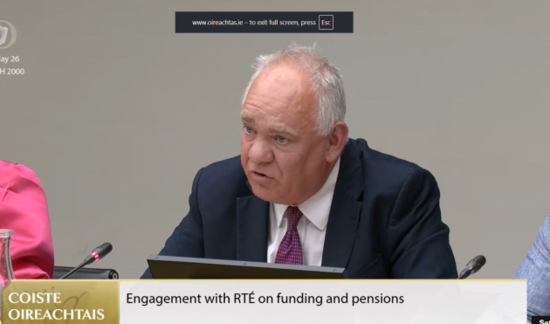
Brennan also asked Bakhurst: “do you really think that RTÉ is fit for purpose?”
Bakhurst replied: “I’m three years in the job in July, and the first year and a half was dealing with an absolute crisis.”
“RTÉ is a very complicated organisation, and we’ve got a new leadership team, we’ve got a robust board and chair, absolutely trying to drive transparency, we have made significant changes to what we reported, the annual report, how we report it.
“The level of disclosure is much more transparent than it has ever been,” Bakhurst added.
Sinn Féin TD Joanna Byrne said the situation felt like “Groundhog Day” and questioned whether Derek Mooney’s classification as a producer rather than a presenter was a deliberate decision.
Deputy Director General Adrian Lynch told the committee the categorisation had been made under instruction from the previous Director General.
Bakhurst said the current leadership had taken a different view, given that Mooney undertakes a “significant amount” of presenting work.
Ms Byrne challenged RTÉ’s emphasis on transparency, accusing the broadcaster of “virtue signalling”, a characterisation Bakhurst rejected.
She also questioned whether the issue pointed to a simple misclassification or something more deliberate, suggesting it reflected a culture at senior levels where rules and commitments on governance and transparency were not being properly applied, and where RTÉ may have been “playing fast and loose” with public money and salary reporting.
Bakhurst said he was confident there were no further misclassifications.
Former RTÉ Director General Dee Forbes instructed that Derek Mooney be treated as a producer for the purposes of how his wages were categorised, Bakhurst said.
Asked about Mooney’s pay by TD Joanna Byrne, Bakhurst said the decision in 2020 under Forbes and the then CFO Breda O’Keeffe was made after they examined his contract and concluded that the “balance of his work” was as a radio producer.
“They looked at his contract, which is a radio producer contract, they looked at the balance of his work, which is he does more producing than presenting,” Bakhurst said.
“We took a different view, which is he’s well known as a presenter. He should be in the top 20.”
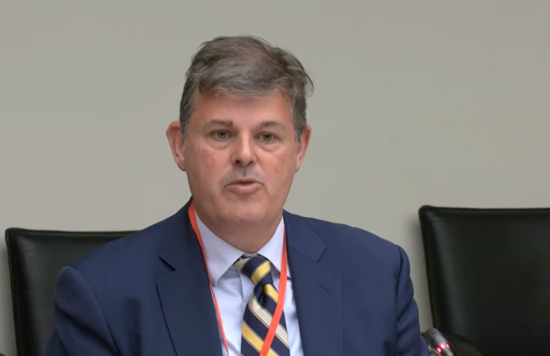
Deputy Director General Adrian Lynch told Byrne that internal RTÉ records indicated there had been an instruction that Mooney be classified as a producer, with reference to a directive attributed to the then Director General.
Asked to clarify the chain of instruction, Lynch said it had gone from the CFO to payments staff, but “per DG he was to be classified as a producer”.
Bakhurst stressed that, in RTÉ’s view, Mooney did not benefit financially from how he was categorised.
Fianna Fáil TD Peter Chap Cleere pressed Bakhurst on Derek Mooney’s pay.
Cleere noted that the highest point of the producer scale is around €90,000, arguing that this would leave roughly €110,000 of Mooney’s reported €200,000-plus salary effectively attributable to presenting work, which he described as “for an hour a week”.
Bakhurst said Mooney’s producer role relates specifically to the annual Dawn Chorus programme, which he described as a programme requiring “a whole year in setting up”.
Cleere questioned whether this represented good value for money, asking if RTÉ was effectively paying a presenter to “listen to a few birds singing”.
Bakhurst rejected the framing, saying Mooney’s involvement went beyond a single broadcast and emphasising that the programme involves year-round preparation.
He also said RTÉ is “always looking to get better value for money”, but stressed that Mooney is a long-serving staff member whose role has evolved significantly over time.
Kevin Bakhurst said he would support publishing a wider list of RTÉ salaries, including a possible “top 100” earners list, but warned there could be GDPR and legal obstacles to doing so.
The RTÉ Director General told the committee he had previously discussed expanding salary disclosures with former chair Siún Ní Raghallaigh and remained “very much in favour” of greater transparency.
However, he said concerns had been raised internally around employees’ data protection rights once disclosures moved beyond the current top earners list.
“There were immediately issues beyond the top 20 of individuals who’ve got their own GDPR rights about their salary not being released into the public domain,” Bakhurst said.
He added that even some staff members who publicly support greater transparency would object to having their own salaries published.
He told the committee legislative changes may ultimately be needed if RTÉ is to publish a significantly expanded salary list.
A total of 24 people at RTÉ earned more than €200,000 last year, according to figures circulated to members of the Oireachtas media committee today – an increase of five compared to the previous year.
The figures, which include overall remuneration packages such as pension contributions and allowances, were provided to TDs as RTÉ executives faced fresh scrutiny over pay structures and transparency at the broadcaster.
The breakdown also showed that 13 individuals received total remuneration packages above the organisation’s €250,000 pay cap.
The cap was introduced in 2023 following the Ryan Tubridy payments scandal
Media committee chair Alan Kelly has said the “mechanisms” around RTÉ’s payment to presenters “is a mess”.
“It’s time now to just deal with it,” Kelly added.
Kevin Bakhurst has also defended RTÉ’s decision to send 41 staff members to Prague for Ireland’s recent World Cup qualifier, telling the media committee that the broadcaster’s radio coverage of the trip ultimately made a profit.
Questioned by Fine Gael senator Garret Ahearn about the scale of the delegation, Bakhurst described the match as a “one-off event” that generated “huge public interest” and a “record audience”.
“The whole nation was discussing it,” Bakhurst said. “It’s exactly the kind of public service broadcasting we should be doing, bringing the country together.”
Bakhurst said 21 of the staff travelled for radio coverage, with the trip costing around €20,000 on the radio side.
“The amount of commercial revenue that was driven by those radio programmes, in terms of extra advertising and sponsorship, more than paid for all those people to go. In fact, they made a profit,” Bakhurst said.
He added that costs associated with the remaining 20 staff who travelled for television coverage were not yet available.
Bakhurst also revealed he had personally declined an invitation to travel to Prague.
Fianna Fáil TD Peter ‘Chap’ Cleere questioned deputy director Adrian Lynch over how certain high-profile on-air talent, including Tommy Tiernan, are categorised and paid.
Cleere pointed to Tiernan’s television show as an example, noting that although it attracts viewing figures comparable to The Late Late Show, the presenter would not appear on RTÉ’s internal salary lists because he is not directly employed by the broadcaster.
Lynch said Tiernan is paid via an independent production arrangement rather than as an RTÉ employee, meaning the costs sit within a broader production budget rather than individual presenter salaries.
He said such arrangements are common across the industry, with talent sometimes engaged through production companies or limited companies rather than direct contracts with RTÉ.
“He’s never going to appear on the [highest earners] list,” Lynch said.
Cleere asked how much the programme costs in total, to which Lynch replied that while commercially sensitive, it runs into “hundreds of thousands” of euro.
Lynch outlined what he described as three broad categories of engagement: direct RTÉ employees; external limited companies providing services; and hybrid arrangements where individuals may provide both presenting and production services under separate contracts.
Cleere criticised the structure, describing it as “very creative” and accusing it of amounting to “creative accounting”, a characterisation Lynch did not directly accept.
Alan Kelly described RTÉ’s treatment of its former presenter Seán Rocks’s pay as “horrendous”.
Rocks, who died last year after a short illness at the age of 64, presented the RTÉ arts and culture radio show Arena for 16 years, beginning in 2009.
It was reported that when Rocks took over as presenter of Arena, he was put on a producer salary with an additional allowance covering off his on-air role.
Rocks’s widow, Catherine Bailey, has since confirmed that she met communications minister Patrick O’Donovan on Tuesday to express concern over the classification of his work at the broadcaster.
“He paid for his loyalty, he paid for his love of his work,” Kelly said.
“The fact that he was actually categorised wrong for 16 years. I’ve spoken to people who worked with him, I’ve spoken to his friends, and to be honest with you, a lot of people are not happy with how it went, and it’s almost going to be symbolic,” Kelly said.
Bakhurst said that he has also spoken with Bailey on the issue, and said that RTÉ “have huge sympathy for Seán”.
Former RTÉ sports journalist Evanne Ní Chuilinn told the media committee she was not paid as a presenter despite effectively doing presenting work for around a decade at the broadcaster.
Speaking to Bakhurst, the Fine Gael senator said there is a “two-tier system” within RTÉ, as scrutiny continues over pay, classifications and transparency at the organisation.
Ní Chuilinn said she repeatedly sought a presenter contract during her time at RTÉ but was never granted one, despite presenting programmes for more than 10 years.
She also criticised the system of presenter allowances, saying she received a maximum of €10,000, which she said was taxed at 50% and was not pensionable.
“I feel like it’s you that’s getting away with a two-tier system,” Ní Chuilinn told Bakhurst.
Bakhurst said increased transparency at RTÉ had been met with “noise”, adding that there is a range of presenter salaries depending on experience and audience reach.
He said RTÉ is attempting to address inconsistencies in pay structures over time, and acknowledged that some staff may be under- or over-paid relative to their roles.

To embed this post, copy the code below on your site













have your say