Share your views on our Irish-language content

We need your help now

Support from readers like you keeps The Journal open.

You are visiting us because we have something you value. Independent, unbiased news that tells the truth. Advertising revenue goes some way to support our mission, but this year it has not been enough.

If you've seen value in our reporting, please contribute what you can, so we can continue to produce accurate and meaningful journalism. For everyone who needs it.

Sitdown Sunday: Meet the last man that US death row inmates see

Settle down in a comfy chair with some of the week’s best longreads.

IT’S A DAY of rest, and you may be in the mood for a quiet corner and a comfy chair.

We’ve hand-picked some of the week’s best reads for you to savour.

1. When I’m 84

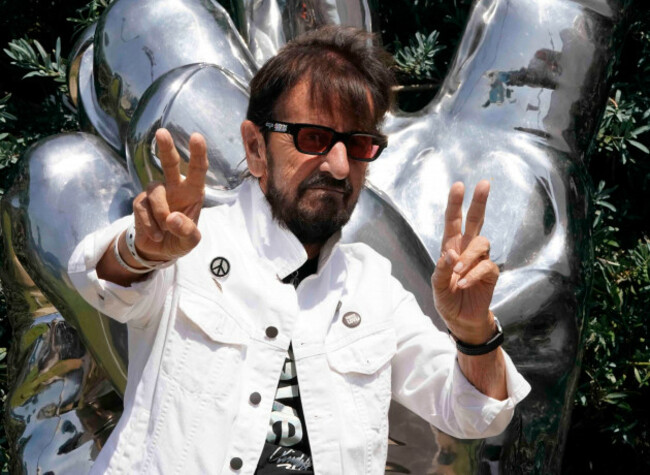
july-6-2024-musician-ringo-starr-ringoas-annual-july-7-peace-love-birthday-celebration-beverly-hills-ca-usa-july-7-2024-credit-image-cr-scott-mitchellzuma-press-credit-image Ringo Starr at his 'Peace and Love' birthday celebration last year. Alamy Stock Photo Alamy Stock Photo

We heard this week that Irish actor Barry Keoghan is going to play Beatles drummer Ringo Starr in four upcoming biopics about the band. Here’s a new interview with Ringo himself about his extraordinary life.

(The Atlantic, approx 30 mins reading time)

I attended events tied to the release of Starr’s two new records, and two concerts by his long-running “Ringo Starr and His All Starr Band.” Throughout, the Ringo habitat stayed blissfully sealed off from Donald Trump, Joe Biden, national reckonings, crises of democracy, and things of that nature. On the rare occasions when politics did intrude, the context was fittingly fun-loving. “I agree!” Starr announced last fall, as he held up a RINGO FOR PRESIDENT 2024 placard that he had grabbed from a fan in the audience during a show in Washington, D.C.If only. Instead, Starr would be my roving ambassador of joy and amity in an America that felt starved of such things. “I can’t force you to be peaceful and loving; I can only say, ‘Peace and love,’ ” Starr told me. But how wonderful it would be, I replied, if his “peace and love” birthday festivities kept growing and growing. The event might outlive him, and July 7 could be a certified international holiday. One day a week should be dedicated to peace and love, Starr countered: “I want Monday, Tuesday, Wednesday, Peace and Love, Thursday, Friday.” (Naturally, this would require eight days a week.)

2. Death row Reverend

A profile of Reverend Jeff Hood, a spiritual advisor to men on death row in the United States who advocates on their behalf. 

(Rolling Stone, approx 30 mins reading time)

“I always like to stand here this early because it makes them have to pass by me and think about what they’re about to do,” Hood says as a shiny black truck carrying prison officials trundles through the gates. He may look stoic, but Hood feels ill. In just under five hours, he’ll either see Littlejohn beaming in celebration, or strapped to a gurney. The public pays precious little attention to the majority of death-row inmates; the world only seems to tune in when a celebrity or organization rallies around a convict they deem innocent. Not Hood. No case is too small, or man too beyond forgiveness. “Back when I was growing up, it was all about the Rapture,” he says. “This idea that the world was going to end at any moment — and so there was an urgency. I don’t feel like that anymore, but that urgency is still there. People are dying.”

3. Palestine

pro-palestine-demonstrators-gathered-at-berlins-potsdamer-platz-on-april-20-2024-as-part-of-a-nationwide-protest-calling-for-germany-to-cease-arms-supplies-to-israel-the-rally-under-the-banner-s Pro-Palestine demonstrators gathered at Berlin's Potsdamer Platz in April 2024. Alamy Stock Photo Alamy Stock Photo

Germany is moving to deport four foreign residents, including two Irish nationals, for alleged participation in pro-Palestine protests. With none of them convicted of a crime, the case has raised concerns over civil liberties in the country. 

(+972 Magazine, approx 9 mins reading time)

The four people slated for deportation — Cooper Longbottom, Kasia Wlaszczyk, Shane O’Brien, and Roberta Murray — are citizens of, respectively, the United States, Poland, and in the latter two cases Ireland. Under German migration law, authorities don’t need a criminal conviction to issue a deportation order, explained Thomas Oberhäuser, a lawyer and chair of the executive committee on migration law at the German Bar Association. The reasons cited, however, must be proportional to severity of deportation, meaning that factors like whether someone will be separated from their family or lose their business come into play. “The key question is: How severe is the threat and how proportionate the response?” said Oberhäuser, who is not involved in the case. “If someone is being expelled simply for their political beliefs, that’s a massive overreach.”

4. ‘Something went wrong’

Two University of Texas students, John White and Keitha Morris, were brutally killed in 1969. Stephen Harrigan writes about what happened to them, and how their deaths still haunt some in Austin today. 

(Texas Monthly, approx 38 mins reading time)

“All we thought we had then was one dead boy,” a deputy sheriff, Billy Webb, told a reporter. “There was no indication anyone had been there with him.” That understanding changed later that night when Webb visited the Pearl Street house where John lived, to deliver the news that he was dead and to enlist one of John’s roommates to make an identification. That was when Webb learned that one of the roommates, David Bond, and his girlfriend, Dawn Horak, had been at Bull Creek that day with John and Keitha. They had driven in a separate car, hung out with them for much of the afternoon, and then left them alone, perhaps an hour or so before John’s body was found. So where was Keitha? The deputies went back to the creek with flashlights, searching deep into the night. They found footprints—in an erratic pattern that seemed to indicate someone might have been running—but nothing else to add to their understanding of the crime scene or of where the missing girl might have gone.

5. The life expectancy researchers are fighting

celebration-cake-with-burning-candle-number-100 Alamy Stock Photo Alamy Stock Photo

There’s a long list of centenarians who are suspected to be phony. Australian researcher Saul Newman has attacked the (highly profitable) field of longevity research, and the concepts of blue zones – places where people supposedly live exceptionally long lives.

(Intelligencer, approx 40 mins reading time)

Scientists would later describe Newman and his work to me in the following ways: “totally inappropriate,” “just plain offensive,” “misleading,” and “potentially libelous.” He was not even a demographer, his future enemies would delight in telling me, but a “crop scientist.” This last part was true. Newman’s grasp of graph theory and interpretable machine learning made him ideally suited to understand gene-environment interactions in wheat. He was thus unaware that he had stumbled into the most bitter feud in academic demography, between S. Jay Olshansky, a Chicago-based biodemographer who believes there is a natural limit to human life, and the late James Vaupel, who led the Max Planck Institute for Demographic Research in Germany until 2017 and believed life to be potentially limitless. In Olshansky’s telling, Vaupel would misrepresent Olshansky’s work at conferences, Olshansky would publicly correct him, and Vaupel would shout at him before a collective hundreds of people over decades.

6. Getting kids unplugged

Australian Prime Minister Anthony Albanese has announced a social media ban for children aged under 16. Instead of asking kids to disclose their real age, Australia is going to put the burden on the tech giants. It’s a bold move – but can it work? 

(TIME, approx 18 mins reading time)

“If the age restriction goes well in Australia, then I think it will go global very quickly,” says Professor Jonathan Haidt, a social psychologist at New York University’s Stern School of Business and author of The Anxious Generation: How the Great Rewiring of Childhood Is Causing an Epidemic of Mental Illness. Albanese’s stance is also remarkable for just how politically uncontroversial it has proved. As Australia heads for a close federal election in May, Albanese’s center-left Labour Party and the right-leaning Liberal-National Coalition opposition are locking horns on every issue, whether nuclear energy, health care funding, or taxation. But the social media age restriction passed with bipartisan support and stands to be implemented no matter who triumphs at the ballot box. That’s not to say there aren’t detractors—and not just the social media companies, which say the legislation passed without due consultation. “We are concerned the government’s rapid, closed-door consultation process on the minimum-age law is undermining necessary discourse,” a Meta spokesperson told TIME. TikTok complained that an exemption for YouTube was “akin to banning the sale of soft drinks to minors but exempting Coca-Cola.”

…AND A CLASSIC FROM THE ARCHIVES…

view-of-these-wide-train-tracks-north-of-coolidge-arizona-still-in-use-by-the-bnsf Alamy Stock Photo Alamy Stock Photo

An epic tale about the last train robbery in America’s Old West in 1900, complete with outlaws and a shootout.

(Truly Adventurous, approx 28 mins reading time)

A few onlookers were drunk. A cowboy lay sprawled up against the station building, apparently asleep. Another cowboy hung onto a support post to keep his balance, giggling and twirling around. A third sat on a bench, leaning up against a post. His hat had a blue feather in the brim. Two other inebriated cowboys, who were brothers, were arguing loudly close to the tracks north of the platform. They were half-heartedly shoving each other and arguing. Sheriff Thomas Brodrick of nearby Santa Cruz County happened to be on the platform, waiting for a friend to arrive on the train. He noted the argument off to his right and ignored it, except to smile in amusement. It wasn’t his county, so it wasn’t his problem. The train whistle was heard in the distance and soon the chugging sound of the engine could be heard.Within minutes, the whistle was loud enough for people to cover their ears. Moments later, the big locomotive was rolling into the light from the station. The two brothers off to the side of the platform stopped arguing and walked together toward the train as the engine pulled up beside them.

Note: The Journal generally selects stories that are not paywalled, but some might not be accessible if you have exceeded your free article limit on the site in question.

Readers like you are keeping these stories free for everyone...
A mix of advertising and supporting contributions helps keep paywalls away from valuable information like this article. Over 5,000 readers like you have already stepped up and support us with a monthly payment or a once-off donation.

Close
10 Comments
This is YOUR comments community. Stay civil, stay constructive, stay on topic. Please familiarise yourself with our comments policy here before taking part.
Leave a Comment
    Submit a report
    Please help us understand how this comment violates our community guidelines.
    Thank you for the feedback
    Your feedback has been sent to our team for review.

    Leave a commentcancel

     
    JournalTv
    News in 60 seconds