TheJournal.ie uses cookies. By continuing to browse this site you are agreeing to our use of cookies. Click here to find out more »
Dublin: 13 °C Wednesday 19 June, 2013

Column: Smart farming needed for the future

Large-scale livestock farming is out of step with food-production needs and the effect of climate change, writes food writer and lecturer Frank Armstrong.

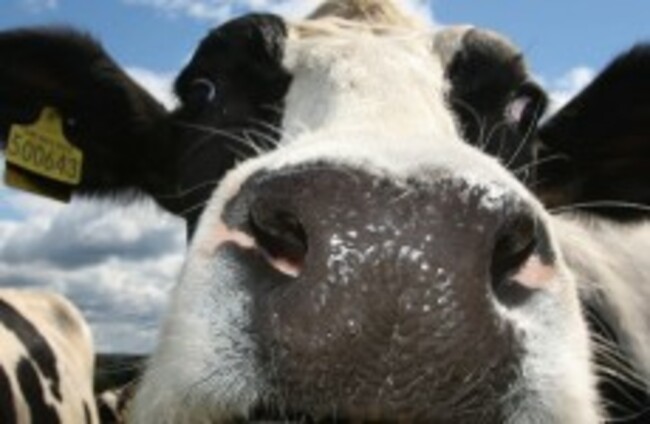
Image: David Cheskin/PA Wire

LIKE AN ONION, the subject of food reveals many layers. Peeling them back might even bring you to tears.

For the most part it is a remarkable story of human achievement. In 1800 the global population stood at one billion. Today it surpasses seven and is set to reach nine by 2050. We have life expectancies that exceed seventy in many countries. Crucial to this has been the delivery of food.

Today we consume more calories than our ancestors despite vastly increased numbers. Farmers, industrial workers and scientists all take credit for extraordinary achievements. Thomas Malthus’s grim analysis that food production increases at an arithmetic rate while populations rise geometrically has not been borne out.

But we could yet face the shortages Malthus predicted. The dangers emanate from scarce resources, a culture of over-consumption and, most worryingly, climate change. All of these problems could be alleviated by reducing the production of farm animals.

Without oil and natural gas most of humanity would starve. We depend on it at almost every stage of production from farm machinery and fertilisers to transport and refrigeration. As fossil fuels are finite, we need to alter the way we consume and farm.

A 2010 BBC documentary A Farm for the Future weighed up the options beyond peak oil and concluded that forest-gardening and permaculture offer viable alternatives in temperate climates. These practices harness biodiversity in place of oil to increase yields and decrease workloads.

“Many more of us may become involved in agriculture”

The ‘smart’ farms of the future will be very different from today’s. Contrary to employment trends over the past two centuries, many more of us may become involved in agriculture, at least on a part-time basis.

Smart agriculture demands the abandonment of large-scale livestock farming that began in earnest in the middle of the nineteenth century. Dwindling oil supplies decree that livestock should only be kept on mixed farms or in some marginal locations and that the disproportionate cultivation of crops for livestock consumption should cease.

Farm animals also place huge demands on water resources. At present, globally we derive 20 per cent of our protein from animal-based sources but in order to take account of declining water supply this figure must drop to 5 per cent if we wish to feed the population of 2050 according to new research: But the most pressing issue we confront is climate change. This year’s failure of the maize crop in America offers a foretaste of catastrophes that will afflict the Third World disproportionately.

Weather conditions in Ireland could also become increasingly problematic for farmers as summers become monsoon-like. Our own government should take note of this and desist from the wildly irresponsible targets of Harvest 2020.

After writing my last article for TheJournal.ie I was contacted by Jeff Anhang, an environmental specialist for the World Bank. He, along with a former World Bank colleague Robert Goodland, authored an article which showed that livestock account for at least 32.6 billion tons of carbon dioxide per year, or 51 per cent of annual worldwide greenhouse gas emissions. This is far worse than the 18 per cent which the UN report Livestock’s Long Shadow estimated in 2006. Curbing livestock production is the most important issue in the battle against climate change.

“Grass-fed cattle produce four times more methane than their feedlot cousins”

Dishearteningly for Irish agriculture, grass-fed cattle produce four times more methane through enteric fermentation than their feedlot cousins. We must start looking for agricultural alternatives.

We desperately need more trees to absorb the emissions that drive us towards a tipping point where negative feedback will leave us powerless to halt global warming. We have to curb depletion of rainforest but also restore some forestry to agricultural land.

It may sound paradoxical that with a rising global population I should advocate reducing the amount of available farmland, but that is what we need to do. The way to achieve this without causing widespread starvation is to move towards plant-based nutrition. This will produce more food using a fraction of the land that is presently devoted to livestock: up to half of all US corn is now fed to animals; less than 20 per cent is destined for human consumption.

That brings me to my last point which is the crisis of over-consumption in the West. Obesity is considered a disease of affluence, but that is not the case. Mexico, a relatively poor country, is dominated by cheap US food making it the second fattest country in the OECD. Those living in poverty where the Western diet predominates cannot afford nutritious food, subsisting instead on refined sugars and saturated fats. In part, this can be attributed to an agricultural system dedicated to livestock rather than diverse and healthy crops for human consumption.

“We need affordable proteins for human beings”

We must acknowledge the ultimate failure of the Western model of agriculture and diet. But often the antidote lies next to the poison. I remain hopeful that Western societies can develop smart solutions.

Rethinking our agricultural model requires us to consider which crops are best suited to human consumption and where we can grow them. We need affordable proteins for human beings. Plant sources require far less land and there is compelling evidence that human populations would be healthier with a greater proportion of them in our diet. We also need to start educating the smart farmers of the future, but what we need most urgently is to plant more trees.

Frank Armstrong is a food writer and lecturer and will teach an open access course on the Politics of Food in the Adult Education Centre in UCD beginning at the end of September.

Read more pieces by Frank Armstrong >

  • Share on Facebook
  • Email this article
  •  

Read next:

Comments (18 Comments)

  • This article is misleading in relation to the differences in carbon footprints of grass-fed v grain-fed cattle. Methane produced in their guts is only a tiny part of that calculation. A huge part of the carbon footprint is attributable to the production of grains for feed (not necessary for grass-fed), the use of fertilisers and chemical inputs, and mechanical handling of grains (not necessary for grass-fed), the destruction of soil and release of CO2 by plowing (not a feature of permanent pasture), and others.

    The author puts forward a vision of permaculture as a more sustainable source of future food for humans, but neglects to mention that a grass-grazer-predator system is a natural permaculture system that has been very successful since the evolution of grasses tens of millions of years prior to the arrival of humans into the mix.

    The replication of the conditions that permitted the American prairies and African savanahs to teem with millions of herbivores, now known as holistic grazing (per Allan Savory), allow the soil to be rebuilt, to sequester carbon, to more easily withstand both drought (a permanent pasture can retain a great deal more water than a plowed field), and flood (a permanent pasture can absorb seven times more water than a plowed field). Grazing animals allowed into cropland after a harvest can also reduce the requirement for fertility inputs and for rotovation, saving both labour and fossil fuels, and improving the biodiversity of the soil.

    Ireland excels at the production of grass and livestock, and we should keep playing to our strengths. In my opinion we simply need to wean ourselves completely away from all grain based food additives for sheep and cattle, and go back to some of the more traditional and holistic grazing patterns of the past.

    Reply
    • Are you suggesting all cattle in Ireland are fed exclusively grass ? The rise in Continental breeds here has seen the increase of grain based animal feed as these cattle will not thrive / grow on a grass only diet. Breeds like Longhorn ,Dexter , Belted Galloway will thrive on grasses alone but unfortunately the numbers of these animals in this Country are paltry by comparision

      Reply
  • “Those living in poverty where the Western diet predominates cannot afford nutritious food, subsisting instead on refined sugars and saturated fats.”

    Which is odd because buying fresh produce and cooking it yourself is generally cheaper than buying “convenience” foods. Maybe people could learn to cook?

    Reply
  • You know what else has layers? Parfait, parfait maybe the most delicious…

    Reply
  • The ivory tower of academia exemplifies its dullness by advocating impractical solutions. Here we have an academia advocating a solution which would require the overthrow of industrialisation (a tad impractical I would say).

    History and recent memory teaches us that Ireland is prone to suffer from disastrous growing season weather. Our most reliable ‘crop’ is grass and it is our most valuable natural resource. To advocate the elimination of grass fed cattle in Ireland is a madness commensurate with the logic of Pol Pot.

    Reply
  • iPads for cows lets get smarter people

    Reply
  • Anyone who disagrees with this article should

    watch this video about Sepp Holzer, the Austrian farmer and forester practices “permaculture” a different kind of farming on his mountain property. With this certain form of organic-agriculture, he is very convincing and successfully. Contrary to all conventional rules and despite annual average temperatures of 4.5°C and an altitude of between 900m-1400m, he cultivates cherries, apples, mushrooms, kiwis, lemons, pumpkins, potatoes and zucchinis. This year he also started big permaculture-projects in Brazil, Columbia, Peru and Venezuela.

    Reply
  • Even with all the resources the US has at its disposal it could do nothing to stop the drought it suffered this summer devastating its crop yields. This coupled with crazy weather all over the world will see food prices soar this winter. This will likely lead to inflation and force economists to really consider environmental issues such as climate change in their economic models, something the economist Richard Douthwaite tried to do 20yrs ago in his book The Growth Illusion in which he explains our economic model is still basically based on unlimited resources. We only started to talk about economics after we lost control of it we dont have the luxury to do the same with our environment.
    looking at GM crops as a solution is like looking to nuclear power to solve our energy needs; the long term consequences of any mistakes such as horizontal gene transfer of herbicide and fungicide resistant genes to ordinary weeds has the real potential to make things far worse. The safety record of the companies involved in GM foods is worrying, like Monsanto who created Agent Orange which to this day is causing deformities to children three generations on in Vietnam.
    On a positive note the automation of much of our work basically means that we will probably never again reach full employment, thus the possibility of small scale food production that pays an adequate wage for fresh locally grown produce is very appealing to me and an ever increasing proportion of our population on top of offering a way to reconnect with our communities.
    Our mountains are going to waste, i heard that it is only profitable for a sheep farmer with 120 acres to work 15 hrs a week. We could use our mountains to grow forest gardens, a system that involves growing plants with short root structures like strawberries, herbs on the outside followed by soft fruit, then fruit / nut and nitrogen (Alder) trees and finished with oaks, ash and other canopy trees then fruit/nut trees on other side back down to the ground, this maximises the use of the different layers of soil as well as light. Can you imagine how expensive oak and other woods will be in 30yrs. They can be sustainably coppiced and soaking carbon along the way.
    At present if our mountains are are either full of sheep or Sitka Spruce a tree from an Alaskan island that was found to grow quickly decades ago but which prevents crops growing underneath it as well as producing poor quality wood. This futile practice continues because as is the case with so much of our society many of the people in power are old men stuck in their ways not willing to listen to alternatives.
    Nuts are not the only possible source of our future protein, Will Allen is an urban farmer in the US and the group he set up Growing Power are using a chemical free way to produce large quantities of fish while using the nitrogen in the waste water to feed plants which purify it before it goes back into the fish ponds.
    There are real solutions available to us offering a sustainable low energy way to feed us to infinity but we need to start putting them into practice now for if we hit a resource/ climate wall as fast we hit the economic growth wallthen all the technological and societal luxuries we now enjoy will be washed away

    Reply
  • I read this article with some disbelief. The author’s research seems to consist of having watched a BBC documentary and read the work of someone who contacted him having read another of his pieces.

    Perhaps some independent reading around the subject would have helped make for a better column.

    He seems to suggest that Ireland’s agricultral industry should be radically overhauled in a bid to cut down methane emissions.A ludicrous suggestion given the scale of our contribution to this problem.

    The idea that we devote most of our farmland to crop growth ignores the lessons of the past.1845 anyone?

    What trees does MR Armstrong suggest we plant, as smart farmers of the future,which could counter the huge emissions produced in the emerging industrial superpowers? IF he can let me know the type I’ll gladly devote a few acres to their cultivation.

    Finally a quick search of the author’s name threw up:

    http://images.spectator.co.uk/scoff/blog/5905868/a-rare-argentine-welcome.thtml

    I’ll save anyone elsethe displeasure of having to read another of his tiresome pieces, he writes about a holiday in argentina and then reviews a restaurant in London at which he ate beef, lamb and pork. He enthusess about the pampas grazed cattle and shows no concern at the huge carbon cost of his holidays and meals.

    Patronising, preachy, poorly researched and hypocritical I imagine this column was only written to advertise his lecture series. If of a similar quality to his writing I for one will avoid it.

    Reply
  • Damocles 10/09/12 #

    “Thomas Malthus’s grim analysis that food production increases at an arithmetic rate while populations rise geometrically has not been borne out.”

    Thanks to intensive farmer and scientific intervention on crops. How about more of the same? I understand GM crops would help here.

    Reply
  • Agriculture users 40% of all the fresh water in the world today and agriculture is the single more harmful industry to the environment, worse that all the fossil fuel power plants combined in the world. We will have to up production to meet the demand for food, its unsustainable and i think that a population overshoot will occur within the next decade.Us in Ireland will be ok, with our temperate climate, but sub Sahara areas are in major trouble

    Reply
  • Superb insight Frank. Ireland alone will not solve this conundrum but it does need solving. Surely deforestation should be slowed and also convert the methane gasses to energy? Problem half sorted.
    Needs a full revolution on diet to figure the rest. Can’t see it happening without an imminent catastrophe threatening.

    Reply

Add New Comment