Sign in. It’s quick, free and it’s up to you.
An account is an optional way to support the work we do. Find out more.
Sign in. It’s quick, free and it’s up to you.
An account is an optional way to support the work we do. Find out more.
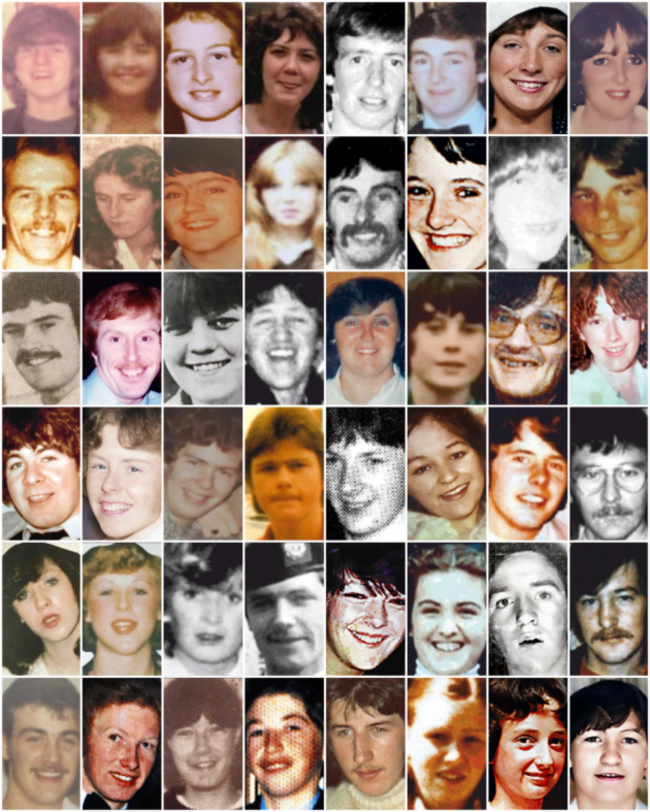
THE JURY IN the Stardust inquests has returned a verdict of unlawful killing for how all 48 victims died in the fire over 40 years ago.
The jury’s verdict on where, when and how each of the 48 died was delivered this afternoon at Dublin District Coroner’s Court.
There had been five options open to the 12-person jury: unlawful killing, misadventure, accidental, an open verdict or a narrative verdict.
The blaze tore through the nightclub in Artane on Dublin’s northside in the early hours of Valentine’s Day 1981. More than 200 people were injured.
The inquests heard from more than 370 witnesses over 90 days of evidence, and first sat in April 2023.
The jury found that the fire started in the hot press in the main bar of the venue and was caused by an electrical fault.
The jurors found that the use of carpet tiles on the walls, the presence of polyurethane foam in the seating and the height of the ceiling in the west alcove of the building all contributed to how quickly the fire spread.
A number of factors were found to have contributed to the difficulty of people leaving the nightclub once the fire started, including the fact exits were locked, chained or otherwise obstructed.
A lack of staff preparedness for a fire, the failure of the emergency light system, and a lack of visibility due to smoke also played a role, the jury found.
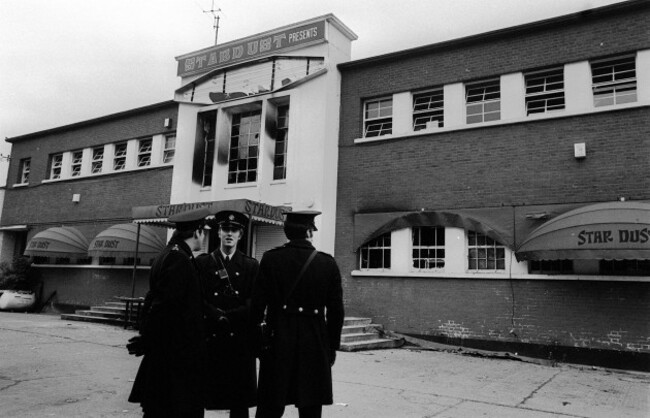
A tribunal to investigate the fire was held in 1981 and concluded that it was caused by ‘probable arson’, a verdict that caused anger among families and survivors and which was later struck from the public record.
Several campaigns were launched over the following decades calling for further investigations to be held into the disaster, the worst in the history of the State.
In 2019, then-Attorney General Seamus Woulfe ordered that fresh inquests be held, citing an “insufficiency of inquiry” as to how the deaths occurred.
Ahead of the verdict being announced this afternoon, the names of the 48 deceased were read into the record (in alphabetical order), alongside the date they were identified, the medical cause of their death, and the date and place of their death.
The most common cause of death was “rapid incapacitation due to inhalation of fire fumes and heat”.
Most of the deceased were identified in 1981, but five people were only identified in 2007 following advancements in DNA testing.
Names of the deceased, date of identification, medical cause of death, date of death (DOD), and place of death:
To embed this post, copy the code below on your site












have your say