TheJournal.ie uses cookies. By continuing to browse this site you are agreeing to our use of cookies. Click here to find out more »
Dublin: 10 °C Sunday 19 May, 2013

Number of primary school children with depression rises

The survey found that bullying leads to a number of significant mental health challenges in primary schools.

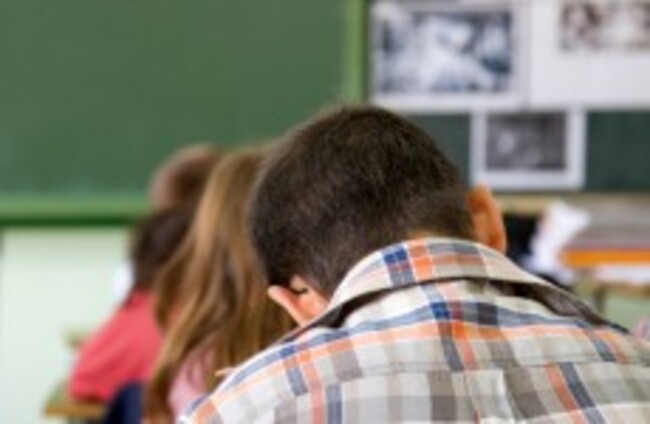
Image: Primary school children via Shutterstock

MENTAL HEALTH ISSUES amongst primary school children is on the rise.

According to a survey by the Irish Primary Principals’ Network, three out of five primary school principals said they noticed an increase in emotional disturbance of children while four out of five said attention disorders were becoming more prevalent.

Just over half of principals reported increasing evidence of family trauma while one in five said the incidence of depression among primary school children was rising.

More than one-fifth of the 650 principals who responded to the survey said violent behaviour among primary school children could also be seen more and more.

The figures come as the Government today publishes new national guidelines on promoting positive mental health and suicide prevention in post-primary schools.

However, Seán Cottrell, IPPN Director, said this survey shows that the problem is not confined to second-level schools and more needs to be done for children at primary level:

The process of building emotional wellbeing among children must begin when they are in junior infants.

He added that bullying is a significant mental health challenge in schools:

Schools must be adequately resourced and supported in delivering anti-bullying strategies locally, including the provision of adequate continuous professional development for teachers and principals.

To help combat the issue, IPPN has called for greater allocation of curriculum time for social, personal and health education to build children’s confidence and communications skills which are essential in helping them to deal with mental health issues.

Read: National guidelines on mental health in secondary schools published >

Read next:

Comments (22 Comments)

  • Lets not rush to suggest that this is the responsibility of the Department of Education. If we had any decent research tools in place, I would suspect that many children in today’s schools are coming to school with the worry and weight of family problems on their minds. Children coming to school from home environments of drugs,alcohol, domestic violence, Parental mental health and financial woes , are sure to suffer depression. Our preventative services working in the community tackling these issues have had their funds slashed – this is the result !

    Reply
    • Spot on analysis.

      Reply
    • Society is not well and they are without example basic human decentness and goodness that the overwhelmingly majority are born with.You look at the worst cases in society and you look at the top the difference is minimum and the rest are stuck in the middle depressed and held back kept down ,Humans beings should have progressed alot further but we have been held back through history by corruption war and the pursuit of greed and power and know that we have globalization the decisions of a few have worldwide effect even robbing the innocence of childhood .Its too much for good natured souls.

      Reply
    • Serious need for a look at the overall picture step outside the box and look in.

      Reply
  • Why dont the department develop a programme like the green flag, have say a yellow or whatever colour you want. To be awarded when schools develop anti-bullying programmes, promote mental health, amd most of all self acceptance, confidence and self-esteem. Have the schools work towards something, then they can fly it with pride. Just an idea?

    Reply
    • The DES new guidelines on time tabling for the current Numeracy and Literacy Initiative require a significant reduction in time spent on PE in primary schools! How short-sighted is that?

      Reply
    • Jules 31/01/13 #

      I think that’s a good idea, there’s already a Yellow Flag for diversity though so would have to be another colour :) I think a big problem is that SPHE is only alloted 30 minutes per week by the Department guidelines, and the curriculum is so overloaded it can be hard to even fit in that inadequate amount of time. We need to find ways of integrating SPHE into other subjects such as English The overall attitude and atmosphere of a school makes a big difference too.

      Reply
  • This is the try true cost of the economic collapse i think there should be introduction of mental health discussion in our schools and educate our kids on how to deal with feeling down and most of all talking to someone they trust instead of passing the responsibility from department to department until this is done there will more suicides all because kids don’t know how to talk about their problems this action will also go along way in dealing with bullying.

    Reply
  • I think the IPPN should be pushing to get rid of the 2.5 hours religion per week & use that for sphe & sports which would also help children feel better about themselves. Also i think that there has to be at least an acknowkedgement that bullying in schools is not limited to child to child bullying. There is also bullying of parents by principals, bullying of children by principals, bullying of board members by principals…..no policy in place or willingness to tackle problem by patron or department of education & skills……….

    Reply
  • I agree but there is something wrong with an education system where in the majority of schools, children have to participate in 2.5 hours religious instruction per week and only 1 hour of PE. Surely more PE would raise endorphine levels and reduce stress & anxiety. While some parents may opt for schools with religious ethos, many people have no choice of school available to them. In addition Gaelscoils should not have a religious ethos as some gaelscoils currently have RC & COI ethos, which excludes other christian children, non christian children of other faiths and children of no faith…..surely Gaelscoils should be open to any child wishing to participate in Irish medium education.

    Reply
  • Steve 31/01/13 #

    Teachers are qualified to diagnose medical conditions now?

    Reply
    • Teachers get training on how to spot and help children with developmental, attention and emotional problems, they can refer them for an assessment and diagnosis if necessary.

      Reply
    • Exactly. While Psychology is part of teacher training, teachers are not trained counselors. With some exceptions. So if they felt the child was in difficulty, either in learning or otherwise, they would have to be referred for assessment and there are usually waiting lists. And I am thinking of the “boom” times when I say this. So it is probably worse now. What they would need is to be connected to free or low cost counseling services.

      I myself lost my grandmother suddenly when I was 11 and I think it had an big impact on my life. As no one talked to me about it.

      If I was to go back to being in school again, I wish I had been trained in how to manage stress – how to breath properly, how to meditate and in Yoga. My self-confidence and sense of self also needed and needs work. And I’m sure that is the case for some school kids. We worry too much about the opinions of others.

      Reply
  • Where do primary school principals get their diagnostic criteria?
    Can they troubleshoot the fuel injection on my Volvo as well?

    Reply
  • who realy cares the are poor so mutch off the gov. bill if they die .and ireland stand by and watch.Christans my arss

    Reply

Add New Comment