Sign in. It’s quick, free and it’s up to you.
An account is an optional way to support the work we do. Find out more.
Sign in. It’s quick, free and it’s up to you.
An account is an optional way to support the work we do. Find out more.
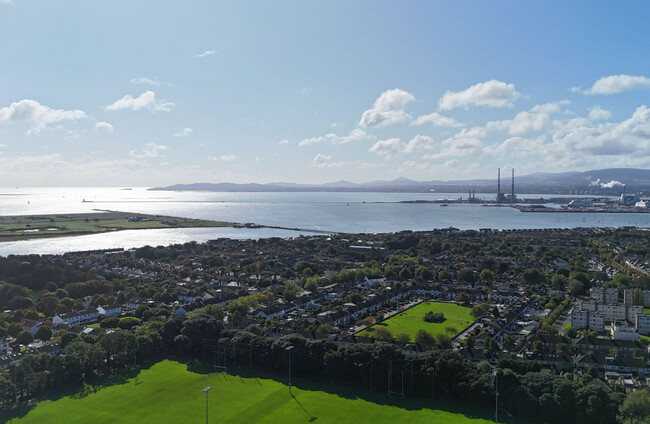

THE RECENT (AND prolonged) heatwave has once again exposed how unprepared we are for 1.5 or 2 degrees of global warming.
Throughout Ireland, we lack the infrastructure and amenities to deal with temperatures reaching into the high 20s or 30s: Dublin is no exception.
And the lack of blue spaces is a perfect example.
The term ‘blue spaces’ encompasses any water body, such as a city’s coastline, natural or canalised rivers, or lakes and ponds, and while Dublin boasts iconic swim spots such as the Forty Foot and Vico Baths, overall, there is a clear lack of accessible and swimmable blue spaces.
As people headed for a swim along Dublin’s coastline during the most recent heatwave, the failure to make Dublin as swimmable as its European counterparts became apparent once more.
As a healthcare professional, I see the impacts of heat firsthand. Heat-related illnesses are rising among vulnerable populations: be it people living in poor quality housing, often without air conditioning; older people or children; people with medical comorbidities; or those who, for whatever reason, are unable to find shelter from the heat.
What makes this particularly frustrating is that Dublin sits on one of Europe’s most remarkable urban coastal environments. Dublin Bay is the world’s only capital city UNESCO Biosphere Reserve. From Howth to Dalkey and beyond, the sea is literally on the city’s doorstep.
Or should I say, on some people’s doorstep.
Many readers will think: “I live ten minutes from the sea. It is as accessible as it can be”. But for too many Dubliners, blue spaces, whether fresh or salt water, remain effectively inaccessible.
I live close to the city centre and am still a 25-minute cycle from Seapoint, the closest place I can consistently go for a swim (depending on the tide, of course).
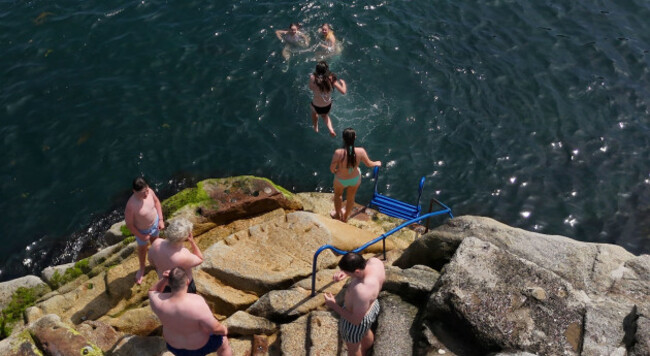
For people in the western parts of the city, getting to the sea can be a time-consuming and complicated ordeal. If you live in Crumlin, for instance, it is at least an hour by bus or DART on a weekday evening after work, or a 50-minute cycle on mostly unprotected cycle paths. It might be only 30 minutes by car, but if you don’t have access to one, a swim to cool down in the heat might not be an option.
Overall, the people of Dublin have few options for cooling down, and those living in communities with lower socioeconomic status, too often have the least options.
A swimmable city is fundamentally a social justice issue.
I keep talking about the sea simply because Dublin has few alternatives. There is the outdoor pool in Clontarf but beyond that, nothing. Dublin has no lido (a public outdoor swimming pool). By comparison, London has 17.
Worse still, the canals nor the rivers, particularly the Liffey, are neither safe nor accessible for swimming.
In fact, swimming in the Grand Canal Dock is prohibited under the Canals Act 1988 Bye Laws which state: ‘No person shall bathe or swim in any lock harbour or dock on the canals except with the permission of the Commissioners’. A perfect example of the almost complete lack of ambition when it comes to Dublin blue spaces.
The contrast to other cities that have adapted to increase public access to blue spaces could hardly be starker. Across Europe, swimmable cities are making a comeback.
On a summer day in Paris, the Seine is alive with swimmers enjoying waters that have been previously off limits for nearly a century.
Similarly, the likes of Copenhagen and Oslo have spent years improving their urban water quality. These cities took bold, brave action. The result: people returning to their waters and the increased access to the health, social and environmental benefits this brings.
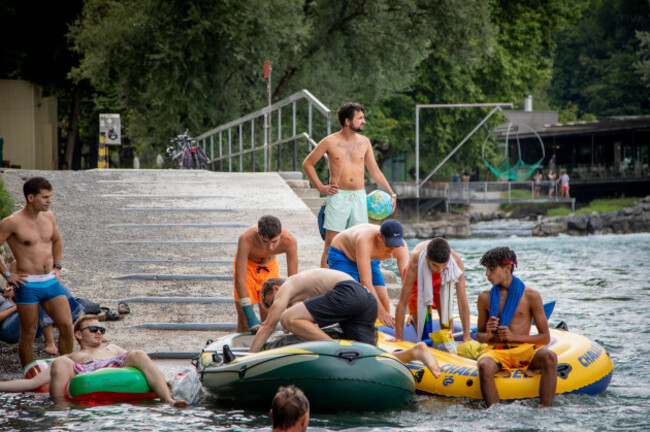
Add to these movements such as the Swimmable Cities Alliance, a grassroots campaign whose first foundational value is: Safe, healthy and swimmable waterways should be accessible to all people.
As it stands, the alliance consists of 251 diverse organisations across 121 cities and towns, and 38 countries, including the Greater London Authority and the City of Paris. Dublin City Council has not joined the alliance.
Thus, the Liffey remains a place to walk beside, not a place to swim in. Dublin’s canals are filled with rubbish and rampant algae.
Back in 2019, the public was warned not to swim in the Royal Canal after an outbreak of leptospirosis, a disease usually spread through contact with rats or rat urine. Dublin’s ‘blue spaces’ remain polluted bodies of water instead of accessible, swimmable havens.
What we should strive towards is an open-air swimmable place within 15 minutes, either by public or active transportation, of everyone’s home.
More lidos are an obvious first step. Spread out throughout the city, particularly in areas far away from the sea, and in communities with lower socioeconomic status, making going for a swim more accessible for people all over Dublin, no matter the time of day or year.
The Royal and Grand Canals should be made swimmable. Imagine Grand Canal Docks with a floating pool and a floating sauna village inspired by the one in Oslo.
Yes, that will take significant investment in sewage systems, road run-off and stormwater infrastructure, but it is worth it.
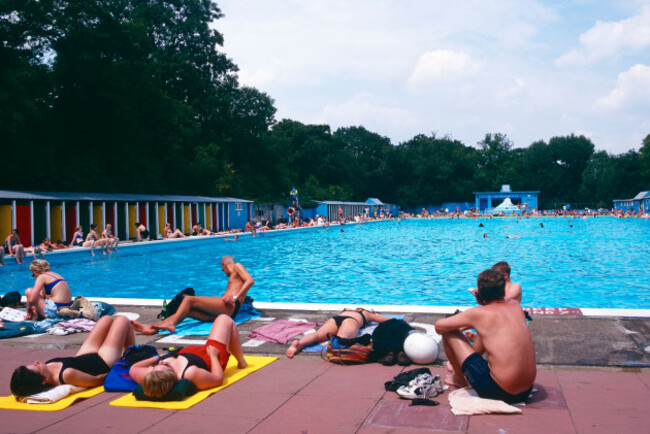
Such facilities must be operated so they don’t become a privilege for the wealthy but remain an amenity for all. Over time, such swimmable places should even form part of social or nature prescriptions from healthcare providers.
Imagine receiving a prescription for free access to a lido or a floating sauna twice a week for three months, alongside your medical treatment or medication.
Add to this a ribbon of free-to-use tidal pools, dotted along the coast, making going for a swim in the sea not only safer, but accessible regardless of the tide.
Or what about a purpose-built swimming lake in the Phoenix Park?
To coordinate and promote these spaces, the council also ought to employ blue health officers.
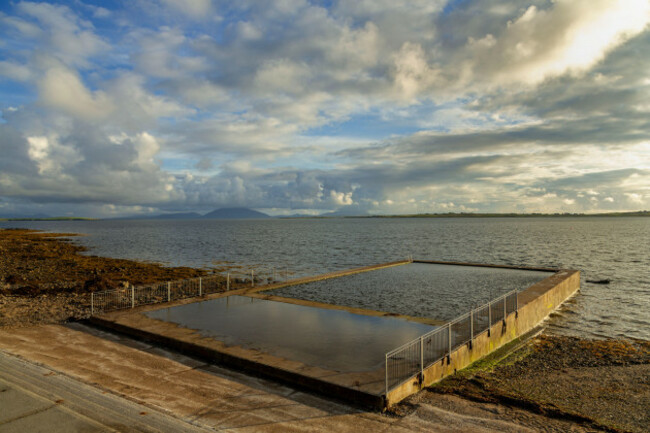
That said, this must all be done in a manner that conserves and protects the fragile ecosystems and wildlife that exist in Dublin’s waterways and Dublin Bay.
The potential to make Dublin a swimmable city is enormous. But as it is, Dublin is a city by the sea that does not function as a blue city.
A Dublin City Lido has been ‘floated’ over recent years, with Dublin’s Docklands the site of the proposed scheme, but the council powers that be have been non-committal so far.
As progressively harmful heatwaves and other extreme weather events become the new normal, Dublin faces an urgent reckoning not just in terms of climate adaptation and the need for more blue and green spaces, but also in terms of social equity, ensuring that these spaces and their enormous benefits are accessible to all.
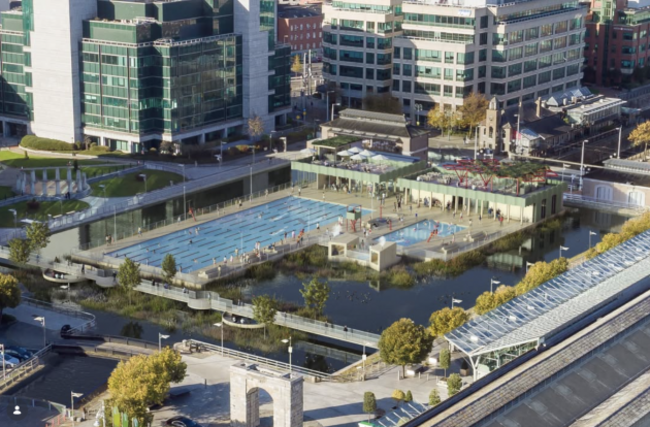
Because going for a swim is not just about heatwaves. Swimming is an incredible source of health and wellbeing for people of all ages. It is a fantastic way to encourage social interaction and build a greater sense of community. If safe and accessible, it is a ‘wonder drug’.
Just look at the proliferation of sauna culture across the country in the last decade; Irish people love being in the outdoors, in community, in a healthy way. It is about time that we reclaimed Dublin waterways and made Dublin a swimmable city. Because a swimmable Dublin is a healthier, more liveable, climate-resilient and equitable Dublin.
Blue spaces should not be a privilege for those fortunate to live by the sea or drive a car. In a time of rampant climate change and global warming, being able to go for a swim is a public health necessity.
So when we ask: who gets to swim in Dublin? The answer should be: all.
Dr Ola Løkken Nordrum is an anaesthesiology trainee and committee member of Irish Doctors for the Environment.
To embed this post, copy the code below on your site















have your say