TheJournal.ie uses cookies. By continuing to browse this site you are agreeing to our use of cookies. Click here to find out more »
Dublin: 9 °C Sunday 19 May, 2013

In focus: War of words over plan to ban ‘raw milk’

The Food Safety Authority of Ireland believes banning the sale of unpasteurised milk makes sense – but not everyone agrees.

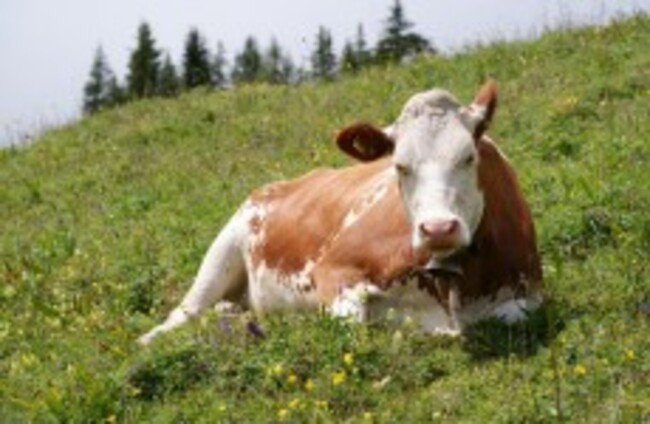
Image: Slaunger via Flickr

A GROUP of artisan foodmakers are at odds with the government’s food safety body over plans to ban the sale of unpasteurised ‘raw’ milk – rejecting claims that the ban is a logical move to reduce health risks.

The Food Safety Authority of Ireland has recommended that the government restore an outright ban on the sale of such milk, which had been originally introduced in the mid 1990s but overturned by a European directive in 2007.

Opponents of the proposed ban – including some of Ireland’s best-known restaurateurs - believe there is no reason for the ban, arguing that the government should instead try to educate people on how to avoid some of the potential health risks posed.

“The primary reason why we don’t think the ban should go ahead involves choice,” said Elisabeth Ryan, of Sheridan’s Cheesemongers in Co Meath, who is leading a campaign urging the government not to ban the sale of raw milk.

“We think people are educated enough and clever enough to be able to read – we’re not saving raw milk should be sold from every single farmer around Ireland! Our suggestion is that small dairy farmers, who have regulations on them, be allowed to sell raw milk – and people be allowed to buy it.”

Ryan explained that the largest consumers of raw milk are farming families who drink the produce of their own dairy herds – and that statistics from the time the original ban was introduced showed suggested that as many as 100,000 Irish families drank raw milk.

Dr Wayne Anderson, the FSAI’s Director of Food Science and Standards, says there is a genuine reason for banning the sale of raw milk – pointing to stats showing that banning the sale of unpasteurised fluids genuinely reduces human illness.

“Cornell University in the US lists outbreaks due to raw milk, and lists 17 between 2008 and 2010, affecting 159 people,” he says, saying that E.Coli O157 can regularly be found in milk that isn’t unpasteurised.

“What many people don’t realise is that E.coli O157 doesn’t show signs in cattle – cattle can be perfectly healthy, but intermittently share this organism in their milk.

You could go on and take a sample at one time, which should show up clear, and then take another shortly afterward showing the presence of E.coli… you could take it a third time and it would be clear again.

Inherent risk

Anderson also rejected assertions that farms knowingly producing raw milk for human consumption could minimise their health risks – countering Ryan’s suggestions that farms pasteurising their dairy produce could afford to be less rigorous in safety standards.

He pointed to studies conducted by the FSAI’s British equivalent which showed that when Scotland introduced a similar ban on raw milk sales, the rate of outbreaks of human diseases attributed to raw milk fell significantly – while the rates remained almost unchanged in England and Wales.

“Effectively, even under the best hygiene circumstances within a dairy… it cannot prevent these pathogens being present… we’ve always recommended that everyone should consume pasteurised milk, and we’re consistent about that.”

Ryan, however, believes there is a “nanny state” aspect to having a State agency recommend the banning of a natural foodstuff – particularly one which is so prevalent and popular among Irish people.

“Raw milk is the only natural food we’ve had the proposal to ban. We saw recently the danger that can be posed by bean sprouts, but there’s been no move to ban them.”

“I’d be quite happy with bottles of raw milk had ‘warning, danger’ on them – we’re not trying to have people buy it by accident… this isn’t a food like transfats, it’s a natural food – anyone with a rural background would have had it, or would still have it.”

Anderson acknowledges that banning a popular natural foodstuff is unusual – but says that on a global scale, raw milk has been regularly proven to be behind outbreaks of E.coli and tuberculosis.

He adds that there are documented Irish cases of similar conditions being caused by the consumption of unsafe milk. ”Without a shadow of a doubt, we have these pathogens in Ireland, and even the best hygiene conditions can’t prevent them being present.”

Even if the government does not ultimately take its advice on board, Anderson said the agency would still continue to encourage people not to drink raw milk, and to always seek a pasteurised alternative.

“We have no axe to grind with small farmers or the artisan food industry… public health measures like re-instating the ban that has existed up to 1996 seem, to us, to be the most logical.”

A government spokeswoman this evening said the final decision would rest with the health minister James Reilly, who is expected to make a decision on the matter by the end of the year.

Read next:

Comments (24 Comments)

  • …It affected 159 people, in the US, over the space of 3 years…

    The population of the US is 312 million. Bloody hell. That’s an EPIDEMIC.

    Reply
  • I drank ‘raw’ milk for years – sometimes still warm from the cow! NO harm at all !!!

    Reply
  • Nanny state rubbish….

    Reply
  • Raised on raw milk, both human and bovine, never a bother. Nanny state nonsense at its best. Someone stands to make money from this ban. If this ban goes through should be also ban breast feeding ?

    Reply
  • As with all stories there’s a back story, a wider context. The FSA acknowledge themselves that ‘banning a popular natural foodstuff is unusual.’ So why are they banning it? Numerous other foodstuffs have not been banned which had similar risks from duck eggs to bean sprouts. It’s very simple, those sectors do not have a global, over-weaned twin brother: the mass produced dairy sector. This global player is terrified of the raw milk movement. They are worried that a minor health scare here will be used by other global players to halt their production. And wouldn’t you when you’ve their business model? Put it this way: a kilo of some of the most expensive artisan cheeses are often cheaper per kilo than the mass produced ‘toy-cheeses.’
    The mindset in the Department, the FSAI and the advice Minister Coveney is getting suits the big food players alone. This mindset has not changed with the new government. Across Europe the most humble of consumers understand locality and tradition and assume that they will get the same here. We need to work harder to ensure they do, not work against the sectors who are trying to deliver food with integrity that food-tourists demand (a core part of Tourism Ireland’s strategy). Have we learned nothing from relying on one sector or major players? A multiplicity of small businesses is stronger than a conglomerate of giants to the GDP. Indeed it is small businesses who make up a good 80 per cent of our GDP. Until we change the mind-set this will just be the first of many battles while the lobbyists of mega-food producers will reach cosy agreements around the production of their food, none of which will take account of the small producer. All the better if you have the ear of the Minister. Though it is probably very unfair of anyone to suggest that there is any connection between this issue and the bothers Coveney, one being Simon Coveney, the Minister with responsibility for raw milk and the other Patrick Coveney, the ceo of Glanbia the convenience food manufacturer. I am sure they have never discussed the subject.

    Reply
  • This is just the large scale creameries putting pressure on the Authorities here to shut down competition.

    Reply
  • I udderly agree.

    Reply
  • Pasty faced, bought out, jaundiced, sterilized, bureaucrats!!!

    Want to throw professional Restaurateurs in Jail If there’s a bit of soil on a carrot, a slug on a leaf of lettuce or basically a bit of goodness in their food.

    And yet they will allow and encourage an ex con, with his hands down his cacks, and no food experience, sell you frozen 3 year old nutrient devoid crap, out of a filthy caravan on the side of the road or in some dingy takeaway.

    They must really want a nation of Sick Unhealthy Zombies!!!

    The Food Safety Authority of Ireland, My Arse!!!

    Reply
  • Isn’t it the case that the majority of consumers of raw milk are actually people who produce it in the 1st place?
    it’s just a ban on the sale of said milk… what’s next? black market milk sellers meetin in dark carparks and udder places :)Give us a break and go after some real criminals for a change…

    Reply
  • Correction: meant to say that Patrick Coveney is CEO of Greencore. Spent so long looking through Greencore and Glanbia websites that they both ended up tasting the same … apologies for misinformation.

    Reply
  • Bureaucracy is a giant mechanism operated by pygmies.
    Balzac, Honore De

    Reply
  • Milk is for baby cows. People drink I

    Reply
  • @Tony Stamper

    Yes the FSAI have a duty to inform us of the risks.
    Are the risks they perceive based on honest accurate data?

    Also you may find that there is more illness out there due to Pasteurized nutrition devoid dairy products.

    Personally I’ll stick with mother nature on this one and not the bought out Scholars thank you.

    Reply
  • The food safety authority’s job is to make recommendations on what is safe and what is not safe. It would seem from their research that pasteurised milk is a lot safer than un-pasteurised. It also seems that there is no practical way to be sure un-pasteurised milk is safe to drink contrary to what a lot of foodies will tell you. On that basis it makes sense that they would recommend a ban, that’s their job.

    It’s up to our politicians to decide where the line between authority and personal freedom is drawn. That’s their job. I would lean towards informed freedom every time, but I have little hope that James Reilly will look at it the same way.

    Reply
    • A Suggestion For Comrade Patrick O’Brien.

      Eat Food Closest To Its Natural Form.

      Its Better For You.

      Reply
    • It is no way near as dangerous as Eggs, Chicken or the one that causes most food poisonings but is never suspected – Reheated rice.

      Its milk ffs.

      Reply
    • @hello spruiker

      Funny that you call me comrade when I put forward an essentially libertarian position. People should be allowed do whatever they like to themselves, even if raw milk is dangerous go for it, who am I to stop you. But the FSAI have a duty to inform us of the risks.

      As for food in it’s most natural state being healthier… yes, most of the time but those people who were made ill from un-pasteurised milk products would tell you that it’s not always the case…

      @Tony Stamper

      Yes other things are dangerous, but the FSAI do make recommendations on this sort of thing too, for example reheated rice:

      http://bit.ly/r0wA0b

      Reply
    • It’s the FSAI’s duty to inform us of the dangers, so inform us. A ban is not necessary, a warning will suffice.

      Reply
    • The FSAI don’t have the authority to enforce a ban, they can recommend one though and given their remit it makes sense that they would, it’s the job of the legislature to decide where to draw the line between personal freedom and public health risks.

      Co-incidentally I came across this edition of quackcast last night that discusses raw:

      http://www.quackcast.com/epodcasts/files/7c96f42a113ecaa575dbe70af1eac99e-70.html

      It seems that an infectious diseases specialist also seems to think that raw milk is a pointless risk…

      Reply
  • I think should be down to the stats farmers receive from the dairy groups they send the raw milk to. If the somatic cell count and other bacterial levels are within the accepted levels prior to pasteurisation then should be up to the individual to drink it. But not in the artizan food industry as it is being sold to the public.

    Reply
  • think there’s a typo at the end of the third last paragraph Gavan . . .

    Reply

Add New Comment