We need your help now

Support from readers like you keeps The Journal open.

You are visiting us because we have something you value. Independent, unbiased news that tells the truth. Advertising revenue goes some way to support our mission, but this year it has not been enough.

If you've seen value in our reporting, please contribute what you can, so we can continue to produce accurate and meaningful journalism. For everyone who needs it.

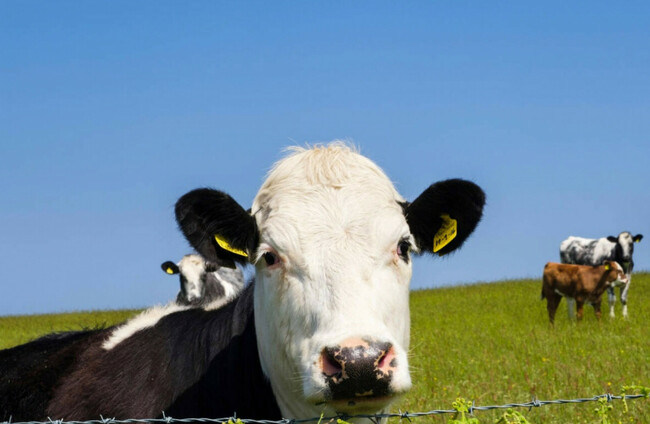
The European Commission has a maximum of 22 weeks to reply to the appeal. Alamy

An Taisce goes to Europe to challenge Ireland's permission to spread manure

An extension of the nitrates derogation was greeted as a big win by the Government and farmers last year.

ENVIRONMENTAL ADVOCACY GROUP An Taisce has formally asked the European Commission to reconsider its decision to grant Ireland permission to maintain its controversial nitrates derogation for farming.

The group, which works to conserve the State’s natural environment, is arguing that Ireland did not demonstrate that the continued exemption for “intensive” farming would be compatible with EU water quality and biodiversity laws.

Ireland’s secured an extension of the nitrates derogation from the EU for three more years in December in what was widely considered a big win in government and farming circles.

The exemption covers around 7,000 Irish farmers, allowing them to keep denser cow herds. However, it has come in for sustained criticism over the years due to the impact that it has had on Ireland’s water quality, particularly in the south and south-east.

It means that Ireland is now the only European state availing of the derogation, but the latest danger posed to it comes from An Taisce, the National Trust for Ireland.

The group – a long-time opponent of the derogation – said today that the type of intensive agricultural activities allowed under the programme remain a threat to water quality.

It has claimed that Ireland’s contention to get the nitrates extension was “so that Ireland could get its house in order by delaying assessments for up to three years”.

The group is represented by solicitor Fred Logue of FP Logue LLP, which specialises in legal challenges on environmental grounds.

The European Commission has 16 weeks from the time of the request to issue a reply, which it may extend up to a maximum of 22 weeks.

According to the request submitted by An Taisce, there are serious doubts about the lawfulness of this decision and therefore the Commission should make a new decision withdrawing this permission.

It has cited documents released to the body under access to environmental information regulations, which it has used to claim that Ireland failed to demonstrate, as it was required to do, that the extension would be compatible with EU water quality and biodiversity laws.

An Taisce has also told the Commission that “erred in its assessment” and did not ensure that the decision included “essential safeguards” to protect water quality and sensitive habitats from pollution caused by intensive animal agriculture such as dairy farming.

Furthermore, the environmental group said the Commission lacked the power to grant this derogation because it was “not justified on environmental grounds”.

What do the EU’s nitrates laws mean?

Under the EU Nitrates Directive, farmers can’t allow the total amount of nitrogen from organic manure applied to their land to exceed 170 kilograms per hectare annually.

Too much nitrogen in a river can lead to the over-growth of algae that cause damage to other flora and fauna, and deplete oxygen in the river overall.

According to an Environmental Protection Agency (EPA) report last year, levels of nitrogen – the chemical that can be highly damaging for Ireland’s rivers – have been going in the wrong direction and jumped by 16%.

In its submission to the Commission, An Taisce pointed to EPA findings indicating that nitrate rose 10% in 2025 compared with 2024.

Head of Advocacy for An Taisce Dr Elaine McGoff said that “decisions like this are meant to be based on the science, but the evidence clearly shows Ireland has a serious water pollution problem that isn’t getting any better”, with agricultural nitrogen largely to blame.

“Given our poor track record on protecting water quality nationally, we are looking to the European Commission to drive better compliance with EU law by the Irish Government,” McGoff said.

“Unfortunately, we do not believe this derogation decision achieved that. We believe it is important that the legal and ecological rationale of the decision be reviewed by the Commission.”

Readers like you are keeping these stories free for everyone...
A mix of advertising and supporting contributions helps keep paywalls away from valuable information like this article. Over 5,000 readers like you have already stepped up and support us with a monthly payment or a once-off donation.

Close
16 Comments
This is YOUR comments community. Stay civil, stay constructive, stay on topic. Please familiarise yourself with our comments policy here before taking part.
Leave a Comment
    Submit a report
    Please help us understand how this comment violates our community guidelines.
    Thank you for the feedback
    Your feedback has been sent to our team for review.

    Leave a commentcancel

     
    JournalTv
    News in 60 seconds