Sign in. It’s quick, free and it’s up to you.
An account is an optional way to support the work we do. Find out more.
Sign in. It’s quick, free and it’s up to you.
An account is an optional way to support the work we do. Find out more.
LAST UPDATE | 23 Mar
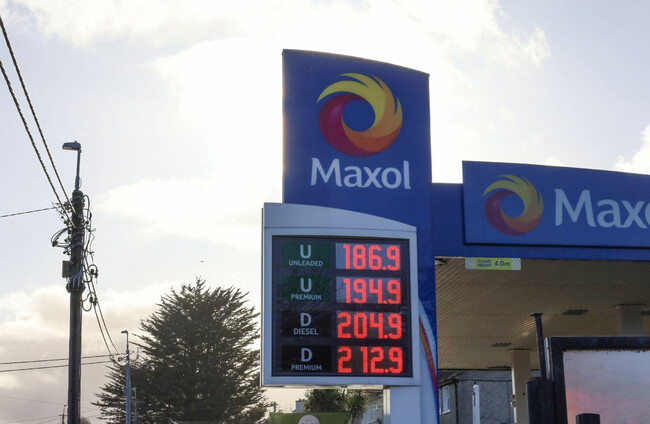
THE GOVERNMENT is expected to cut excise duty on diesel by 20 cent and by 15 cent on petrol until the end of May, The Journal understands.
The measures will be brought forward by Tánaiste and Finance Minister Simon Harris tomorrow as part of Government efforts to help people with the rising cost of fuel.
These excise measures will take effect from midnight tomorrow, subject to a financial resolution being passed by the Dáil.
Meanwhile, the NORA (National Oil Reserves Agency) levy of 2c will also be cut by the Government, meaning levies will effectively be cut by 17 cent on petrol and 22 cent on diesel.
The measures were agreed tonight at the weekly coalition leaders meeting that takes place between Taoiseach Micheál Martin, Tánaiste Simon Harris and Regional Independent TD Seán Canney.
No agreement was reached on whether to introduce a double fuel allowance payment for pensioners, carers and people with a disability. However, it is understood that the payment will be extended into April.
A diesel rebate scheme for hauliers and bus operators has also been agreed by coalition leaders tonight, which will be backdated to January in an effort to keep supply chains functioning.
The measures come as the cost of fuel has soared as a result of the US and Israel’s war on Iran that began earlier this month.
After the initial period, a review of the situation will be conducted.
Within the government, it is anticipated that these measures may need to be extended given the ongoing conflict and the damage to energy infrastructure.
A senior government source has stressed that it cannot “shield people from the full impact of the war”, but that the package announced tomorrow will be a start and will help consumers at the petrol pumps.
It is also expected that a new cross-government taskforce will be established to respond to the growing economic challenges with a focus on Ireland’s need to fast-track renewable energy.
Speaking to reporters today at the plenary meeting of the British-Irish Interparliamentary Assembly in Tralee, Minister for Public Expenditure Jack Chambers said the ongoing crisis had the potential to have the most significant shock to the global economy for decades.
“This is an exceptionally volatile time for Ireland and for the world,” he said.
If it continues that way, that has huge ramifications for the growth trajectory of every economy in Europe in the world.
“So that’s the context. So that has to form part of our economic evaluation, and what the intervention will do.”
Chambers said that Cabinet would be making the final decision tomorrow but stressed that the measures would be “temporary”.
“Government will make, I think, an appropriate intervention, time-bound, but important we keep it under review,” he said.
As the war in the Middle East continues, the head of the International Energy Agency (IEA) warned last week that the US-Israel-Iran war is “the greatest global energy security threat in history”.
Taoiseach Micheál Martin said today that the announcement will see measures that will aim to “ease any of the pressures on the public”, particularly around rapidly rising prices.
Asked by reporters if the fears around the impact of the war in the Gulf would need a Covid-like response, Martin said a presentation he and other EU leaders received at a European Council presentation last Thursday had laid out the pressures from the knock-on effects of the conflict.
Martin added that “economic forecasts are being done” and the Irish government is aware of the significance of the situation.
“Every crisis is different. We do understand fully the implications of this crisis,” Martin said, adding that he welcomed US President Donald Trump’s announcement today that he would postpone attacks on nuclear plants in Iran.
Meanwhile, Tánaiste Simon Harris said today:
“I have consistently said that the most effective remedy to the concerning economic developments globally and their impact on families and businesses in Ireland would be a de-escalation and end to the conflict in the Gulf and Middle East Region.
“With that in mind, it is welcome to see a temporary cessation of US military strikes for a number of days. I really hope this window can be used wisely. It is in the interests of humanity and our global economy for this war to end.
“In Ireland, we will of course, prepare for a variety of economic scenarios and I am continuing that work with colleagues in Government and in the Department of Finance today.”
- With reporting by Concubhar Ó Liatháin at the British-Irish Interparliamentary Assembly

To embed this post, copy the code below on your site












have your say