Sign in. It’s quick, free and it’s up to you.
An account is an optional way to support the work we do. Find out more.
Sign in. It’s quick, free and it’s up to you.
An account is an optional way to support the work we do. Find out more.
THE GOVERNMENT SHOULD pay more heed to the recommendations of the Road Safety Authority (RSA) instead of disbanding it, a road safety campaigner whose teenage daughter was knocked down and killed at a pedestrian crossing has said.
As one of its last acts before the next general election, the government wants to disband the RSA. Minister of State for Road Safety James Lawless told The Journal this week he believes the RSA’s variety of functions are all facing problems that are not being adequately dealt with.
Cabinet ministers are expected to receive a memo that would propose splitting up the RSA’s functions and creating two new bodies – one that would deal with safety and another than would take on roles such as administering driving tests and coordinating the NCT.
Leo Lieghio is the Vice-President of the Irish Road Victims Association, a campaigning organisation that provides support for people who have been bereaved or injured by road collisions.
In 2005, his 16-year-old daughter Marsia was knocked down by a driver at a pedestrian crossing and died in hospital.
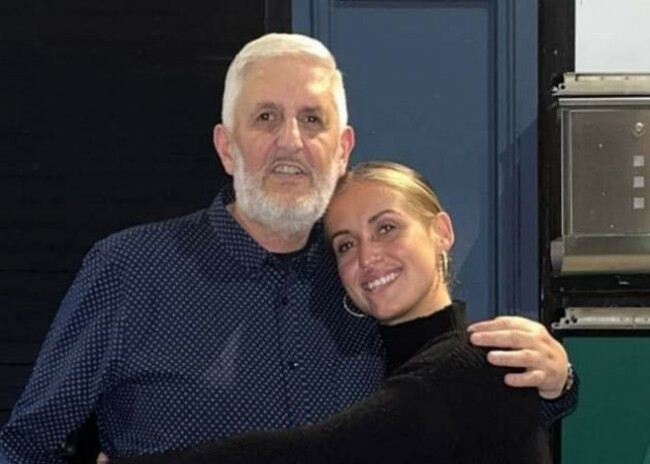
Lieghio has said the RSA is being blamed for problems but that the ultimate power to take action lies with the government.
“I think the RSA are being used as a scapegoat. There’s a lot of good people in there working hard to try to save lives,” Lieghio said, speaking to The Journal.
He said the RSA does not currently have the authority it would need to implement effective changes and has “had to work with their hands tied”.
He added that the RSA can put forward recommendations and produce advertising and promotional campaigns but that decision-making power ultimately lies with the government.
Minister Lawless told The Journal earlier this week that be believes the operational side of the RSA is “not working” and its safety promotion remit is “not where it needs to be”.
He said the problems are both compounding and distracting from each other.
“If there’s a board meeting dominated by discussion on NCT delays and licence failures, there’s not the same time being afforded to discussion on road safety, for example,” Lawless said.
A growing number of devastating road collisions in recent years has raised public attention to the issue of road safety and led to increased calls for high-level action to tackle dangerous driving.
This year, as of Friday, 143 people have died in road crashes. 57 of them were drivers, 30 were passengers, 26 were pedestrians, and 17 were motorcyclists. Nine were cyclists, three were on an e-scooter, and one was recorded in a “pillion passenger/other” category.
Lieghio said the government is “very slow” to implement any changes around road safety.
“The RSA recommended double penalty points a while back and they wanted to implement graduated speeding penalties. They’re still waiting on that,” he said.
He also criticised the limited rollout of new average speed cameras.
Two cameras were introduced this weekend on the N3 in Cavan and the N5 in Mayo – “Two, by the end of the year. Why not more?” Liegho questioned.
Looking forward, Liegho also called for consequences handed down by the courts for dangerous driving to become more serious, especially for repeat offenders, to dissuade drivers from acting irresponsibly.

To embed this post, copy the code below on your site







have your say