Sign in. It’s quick, free and it’s up to you.
An account is an optional way to support the work we do. Find out more.
Sign in. It’s quick, free and it’s up to you.
An account is an optional way to support the work we do. Find out more.
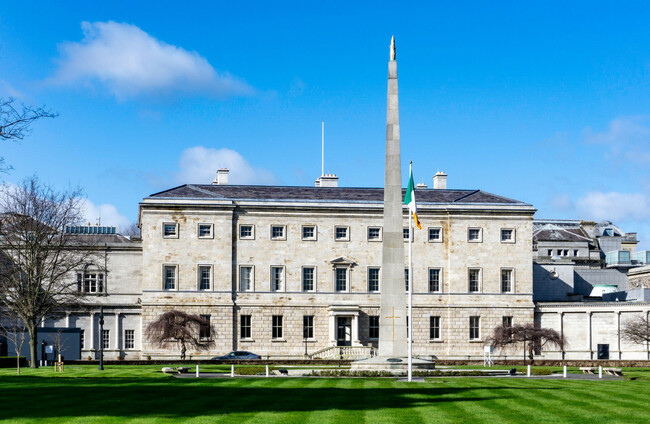
A DOCUMENT COMPILED following a meeting between gardaí and lawyers for the Irish politician accused of being a Russian agent shows that detectives “clearly and unambiguously” cleared the elected representative of wrongdoing.
The document names a number of lawyers and a senior member of the garda Special Detective Unit as being present at a meeting with the politician.
The document unequivocally states that the politician has no case to answer.
The memorandum was obtained by The Journal and verified by a number of sources familiar with the case.
The allegation that Russian intelligence had recruited an Irish politician as an agent was first reported in a Sunday newspaper in October 2024 under the headline ‘Revealed: Putin has an agent in the Oireachtas’.
The politician has never been named publicly and has been identified only by the nickname Cobalt.
Earlier this week we revealed that gardaí had told the politician at the meeting that he was exonerated, and that nothing had been found to suggest he spied for Russia.
It has now emerged that a document exists confirming this was said by gardaí to lawyers for the politician and the public representative. It is understood it was drawn up after a number of meetings between gardaí and the politician.
The memorandum states that the purpose of the meeting in question was “to check in” on the politician’s “well-being following recent media coverage”.
It says that an internal investigation had commenced to find who in An Garda Síochána had leaked details of the case to a Sunday newspaper. It states that the detectives believed “undoubtedly” the information came from inside their organisation.
During the meeting, the politician outlined their involvement in what had happened. They told gardaí that a senior garda officer had behaved in an aggressive manner during an earlier meeting, which was described as “overall poor treatment”.
In one critical paragraph, the document states that the SDU “reiterated clearly and unambiguously that the [politician] was never a person of interest nor was he under investigation or suspicion regarding the subject matter of the Sunday [newspaper] article”.
The meeting heard discussions regarding trolling by a Twitter account which was disseminating “false information” about the story.
When asked to investigate that account, the memorandum states the detectives said that their primary role was to find the source of the leak and that it was their assessment that the Twitter account had no access to “confidential information”.
There was discussion, the memo states, around whether military intelligence could be involved and this was discounted for a number of reasons.
It was also discussed whether British intelligence services were involved in the leaking.
The politician, the document states, asked SDU to make a public statement in regard to the fact that the “accusations were inaccurate”. The SDU refused to do this as it would “fall outside their remit”.
The document concludes with a paragraph stating that the politician should contact SDU with any concerns. The memo says that the SDU “emphasised they cared” about the individuals affected and that they expressed “sympathy” for the impact “on the [politician] and [their] family”.
The Journal put a number of questions to An Garda Síochána about this matter, including whether a garda detective was assigned to the politician as a liaison.
We also asked for confirmation that a very senior garda had attended a meeting with the politician, and whether the gardaí gave undertakings to the politician that they were not considered a suspect.
We further asked about why after five years no-one had been interviewed under caution, no-one has been arrested, and no file has been sent to the Director of Public Prosecutions in connection with the case.
A garda spokeswoman sent us a statement which read: “An Garda Síochána is continuing an ongoing active criminal investigation into this matter. An Garda Síochána has no further comment.”
At a graduation ceremony for new gardaí in Templemore today, outgoing Garda Commissioner Drew Harris refused to answer questions on the case on the grounds of national security.

To embed this post, copy the code below on your site







have your say