We need your help now

Support from readers like you keeps The Journal open.

You are visiting us because we have something you value. Independent, unbiased news that tells the truth. Advertising revenue goes some way to support our mission, but this year it has not been enough.

If you've seen value in our reporting, please contribute what you can, so we can continue to produce accurate and meaningful journalism. For everyone who needs it.

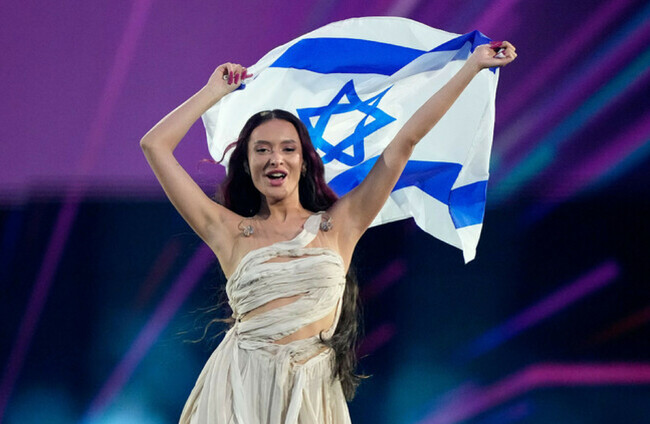
Eden Golan, who represented Israel in 2024 in Sweden. Alamy Stock Photo

Ireland will not compete in Eurovision 2026 after Israel allowed to remain in competition

Spain and the Netherlands have also confirmed that they will not take part in the contest.

LAST UPDATE | 4 Dec 2025

IRELAND WILL NOT take part in the Eurovision Song Contest 2026 and it will not be broadcast on RTÉ after it was confirmed that Israel would be allowed to remain in the competition. 

Spain, the Netherlands and Slovenia have also confirmed that they have withdrawn from the contest, while Iceland will decide next week.

Belgium, Finland and Sweden have also said they were considering a boycott over the situation in Gaza.

It comes after the European Broadcasting Union (EBU), which organises the annual competition, cleared the way for Israel to take part in next year’s contest in Vienna. 

The EBU held a vote for member broadcasters on reforms “to reinforce trust and protect neutrality” of the contest during an assembly at its Geneva headquarters this evening. No vote on participation in the competition was subsequently held. 

Countries including Ireland, Iceland, Spain and the Netherlands, had threatened in recent months to pull out of the 2026 contest if Israel takes part. Broadcasters must confirm participation by mid-December.

In a statement this evening, RTÉ said its position remains unchanged.

“RTÉ will not participate in the 2026 Eurovision Song Contest, nor will RTÉ broadcast the competition,” a spokesperson said. 

RTÉ feels that Ireland’s participation remains unconscionable given the appalling loss of lives in Gaza and the humanitarian crisis there which continues to put the lives of so many civilians at risk.

“RTÉ remains deeply concerned by the targeted killing of journalists in Gaza during the conflict and the continued denial of access to international journalists to the territory.”

A boycott by key European supporters could lead to a significant decline in audience figures and potential sponsorship.

Meanwhile, a BBC spokesperson said it supports the “collective decision made by members of the EBU”.

“This is about enforcing the rules of the EBU and being inclusive,” added the BBC spokeperson.

EBU vote

Last month, the voting rules were “majorly overhauled” after controversy regarding the public vote for Israel at this year’s Song Contest.

Among the changes was a limit to the number of times people can vote and the discouragement of “disproportionate promotion campaigns” by “governments or governmental agencies”.

The changes came after an Israeli government agency paid for adverts targeting this year’s Eurovision public vote.

The EBU had expressed hope that these changes would be enough to persuade national broadcasters to participate in next year’s event in Austria and not go ahead with a planned vote on Israel’s participation.

That vote had been due to be held this evening. 

However, the EBU said that as members were asked to vote in a secret ballot on whether they were “sufficiently content with the new measures and safeguards announced last month”, there was no vote on participation taken.

“A large majority of members agreed that there was no need for a further vote on participation and that the Eurovision Song Contest 2026 should proceed as planned, with the additional safeguards in place,” the EBU said. 

Reaction

Paul Harrington who, with Charlie McGettigan, won the Eurovision Song Contest for Ireland in 1994 told RTÉ that “the whole idea of the Eurovision was to bring everybody together, leave the politics outside the door”.

“I don’t know what the ultimate impact will be, but it certainly will have an effect and maybe there’ll be safety in numbers when everyone has to try and get back in again, I don’t know.”

In a message shared online, the Ireland-Palestine Solidarity Campaign (IPSC) said: “Well done RTÉ.”

Its chairperson, Zoe Lawlor, said the group had been calling on the broadcaster to boycott the event for two years.

“We very much welcome RTÉ standing firm in their decision and reiterating that they will neither participate in Eurovision 2026 nor broadcast it,” Lawlor said. 

The Dublin Broadcasting branch of the National Union of Journalists also welcomed the decision.

In a statement on X, it said: “We agree that to participate would be unconscionable given the appalling loss of lives in Gaza, the targeted killing of journalists, & Israel’s continued denial of international media access to Gaza.”

Elsewhere, Sinn Féin’s culture spokesperson Joanna Byrne said she was “appalled the EBU did not put the decision to allow Israel to participate to a vote”.

She expressed hope that other “nations’ broadcasters follow suit in the coming weeks” and noted that the EBU “moved quickly to ban Russia from participating after their brutal invasion of Ukraine”.

She added that Israel “should be treated the same as Apartheid South Africa was, and be banned and boycotted by all”.

However, former Minister Alan Shatter has criticised the move on X, saying it was an “international embarrassment”.

He claimed it would “deny Irish artists of the career boosting opportunity to compete and the Irish public of both the enjoyment of our doing so and voting for their preferred song”.

Israel

In a statement this evening, Israel president Isaac Herzog said his country “deserves to be represented on every stage around the world”.

“I am pleased that Israel will once again participate in the Eurovision Song Contest, and I hope that the competition will remain one that champions culture, music, friendship between nations, and cross-border cultural understanding,” added Herzog.

He thanked “all our friends who stood up for Israel’s right to continue to contribute and compete at Eurovision”.

“This decision demonstrates solidarity, fellowship, and cooperation, and reinforces the spirit of affinity between nations through culture and music,” said Herzog.

Foreign Minister Gideon Saar also welcomed the announcement.

“I am ashamed of those countries that chose to boycott a music competition like Eurovision because of Israel’s participation. The disgrace is upon them,” Saar said on X.

-With additional reporting from Diarmuid Pepper


Readers like you are keeping these stories free for everyone...
A mix of advertising and supporting contributions helps keep paywalls away from valuable information like this article. Over 5,000 readers like you have already stepped up and support us with a monthly payment or a once-off donation.

Close