Sign in. It’s quick, free and it’s up to you.
An account is an optional way to support the work we do. Find out more.
Sign in. It’s quick, free and it’s up to you.
An account is an optional way to support the work we do. Find out more.
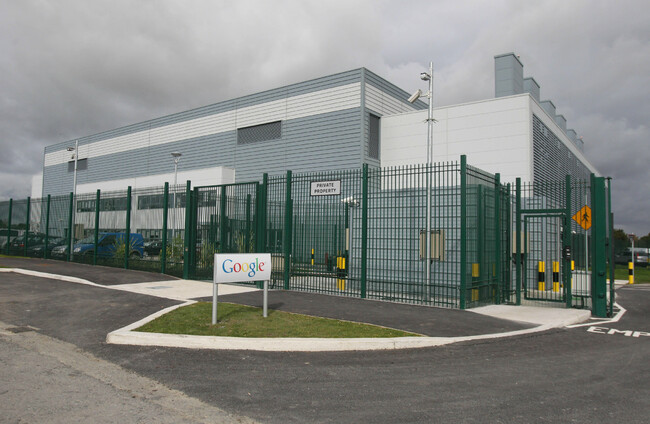
MINISTER FOR ENTERPRISE Peter Burke today received Cabinet sign off on a major plan to build more data centres across the country.
The ‘Large Energy User Action Plan’ (Leap) sets out details on growing the sector over the next five years.
While the plan “anticipates” most new energy-intensive businesses will be built in “strategically prepared, nationally planned locations”, it will not prevent them from being built in other areas.
Leap aims to attract investment in “energy-intensive sectors” including semiconductors, pharmaceuticals and data centres to Ireland.
Speaking at a press conference this afternoon, Minister Burke said the Government is “trying to manage the digital and the green transition together.”
He was joined by Minister for Climate, Energy and the Environment Darragh O’Brien, who said data centres are “central to Ireland’s economic and digital future as they are a key part of our foreign direct investment (FDI) and the associated employment”.
He added: “Many of the significant employers in our state need to see a horizon of certainty when they’re investing.
“FDI isn’t like a tap, you can’t turn it off for a few years and say we’ll come back to it in five years’ time.”
Data centres only employ around 21,000 people in Ireland, while consuming 22% of the country’s metered electricity.
Today’s plan comes following the lifting of an effective moratorium on new data centre connections in December that had been in place since late 2021, while the Commission for the Regulation of Utilities (CRU) was reviewing its policy on large energy users.
In December, the CRU published its decision that data centres can be built where they meet at least 80% of their annual energy demand with additional renewable electricity projects generated in Ireland. This can be done over a six-year period.
Today’s plan from the Department of Enterprise sets out that data centres can be developed in regional locations where there is generation capacity. More centres can then be built when more energy generation capacity comes on stream through renewable energy projects, such as offshore wind.
Electricity demand from data centres has grown from 5% of national electricity demand in 2015 to 22% in 2024.
According to Eirgrid, by 2034, it is expected that this, along with any other new technology-related energy drains, will rise to 34% of electricity demand.
Reacting to the plan, Social Democrats environment spokesperson Jennifer Whitmore said it constituted greenwashing.
The Wicklow TD said the production of renewable energy sources should be prioritised for residents and small businesses, and that approving new data centres “only means that we continue to chase our tail in terms of climate goals and energy demand”.
“Any strategy on data centres needs to set out the energy usage by data centres that we can afford from a climate, energy security, and pricing perspective, which these rules fail to establish.
“Elements of these rules are clear examples of greenwashing – there might be an 80% renewable requirement, but developers can still rely on on-site fossil fuel backup which could lead to locking in carbon-heavy infrastructure,” Whitmore said.
Similarly, Labour’s climate spokesperson Ciarán Ahern said the plan was “reckless” .
“We are failing to focus on what should be the priority, decarbonising the energy we already use. Every new data centre approved without conditions soaks up scarce renewable capacity that should be driving down emissions across homes, transport and existing industry.
“We cannot build a clean energy system if all new renewable generation is immediately swallowed by new demand, while households and communities see no benefit,” the Dublin South West TD said.
With reporting from Press Association

To embed this post, copy the code below on your site







have your say