Sign in. It’s quick, free and it’s up to you.
An account is an optional way to support the work we do. Find out more.
Sign in. It’s quick, free and it’s up to you.
An account is an optional way to support the work we do. Find out more.
 InvestigatesSuicide Prevention
HUNDREDS OF PATIENTS died by suspected suicide shortly after being in contact with healthcare services in Ireland, internal HSE figures reveal.
Documents obtained by The Journal Investigates show that 449 suspected suicides were recorded on the HSE’s internal reporting system between 2022 and 2024.
The incidents – recorded under the National Incident Management System (NIMS) – are logged by staff when a death occurs within three weeks of contact with a patient with mental health difficulties.
They are not publicly reported, and don’t appear in official suicide figures until after a coroner’s inquest officially determines a cause of death, which can take place months or even years later.
The Journal Investigates has found that Ireland’s mental health system routinely funnels those in suicidal crisis through busy Emergency Departments [EDs], with little capacity to track or protect them after they leave.
It comes just weeks after the National Self Harm Registry revealed that more than one-third of those attending emergency departments with self harm injuries were not assessed by a mental health professional during their visit.
Families of those who have lost loved ones say this critical gap in Ireland’s suicide-prevention system must now be fixed to save lives.
“This system is understaffed, under-resourced and overwhelmed,” Joe Loughnane, whose brother Adam took his own life last year, told The Journal Investigates.
“But that doesn’t mean we accept people dying as collateral damage.”
Investigations like this don’t happen without your support… Impactful investigative reporting is powered by people like you.
In Ireland, official figures surrounding deaths by suicide are only published by the Central Statistics Office (CSO).
It shows that in 2022, 436 suicides were registered, while provisional data for 2023 records 453 deaths.
These figures are subject to change due to the fact that suicide can only be ruled as a cause of death by a coroner, with inquests taking some time to complete.
The CSO data captures all confirmed suicides nationally, regardless of whether the person had any recent contact with health services.
By contrast, NIMS captures deaths logged by healthcare staff as suspected suicides where services were aware that the person had recent contact with mental health services.
This can include hospital-based liaison psychiatry teams, in-patient mental health units, community mental health teams and Emergency Departments.
While the two datasets are not directly comparable, the NIMS figures point to a substantial number of people who died after actively engaging with medical staff, highlighting the critical risk period following contact or discharge.
Noeleen Eustace knows of that risk all too well.
In May last year, her 26-year-old son Kelvin Brennan died just weeks after telling a psychiatrist he was suicidal.
In the years leading up to Kelvin’s death, his mother said she attended hundreds of medical and emergency room appointments alongside him while he was in crisis.
“In one year alone, I presented with him to Naas General Hospital A&E at least 60 times,” she told The Journal Investigates.
I remember one time in the waiting room, I just sat and held him. I said, ‘I have to keep him alive’.
When asked about the family’s experience, HSE Dublin and Midlands Region – which oversees Naas General Hospital – said it does not comment on individual cases.
However, a spokesperson stated that all people presenting to Emergency Departments with suicidal ideation follow a “standard care pathway”, including clinical assessment and referral to liaison mental health services.
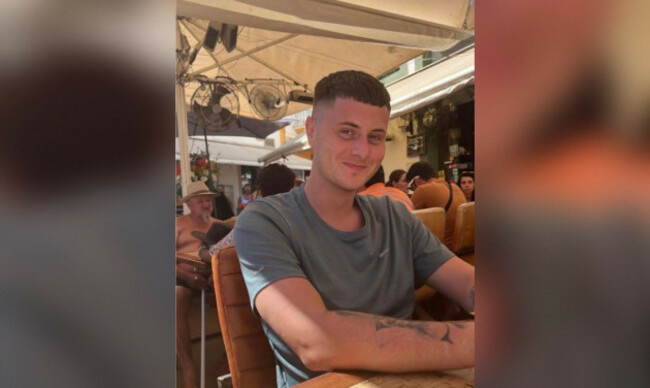
Kelvin’s mental health struggles did not appear out of nowhere. Eustace described how from a young age, she repeatedly brought him to GPs, therapists and mental health services, warning that something was deeply wrong with her son.
He struggled to sleep, regulate his emotions, and cope with overwhelming anxiety. At just five-years-old, Kelvin was referred to Child and Adolescent Mental Health Services (CAMHS).
Despite years of contact, he was not formally diagnosed with Asperger’s Syndrome – which was considered a form of autism up until the 2010s and is now recognised as autism spectrum disorder – until his teens.
This diagnosis, alongside generalised anxiety, dyspraxia and sensory processing disorder, was only made after his mother sought out a private assessment.
“When I rang CAMHS to tell them he’d been diagnosed with Asperger’s, they said: ‘Yeah, we were kind of thinking that,’” she said.
I remember thinking: When were you going to tell me?
In a statement to The Journal Investigates, a CAMHS spokesperson said its service is designed to “treat moderate to severe” mental health presentations and does not assess autism.
Autism evaluation and diagnosis is primarily carried out by Primary Care Services here.
It declined to comment further on Noeleen Eustace’s concerns, citing confidentiality issues.
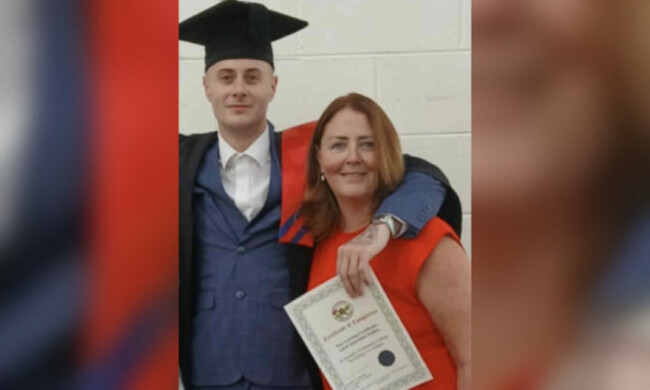
By the time Kelvin reached his teenage years, he was explicitly telling clinicians, and his mother, that he wanted to die.
As he grew older, Kelvin’s mental health deteriorated further, with extreme emotional dysregulation, sleep deprivation, and later substance misuse – a pattern Eustace says health services failed to respond to in any coordinated way.
When Kelvin turned 18, he fell into what she describes as “no man’s land” – too old for CAMHS, but not taken on by adult services.
“For nine months, there was nothing,” she said. “No support. No pathway.”
In April last year, a month before his death, Kelvin again told clinicians that he was suicidal. His mother claims he was signposted to a self-referral support service.
“Four weeks later, he was dead,” Eustace said. “He should have been sectioned [involuntarily detained], and I believe if we were in the UK instead of Ireland, he would have been.”
A hospital spokesperson again declined to directly comment on the 26-year-old’s case, but did state that Emergency Departments prioritise patients based on “clinical severity”.
The spokesperson also pointed to national programmes aimed at improving crisis care, including liaison mental health services in hospitals, suicide crisis assessment nurses, and community-based crisis resolution services.
HSE Dublin and Midlands said these are intended to provide “assessment, safety planning and alternatives to hospital” admission as part of ongoing service development.
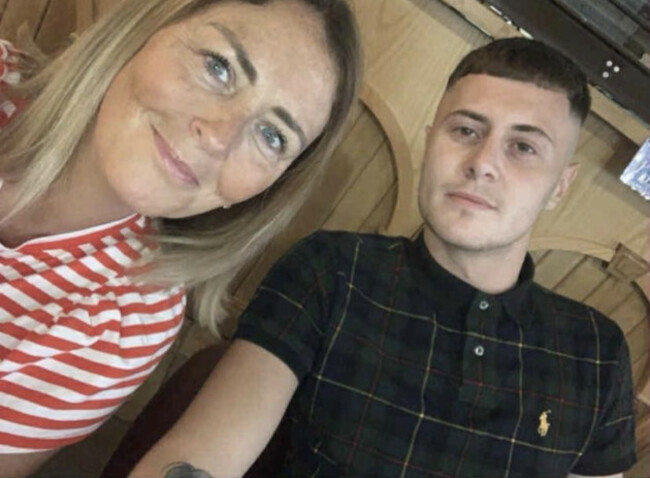
Figures gathered by the National Self-Harm Registry Ireland (NSHR) show the demand for mental health services in emergency care.
Last year, an estimated 12,621 self-harm presentations were made to ED departments by 9,436 individuals.
Almost half of those resulted in discharge directly from an ED, while one-in-seven patients left before any next-care recommendation could be made.
Crucially, the NSHR research shows that suicide risk is highest immediately following hospital attendance.
On 11 February last year, Adam Loughnane attended the Emergency Department at University Hospital Galway. He was in the midst of a mental health crisis.
The 34-year-old from Galway had packed an overnight bag, believing he would be admitted to hospital.
Instead, Adam was triaged and told to wait in an overcrowded ED. He didn’t stay, and within half an hour of leaving the hospital, he was dead.
“What has haunted us ever since is that two hours before he was found, he was sitting in that waiting room asking for help,” his brother Joe told The Journal Investigates.
He later learned that Adam had presented to the same Emergency Department as suicidal on four previous occasions since 2015.
The hospital is currently carrying out a review into Adam’s death.
A spokesperson said: “While we cannot comment on individual cases, UGH management and staff offer our sincere condolences to the family of this patient.
“This matter is now under review and we are engaging directly with the family. In the interests of patient confidentiality, it would be inappropriate to comment further.”
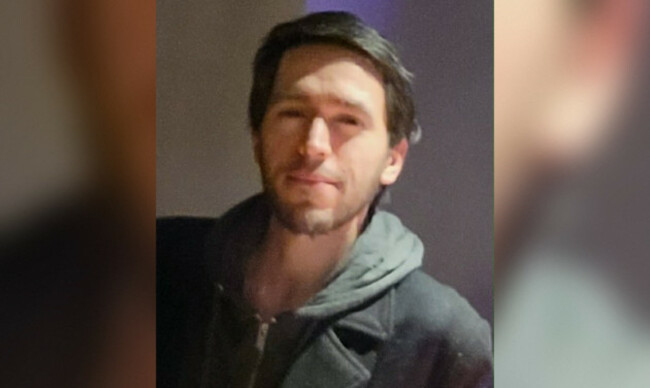
In the weeks following Adam’s death, his brother launched a petition calling for an end to those in mental health crises being treated in general Emergency Departments.
Joe Loughnane compiled a 54-page pre-budget submission building a case for mental health EDs in Ireland.
The document – titled ‘Adam’s Protocols’ – maps every pathway available to someone in suicidal distress. It shows that every route leads back to an Emergency Department.
“If you go to a GP, you’re sent to A&E,” he said. “If you go to an out-of-hours GP, you’re sent to A&E. If you go to a crisis café and say you’re suicidal, you’re sent to A&E.”
The report – which Loughnane said received no responses from any TDs he contacted – points to successful mental health models already operating in some parts of England and the US.
These include standalone, 24/7 mental health emergency units staffed by psychiatric teams, separate from general emergency departments.
His submission estimates that piloting such a unit in Ireland could cost as little as €1.7 million – a fraction of the HSE’s €1.5 billion health budget.
He said: “What Adam needed wasn’t a trolley.
He needed one trained person, in a room, to stop him from dying.
The family’s petition has received almost 21,000 signatures in support of the proposals.
In a statement to The Journal Investigates, Minister of State for Mental Health Mary Butler extended her sympathies to both families, adding that the Department of Health is working with the HSE to “expand alternatives to emergency departments”.
The Minister also said enhanced surveillance systems, including a register of deaths among mental health service users, are planned but not yet operational, and highlighted ongoing work to strengthen regulation of mental health services and expand dual-diagnosis supports.
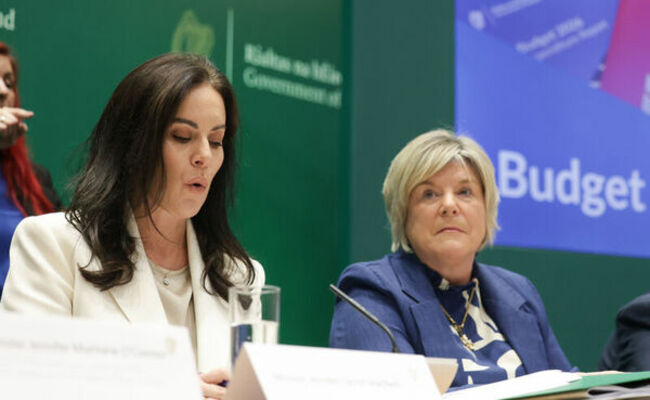
Last year, a report by the Mental Health Commission (MHC) concluded that there is “no consistent level of mental health service” across Emergency Departments in Ireland.
MHC found that out-of-hours care is weaker and delays common, with psychiatric support often provided by on-call community teams rather than ED-based staff.
Discharge, the report states, is the default outcome. Follow-up is recommended, but not guaranteed, it said.
Meanwhile, the system not only continues to cope with persistently high demand, but growing complexity.
Professor Ella Arensman, chief scientist at the National Suicide Research Foundation, warned that Ireland is now seeing a rapid increase in self-harm among children under 12.
“There is a fast, speeding increase of self-harm, including children under the age of 12,” she said.
One third of these children already present with repeated acts of self-harm – something we never observed two decades ago.
She warned that early hospital presentations are now being followed by an escalation in suicidal ideation, underlining the need for specialist intervention long before crisis point.
Despite the scale of the issue, deaths following hospital contact remain statistically invisible for years.
At present, both Adam Loughnane and Kelvin Brennan’s deaths have not been formally recorded as suicides.
Both families will now have to wait until a coroner officially declares their cause of deaths, long after intervention might have saved their lives.
If you need to talk, contact:
Pieta House 1800 247 247 or email mary@pieta.ie
Samaritans 116 123 or email jo@samaritans.org
Aware 1800 80 48 48
Teen-Line Ireland 1800 833 634 (for ages 13 to 19)
Childline 1800 66 66 66 (for under 18s)
Reporter: Patricia Devlin • Editor: Noel Baker • Video: Nicky Ryan • Social Media: Cliodhna Travers • Main Image Design: Lorcan O’Reilly

To embed this post, copy the code below on your site















have your say